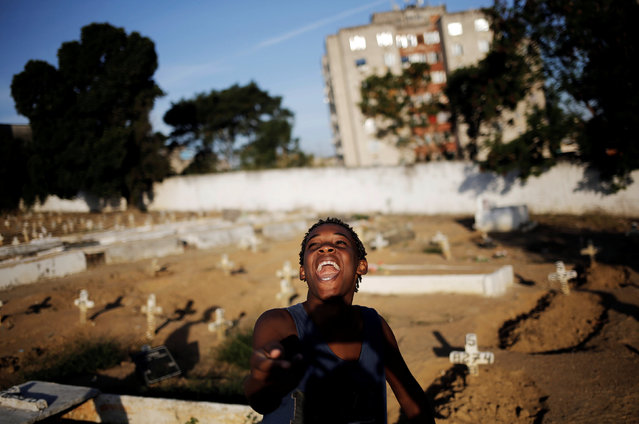
Military policemen take part in an operation at Cidade de Deus favela in Rio de Janeiro, Brazil, on February 01, 2018. (Photo by Mauro Pimentel/AFP Photo)
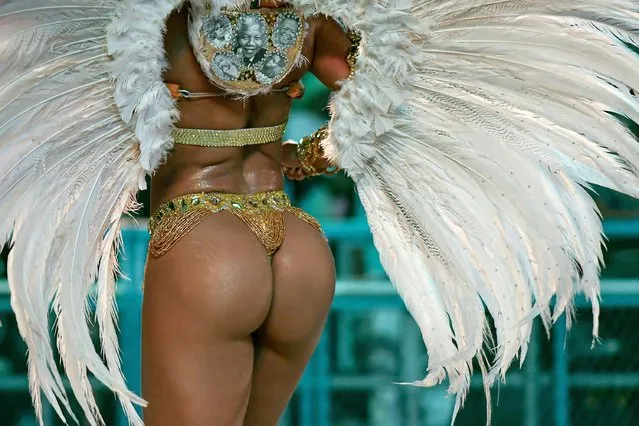
Natalia Lage Rainha de Drums of the Escola de Samba Inocente de Belford Roxo during a presentation in the parade of the Special Group of Carnival in Rio de Janeiro at Avenida Marques de Sapucai, Sambadrome in Rio de Janeiro on April 21, 2021. The Carnival parades that take place in February were postponed to this month of April due to the high number of cases caused during the pandemic caused by COVID-19 (Coronavirus). (Photo by Thiago Ribeiro/AGIF via AFP Photo)
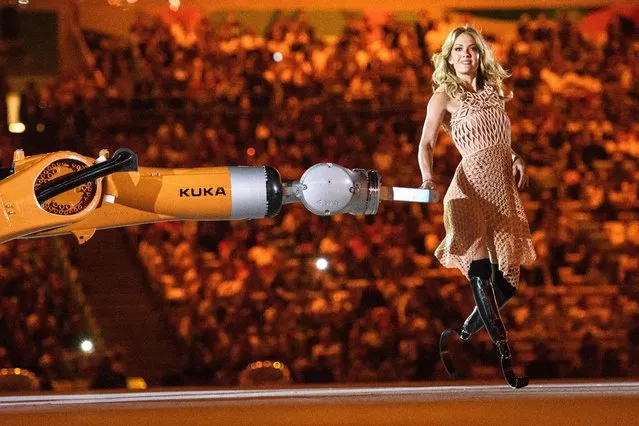
American Paralympic snowboarder Amy Purdy dances with a robot during the opening ceremony of the Rio 2016 Paralympic Games at the Maracana stadium in Rio de Janeiro on September 7, 2016. (Photo by Yasuyoshi Chiba/AFP Photo)
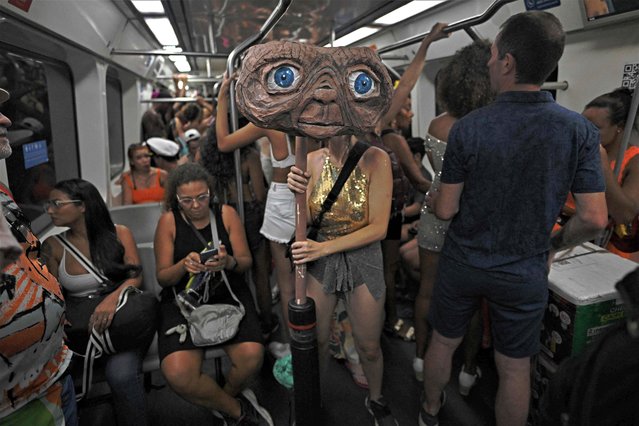
Carnival revellers take the metro in Rio de Janeiro, Brazil on February 19, 2023. Shaking the ground to the beat of their drums, Rio de Janeiro's famed carnival parades returned Sunday in a swirl of glitter, sequins and samba, the festival's first full-on edition since Covid-19 and Brazil's bitterly divisive elections. (Photo by Carl de Souza/AFP Photo)
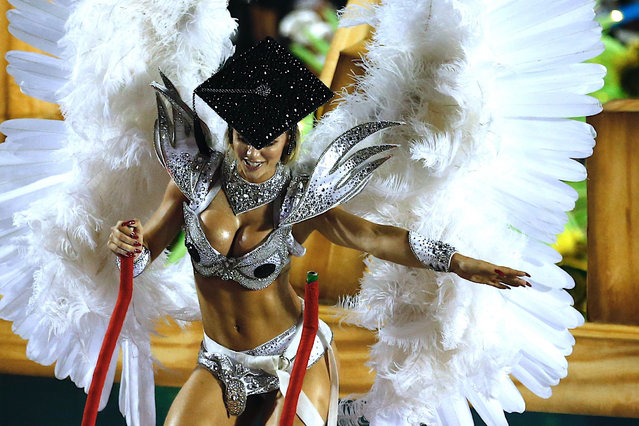
A member of the samba school of the Grupo Especial Academicos do Grande Rio parade during the Carnival celebration at the Marques de Sapucai sambadrome in Rio de Janeiro, Brazil, early 04 March 2019. The samba schools of the Rio de Janeiro Special Groups began their parades on 03 March at the sambadrome, considered the main attraction of the carnival in Brazil. (Photo by Marcelo Chello/EPA/EFE)
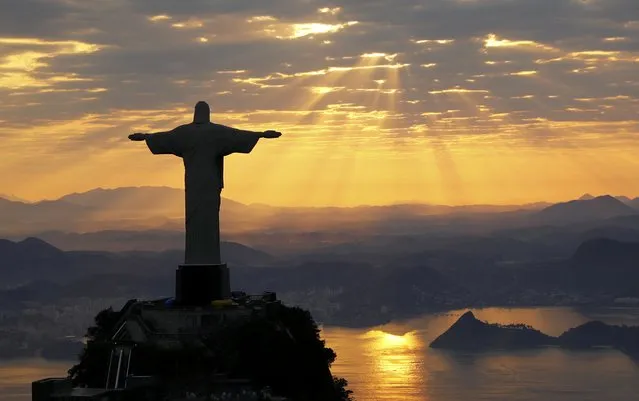
Jesus Christ The Redeemer is seen during sunrise in Rio de Janeiro, Brazil August 2, 2016. Christ the Redeemer is an Art Deco statue of Jesus Christ in Rio de Janeiro, Brazil, created by Polish-French sculptor Paul Landowski and built by the Brazilian engineer Heitor da Silva Costa, in collaboration with the French engineer Albert Caquot. The face was created by the Romanian artist Gheorghe Leonida1. (Photo by Kai Pfaffenbach/Reuters)