Loading...
Done
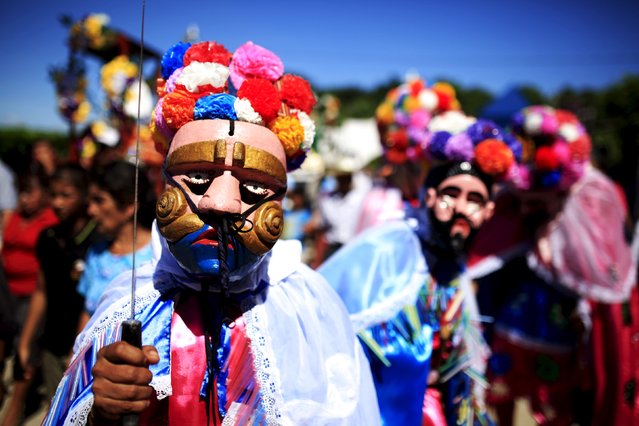
Members of the traditional Los Historiantes dance group perform during a welcoming ceremony for Catholic devotees known as "Cumpas", in the town of Cuishnahuat, El Salvador November 26, 2015. (Photo by Jose Cabezas/Reuters)

Members of the traditional Los Historiantes dance group perform during a welcoming ceremony for Catholic devotees known as "Cumpas", in the town of Cuishnahuat, El Salvador November 26, 2015. The Catholic people of the El Balsamo mountain range meet in the village of Cuishnahuat in November to celebrate the 'friendship' between their respective patron saints in a ceremony that has been carried out for more than 300 years, according to the government. (Photo by Jose Cabezas/Reuters)
Details
29 Nov 2015 08:02:00
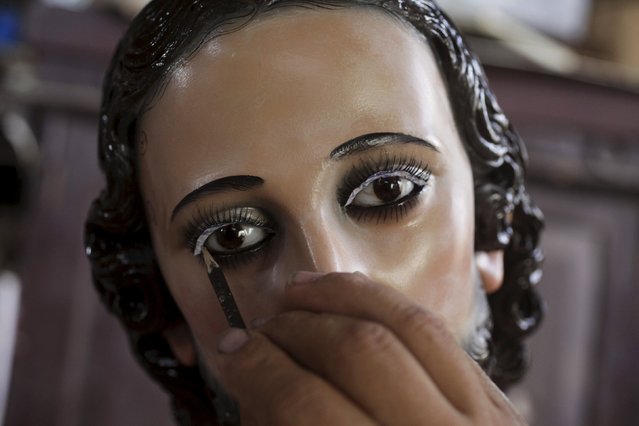
Jose Sabas Gomez pastes eyelashes to a statue of El Jesus Nazareno in his workshop in Apastepeque, El Salvador March 9, 2016. (Photo by Jose Cabezas/Reuters)

Jose Sabas Gomez pastes eyelashes to a statue of El Jesus Nazareno in his workshop in Apastepeque, El Salvador March 9, 2016. Sabas is one of a small number of artists still working on traditional religious art in El Salvador. According to him, there used to be more workshops engaged in the work of restoring statues of saints, but only four remain today as the labor-intensive craft is no longer a popular choice of profession. (Photo by Jose Cabezas/Reuters)
Details
16 Mar 2016 14:14:00
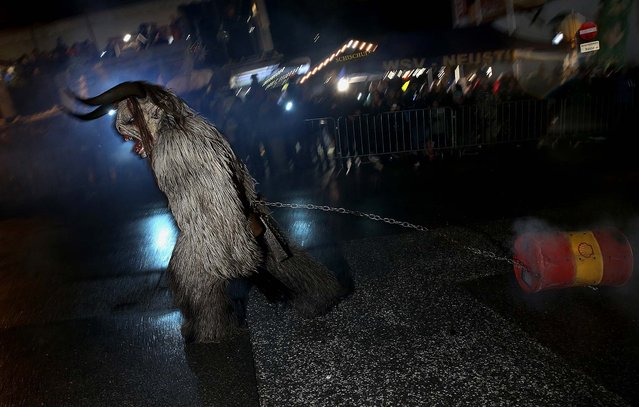
A participant dressed as the Krampus creature pulls a barrel of fire past onlookers during his search for delinquent children in Neustift im Stubaital. (Photo by Sean Gallup)

“Krampus is a beast-like creature from the folklore of Alpine countries thought to punish children during the Yule season who had misbehaved, in contrast with Saint Nicholas, who rewards well-behaved ones with gifts. Krampus is said to capture particularly naughty children in his sack and carry them away to his lair”. – Wikipedia. Photo: A participant dressed as the Krampus creature pulls a barrel of fire past onlookers during his search for delinquent children in Neustift im Stubaital. (Photo by Sean Gallup)
Details
05 Dec 2013 08:29:00
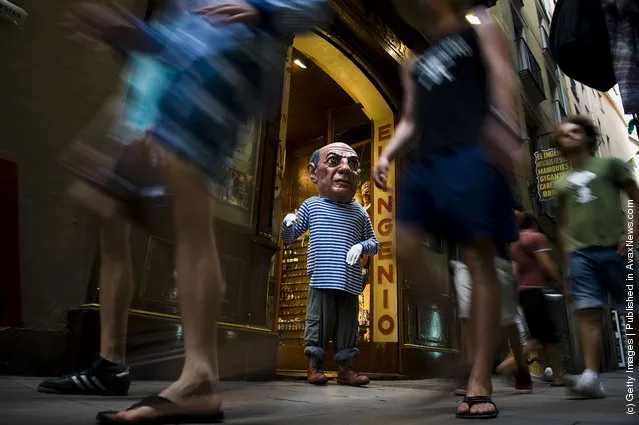
El Ingenio shop

A Pablo Picasso papier mache “huge head” mask, known as “Capgros” in Catalan, is displayed at the entrance of the “El Ingenio” shop on August 23, 2011 in Barcelona, Spain. “El Ingenio” (The Ingenuity) has been making and selling papier mache giant masks and huge heads for Catalan popular festivals since 1838. The “La Merce” festival will be held on September 24 to observe the feast day of Our Lady of Mercy, patron saint of Barcelona. (Photo by David Ramos/Getty Images)
Details
24 Aug 2011 09:14:00
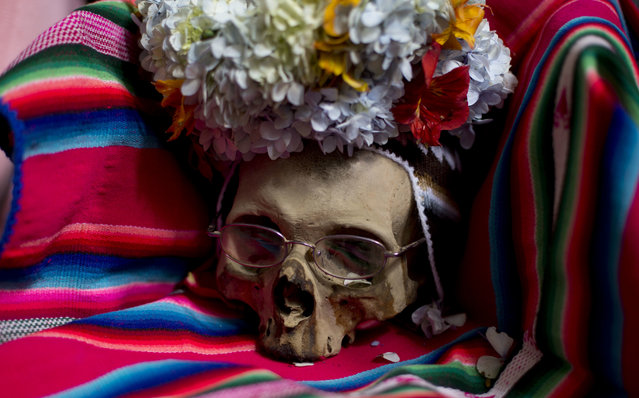
A  decorated human skull or “natitas”, sits on a blanket inside the Cementerio General chapel, during the Natitas Festival celebrations, in La Paz, Bolivia, Tuesday, November 8, 2016. (Photo by Juan Karita/AP Photo)

A decorated human skull or “natitas”, sits on a blanket inside the Cementerio General chapel, during the Natitas Festival celebrations, in La Paz, Bolivia, Tuesday, November 8, 2016. The “natitas” are cared for and decorated by faithful who use them as amulets believing they serve as protection, the tradition marks the end of the Catholic All Saints holiday, but is not recognized by the Catholic church. (Photo by Juan Karita/AP Photo)
Details
09 Nov 2016 06:25:00
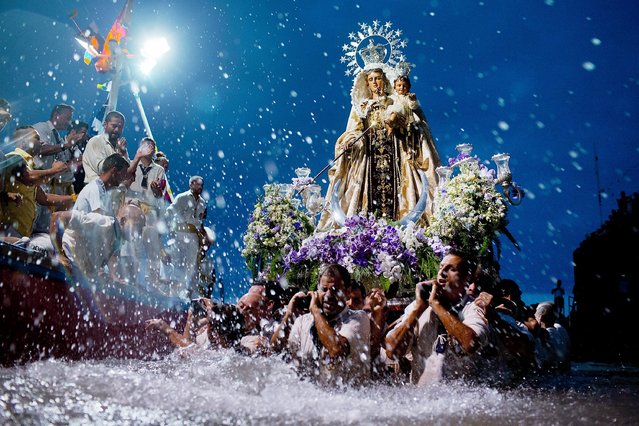
Carriers of the Great God Power brotherhood unload Virgen del Carmen statue after its journey on July 15, 2014 at Puerto de la Cruz dock on the Canary island of Tenerife, Spain. Since 1921, the statue of the Virgen del Carmen, patron saint of fishermen, has been carried with great fanfare annually as part of July Festivities to the Puerto de la Cruz dock where, at the end of its procession, it is hoisted aboard a decorated boat. (Photo by Gonzalo Arroyo Moreno/Getty Images)

Carriers of the Great God Power brotherhood unload Virgen del Carmen statue after its journey on July 15, 2014 at Puerto de la Cruz dock on the Canary island of Tenerife, Spain. Since 1921, the statue of the Virgen del Carmen, patron saint of fishermen, has been carried with great fanfare annually as part of July Festivities to the Puerto de la Cruz dock where, at the end of its procession, it is hoisted aboard a decorated boat. Weather permitting, the boat carrying the statue, accompanied by a flotilla of other boats, makes a short journey along the island coast before returning to the harbour. In recent years, attendance at the event has numbered more than 35,000 people. (Photo by Gonzalo Arroyo Moreno/Getty Images)
Details
21 Jul 2014 11:18:00
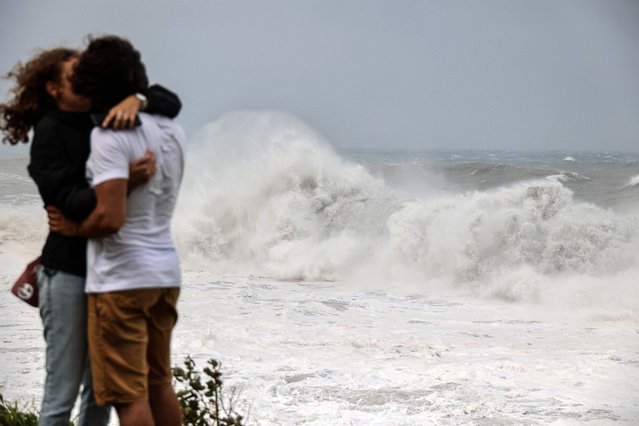
A couple kiss as strong waves hit the coast in Saint-Benoit, on the east of the French Indian Ocean island of La Reunion, on February 2, 2022, ahead of the passage of tropical cyclone Batsirai. La Reunion goes on red alert at 7 pm on February 2, to prepare for the likely passage of cyclone Batsirai overnight. The cyclone already left at least 7,500 homes in nearby Mauritius without power, after it brought heavy downpours and winds of around 120 kilometres per hour, knocking down trees onto electricity lines, according to the local electricity board. (Photo by Richard Bouhet/AFP Photo)

A couple kiss as strong waves hit the coast in Saint-Benoit, on the east of the French Indian Ocean island of La Reunion, on February 2, 2022, ahead of the passage of tropical cyclone Batsirai. La Reunion goes on red alert at 7 pm on February 2, to prepare for the likely passage of cyclone Batsirai overnight. The cyclone already left at least 7,500 homes in nearby Mauritius without power, after it brought heavy downpours and winds of around 120 kilometres per hour, knocking down trees onto electricity lines, according to the local electricity board. (Photo by Richard Bouhet/AFP Photo)
Details
03 Feb 2022 07:38:00
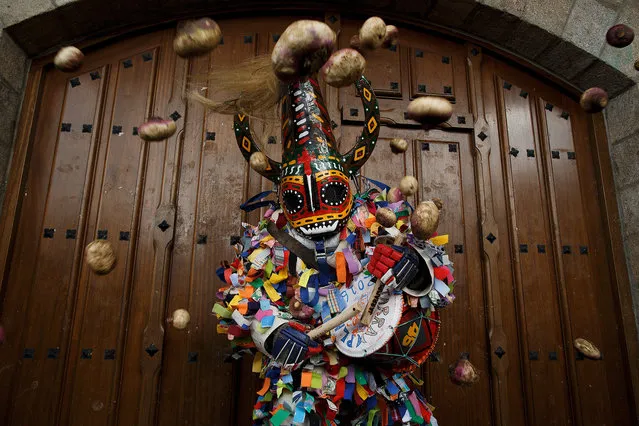
People throw turnips at the Jarramplas as he comes out from the church beating his drum during the Jarramplas Festival on January 20, 2016 in Piornal, Caceres province, Spain. The centuries old Jarramplas festival takes place annually every January 19-20 on Saint Sebastian Day and this year they expect to use more than 20 thousand kilogrames of turnips. Even though the exact origins of the festival are not known, various theories exist including the mythological punishment of Caco by Hercules. (Photo by Pablo Blazquez Dominguez/Getty Images)

People throw turnips at the Jarramplas as he comes out from the church beating his drum during the Jarramplas Festival on January 20, 2016 in Piornal, Caceres province, Spain. The centuries old Jarramplas festival takes place annually every January 19-20 on Saint Sebastian Day and this year they expect to use more than 20 thousand kilogrames of turnips. Even though the exact origins of the festival are not known, various theories exist including the mythological punishment of Caco by Hercules, a relation to ceremonies celebrated by the American Indians that were seen by the first conquerors, to a cattle thief ridiculed and expelled by his village neighbours. It is generally believed to symbolize the expulsion of everything bad. (Photo by Pablo Blazquez Dominguez/Getty Images)
Details
21 Jan 2016 13:21:00