Loading...
Done
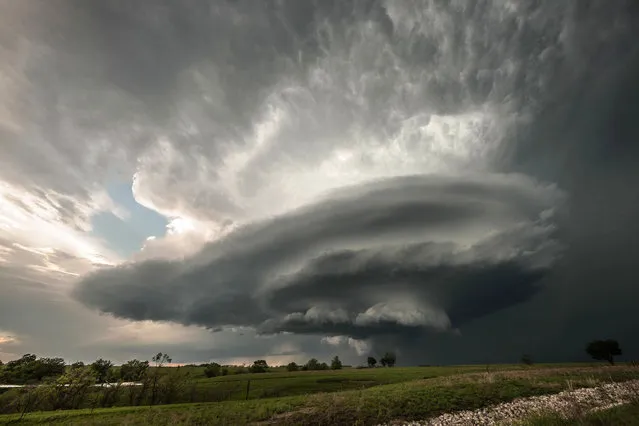
The rotating updraft base of a supercell thunderstorm, and a rear flank downdraft containing rain and hail, backlit by the setting sun, on May 10, 2014, in Climax, Kansas, United States. To most of us, dark clouds on the horizon usually means rain – but here in Kansas, they can also signal the start of a supercell. The huge formations, also known as rotating thunderstorms, are among the most powerful weather phenomenon found over land. (Photo by Stephen Locke/Barcroft Media)

The rotating updraft base of a supercell thunderstorm, and a rear flank downdraft containing rain and hail, backlit by the setting sun, on May 10, 2014, in Climax, Kansas, United States. To most of us, dark clouds on the horizon usually means rain – but here in Kansas, they can also signal the start of a supercell. The huge formations, also known as rotating thunderstorms, are among the most powerful weather phenomenon found over land. They can occur anywhere where the conditions are right, but are normally found in more arid climates. These awe-inspiring supercells were captured south of Climax city by storm chaser Stephen Locke. (Photo by Stephen Locke/Barcroft Media)
Details
18 Jul 2014 12:01:00
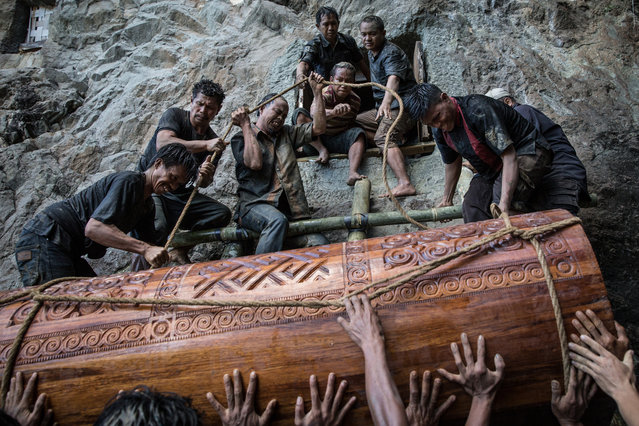
It is said that Torajans are people who “live to die”. For this Indonesian ethnic group, funerals are such extravagant events that they sometimes attract tourists. Families can postpone burials years (and the deceased are considered sick and hosted at home until the funeral) until the family can raise enough money and gather as many relatives as possible. And then it’s a jubilant multiday social event with a parade, dances and animal sacrifices. Agung Parameswara photographed these funerary practices when he traveled to South Sulawesi province, where the Torajans live. But often, their funeral isn’t the last time the dead are seen. In August, crypts are opened, coffins are slid back out and bodies delicately unsheathed. This tender ritual is known as Ma’Nene, which is customarily performed every few years. (Photo by Agung Parameswara/The Washington Post)

It is said that Torajans are people who “live to die”. For this Indonesian ethnic group, funerals are such extravagant events that they sometimes attract tourists. Families can postpone burials years (and the deceased are considered sick and hosted at home until the funeral) until the family can raise enough money and gather as many relatives as possible. And then it’s a jubilant multiday social event with a parade, dances and animal sacrifices. Agung Parameswara photographed these funerary practices when he traveled to South Sulawesi province, where the Torajans live. (Photo by Agung Parameswara/The Washington Post)
Details
06 Oct 2016 09:15:00
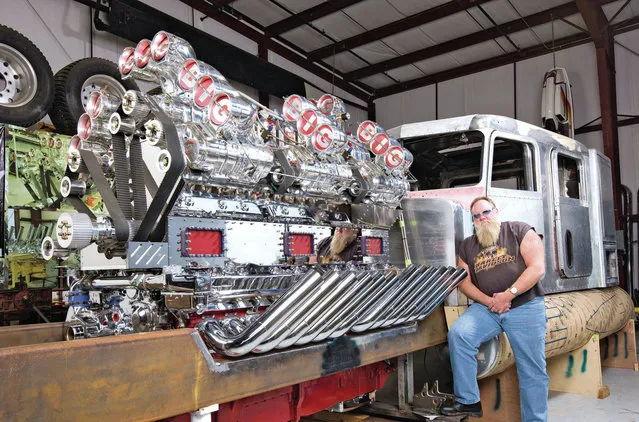
Supercharged 24 Cylinder Engine

This thing has 24 cylinders, 1,704 cubic inches, 12 GMC superchargers (blowers), 8 nitrous bottles and it runs! Why build such a beast? “Because I can,” Harrah says. There’s no other reason to take a 24V71 and build an intake manifold that weighs 1,000 pounds and mount eight 6-71 superchargers on top of four others. This is a V24 Detroit Diesel (normally used to power ships) which is two V12 Detroits joined together nose to nose with splined cranks.
Details
26 Aug 2014 18:40:00
Animalistic Tendencies By Zarnala

Zarnala is a female illustrator with a knack for anthropomorphic illustration, combining human and animal elements to create something altogether new. Unlike other forms of anthropomorphic art one can find out there though, her work always retains a tasteful, professional edge similar to the feel I get from comics like Juanjo Garnido's take on Blacksad. With an awesome watercolor themed approach to all her illustration work and her use of graphic shapes to frame her characters, at times it gives her art a strangely retro look that reminds one of the works of Norman Rockwell and JC Leyendecker. Check out more of her work after the break!
Details
11 Dec 2013 11:08:00
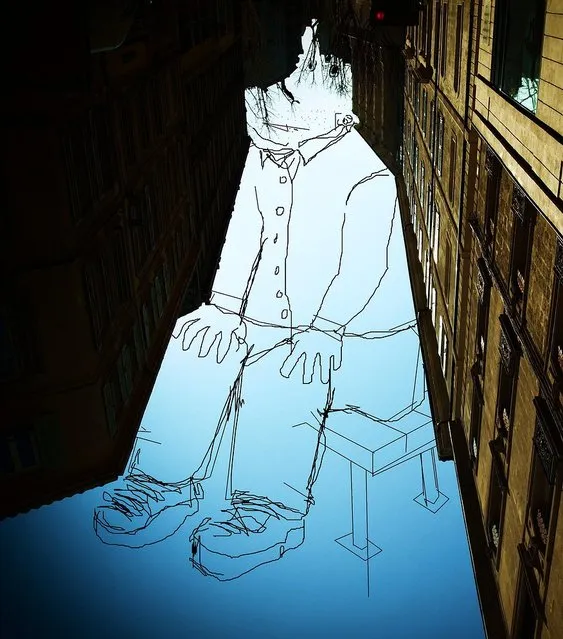
Whimsical Sky Art by Thomas Lamadieu

French artist Thomas Lamadieu, also know as Roots Art, must really love looking at the sky. Every time he looks up, Thomas sees a potential canvas where the building rooftops frame the sky. He photographs it and uses the odd sky shapes to create whimsical line drawings. “My artistic aim is to show a different perception of urban architecture and the everyday environment around us, what we can construct with a boundless imagination,” says Thomas. (Photo by Thomas Lamadieu)
Details
22 Apr 2013 05:17:00
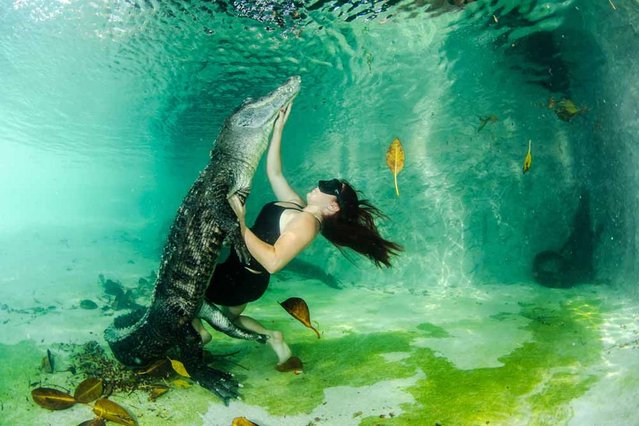
Assistant photographer Adriana Canargo dives with a wild alligator. (Photo by John Chapa/Barcroft Media)

Daredevil Christopher Gillette writhes around with a huge alligator he has saved from death. He works at a Florida sanctuary that rescues the wild beasts if they stroll into neighbourhoods where residents can legally kill them. To raise cash for the centre at Homestead, staff put on shows to feed and wrestle the alligators. Photographer John Chapa, 41, and girlfriend Adriana Canargo, 30, took these shots. Photo: Assistant photographer Adriana Canargo dives with a wild alligator. (Photo by John Chapa/Barcroft Media)
Details
22 Jun 2014 10:35:00
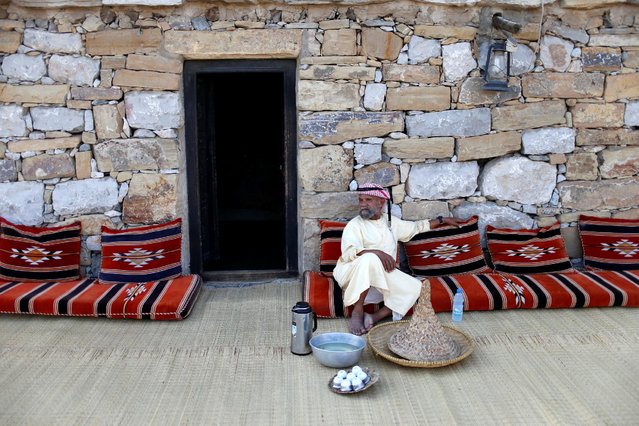
An Emirati man sits outside an old house at the Heritage Village in Dubai, UAE March 13, 2016. (Photo by Ahmed Jadallah/Reuters)

An Emirati man sits outside an old house at the Heritage Village in Dubai, UAE March 13, 2016. The Heritage Village was created in 1997 in Al Shindagha Historical Neighborhood in Dubai, close to the Diving Village, to embrace the heritage events and to display a live image of the old traditional life in UAE. It represents the components of wild, marine, and mountain life, where the visitor can identify closely the old traditional customs of the country and the special characteristics of old houses, handicrafts, patterns, and forms of living. It is owned and managed by Dubai Culture & Arts Authority. (Photo by Ahmed Jadallah/Reuters)
Details
29 Apr 2016 11:26:00


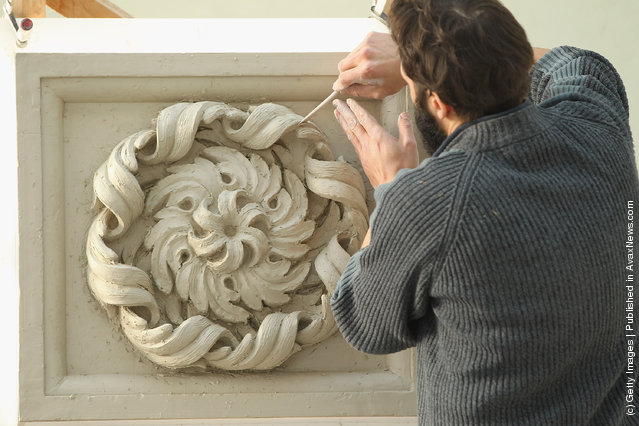
BERLIN, GERMANY - NOVEMBER 11: Sculptor Oleg Bessonov creates a rosette from clay at the Schlossbauhuette studio where a team of sculptors is creating decorative elements for the facade of the Berliner Schloss city palace on November 11, 2011 in Berlin, Germany. The Berliner Schloss was the residence of the Prussian Kaiser and was among the major architectural landmarks of Berlin until it was heavily damaged by Allied bombing in 1945. The communist authorities of East Berlin demolished the building in the 1950s, and today's Berlin government is pursuing an ambitious project to rebuild the palace according to a design by Italian architect Franco Stella, which will recreate the facade of the building but with a modern interior at a cost of approximately EUR 590 million. The Humboldt Forum, the foundation leading the project, has given the Schlossbauhuette sculptors the formidable task of recreating the hundreds of architectural elements that decorated the facade, and though some original pieces were saved, more often the sculptors have only old black and white photos as reference. (Photo by Sean Gallup/Getty Images)
Details
21 Nov 2011 11:22:00