A United aircraft rolls over the highway to its parking position after landing at the airport in Frankfurt, Germany, Thursday, February 15, 2024. (Photo by Michael Probst/AP Photo)
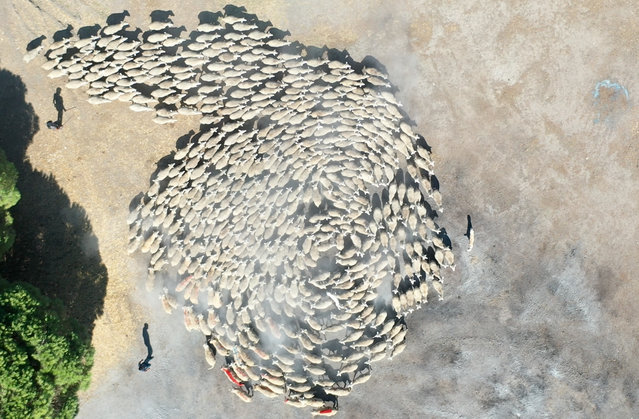
An aerial view of lambs as General Directorate of Agricultural Enterprises of Turkish Ministry of Agriculture and Forestry expects lamb births to increase in winter period, compared to previous years, in Karacabey facilities of Bursa, Turkiye on September 16, 2024. (Photo by Mustafa Yilmaz/Anadolu via Getty Images)
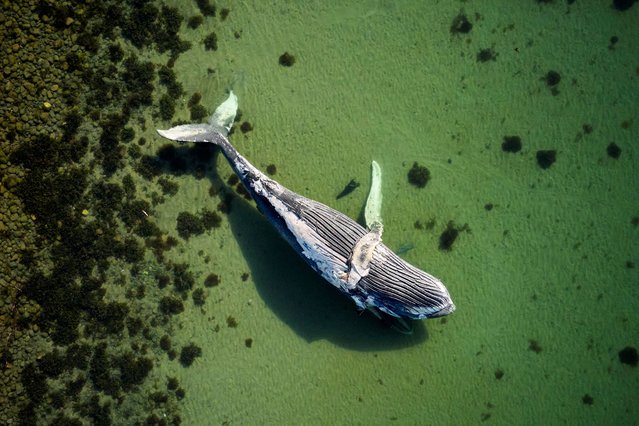
Drone photo of a dead humpback whale at Foelle Strand in Loegten Bay, Djursland, Denmark, on April 2, 2025. (Photo by Mikkel Berg Pedersen/Ritzau Scanpix via Reuters)
English National Opera presents Georges Bizet's “Carmen” at the London Coliseum in London on October 6, 2025. (Photo by Jane Hobson/Rex Features/Shutterstock)
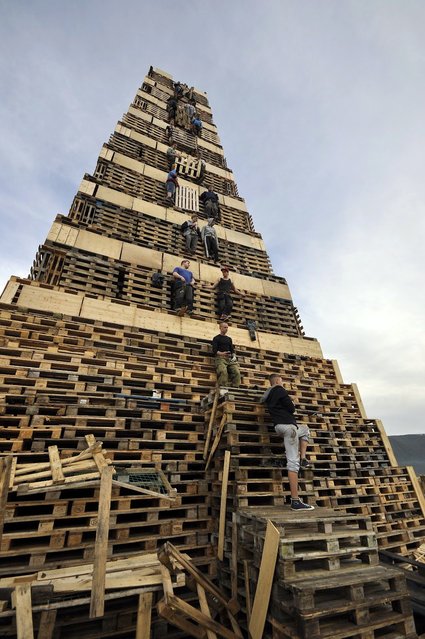
“To see the world’s biggest bonfire you’ll have to visit Alesund, Norway, where wood pallets are stacked over 40 meters (131 ft) high on an artificial island”. (Photo by Trond Folkestad Fredriksen)
French army deminers secure a helicopter in a hangar at the Gao airport, on February 9, 2013. Two Malian soldiers and four civilians have already been killed by landmines, and French troops are still fighting off what Paris called “residual jihadists” in reclaimed territory. (Photo by Pascal Guyot/AFP Photo via The Atlantic)
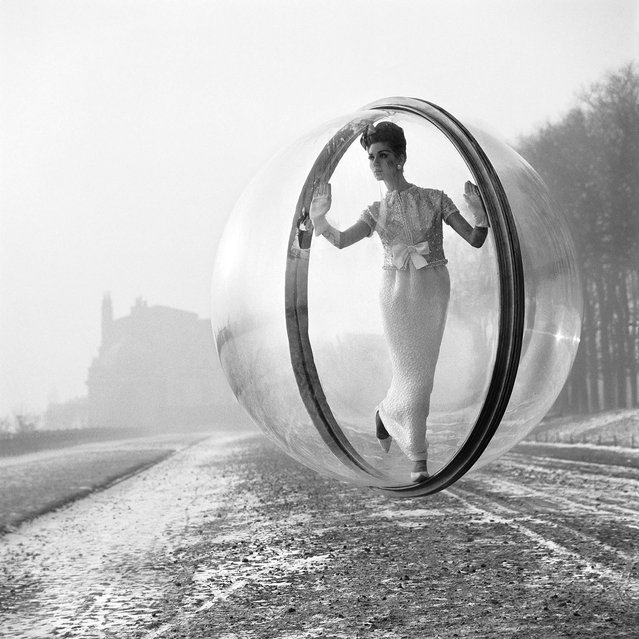
Born 1938 in New York, Melvin Sokolsky was a major figure in the revival of fashion photography from the 1960s. He was only 21 when he started working at Harper's Bazaar for which he produced the “Bubble” series of photographs depicting fashion models floating in giant clear plastic bubbles suspended in midair above the Seine river in Paris. Alongside his steady collaboration with Bazaar, he also worked for publications such as Vogue and the New York Times. Photo: “After Delvaux” – “Paris 1963” – Harper's Bazaar “Bubble” Spring Collection. (Photo by Melvin Sokolsky)
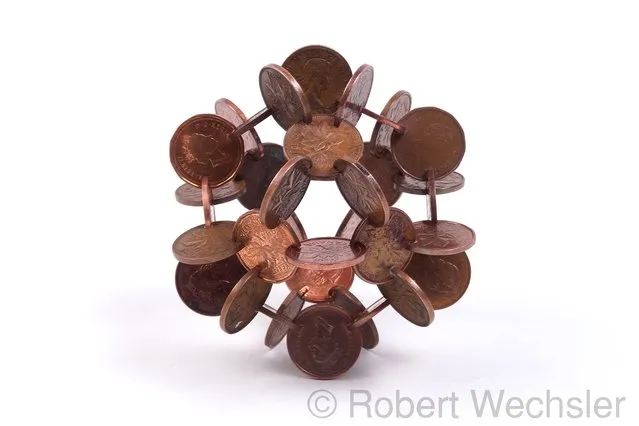
American artist Robert Wechsler has realized a series of sculptural cubes made from thousands of pennies titled “The Mendicant“. Cubes achieved by notching and joining pennies in perfect orientation to one another. Joined at perpendicular angles, the coins create a lattice structure allowing tunnel like passages of light from certain angles. As one moves around them, the cubes seem to fluctuate from material to ethereal. The number of pennies increases exponentially with the size of the cube. Pictured here are three cubes differentiated with subtitles indicating the exact quantity used.