Loading...
Done
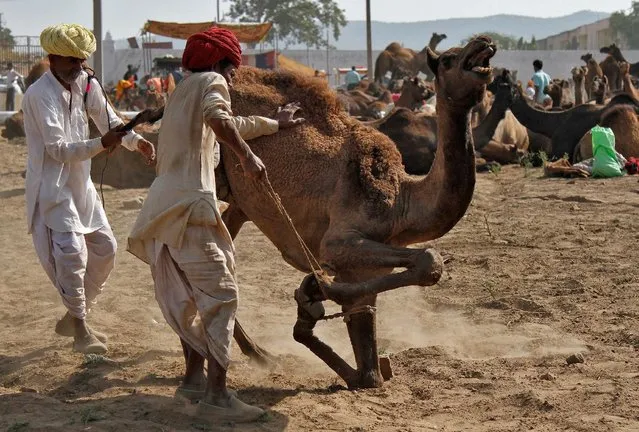
Traders try to control a camel at Pushkar Fair where animals, mainly camels, are brought to be sold and traded in the desert Indian state of Rajasthan November 6, 2016. (Photo by Himanshu Sharma/Reuters)

Traders try to control a camel at Pushkar Fair where animals, mainly camels, are brought to be sold and traded in the desert Indian state of Rajasthan November 6, 2016. (Photo by Himanshu Sharma/Reuters)
Details
07 Nov 2016 12:04:00
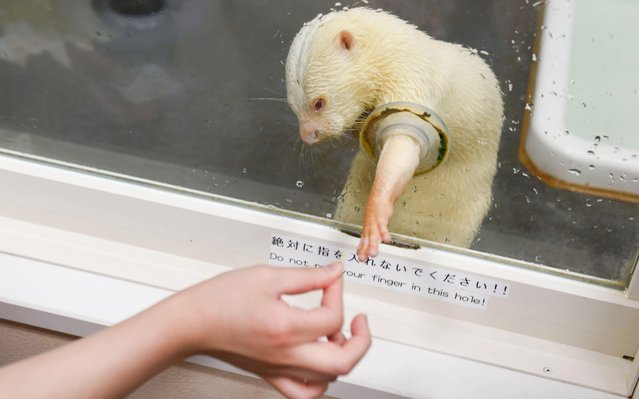
An otter reaches for a snack from a customer at an otter cafe in Tokyo. Asian small-clawed otters are increasingly popular as novelty pets, particularly in Japan. Now international trade in the species may be banned. (Photo by Noriko Hayashi/The New York Times)

An otter reaches for a snack from a customer at an otter cafe in Tokyo. Asian small-clawed otters are increasingly popular as novelty pets, particularly in Japan. Now international trade in the species may be banned. (Photo by Noriko Hayashi/The New York Times)
Details
01 Jan 2020 00:05:00
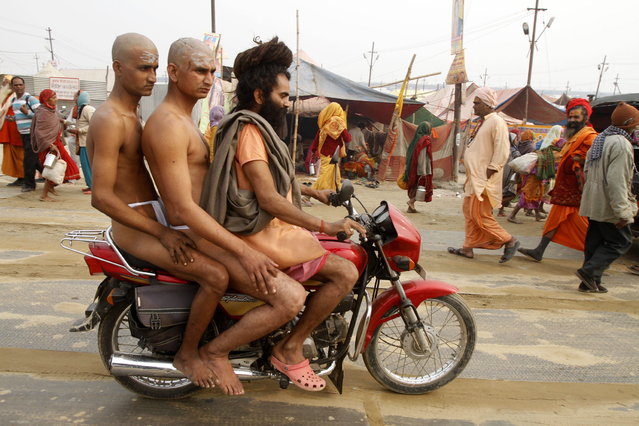
Two Hindu holy men of the Juna Akhara sect  are being take on a motorcycle by their teacher as they got delayed for a rituals that are believed to rid them of all ties in this life and dedicate themselves to serving God as a “Naga” or naked holy men, at Sangam, the confluence of the Ganges and Yamuna River during the Maha Kumbh festival in Allahabad, India, Wednesday, February 6, 2013. (Photo by Rajesh Kumar Singh/AP Photo)

Two Hindu holy men of the Juna Akhara sect are being take on a motorcycle by their teacher as they got delayed for a rituals that are believed to rid them of all ties in this life and dedicate themselves to serving God as a “Naga” or naked holy men, at Sangam, the confluence of the Ganges and Yamuna River during the Maha Kumbh festival in Allahabad, India, Wednesday, February 6, 2013. The significance of nakedness is that they will not have any worldly ties to material belongings, even something as simple as clothes. This ritual that transforms selected holy men to Naga can only be done at the Kumbh festival. (Photo by Rajesh Kumar Singh/AP Photo)
Details
07 Feb 2013 10:11:00
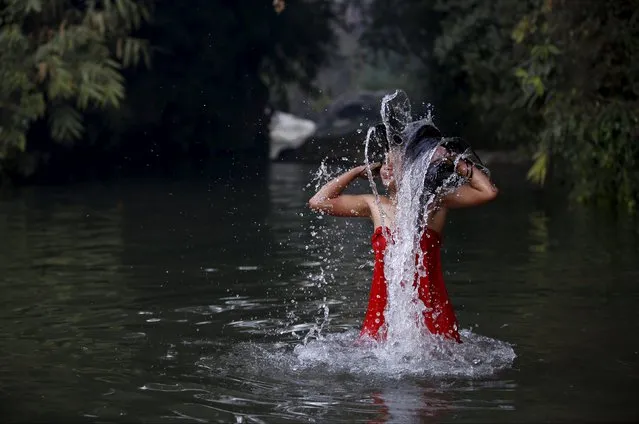
A devotee takes a holy bath in River Saali in Sankhu during the Swasthani Brata Katha festival in Kathmandu, Nepal, January 24, 2016. (Photo by Navesh Chitrakar/Reuters)

A devotee takes a holy bath in River Saali in Sankhu during the Swasthani Brata Katha festival in Kathmandu, Nepal, January 24, 2016. During the month long festival, devotees recite one chapter of a Hindu tale daily from the 31-chapter sacred Swasthani Brata Katha book that is dedicated to God Madhavnarayan and Goddess Swasthani, alongside various other gods and goddess and the miraculous feats performed by them. The devotees also go on pilgrimages to various temples, perform religious rituals, take a holy bath in the rivers and fast for a month, especially among women who believe fasting helps in their family's well-being or in getting them a good husband. (Photo by Navesh Chitrakar/Reuters)
Details
25 Jan 2016 12:05:00
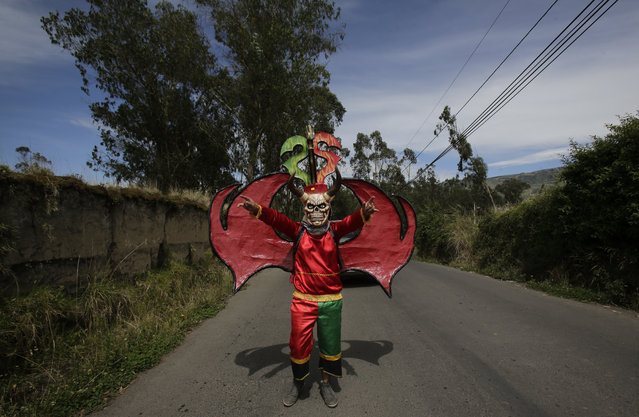
Dressed for the traditional New Year's festival known as “La Diablada”, in Pillaro, Ecuador, Friday, January 5, 2018. (Photo by Dolores Ochoa/AP Photo)

Dressed for the traditional New Year's festival known as “La Diablada”, in Pillaro, Ecuador, Friday, January 5, 2018. Thousands of singing and dancing devils take over the mountain town for six days of revelry in the streets. Local legend holds that anyone who adopts a costume for the celebration and wears it at the event six years in a row will have good luck. (Photo by Dolores Ochoa/AP Photo)
Details
12 Jan 2018 06:47:00
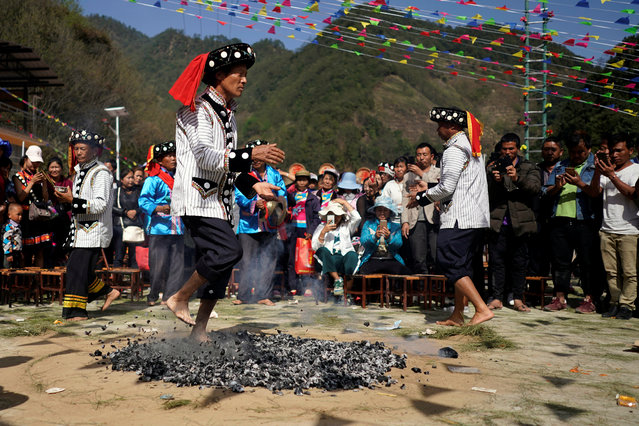
An ethnic Lisu man dances barefoot on hot charcoal embers to celebrate the annual Knife Pole Festival in Luzhang township of Nujiang Lisu Autonomous Prefecture in Yunnan province, China, March 29, 2018. (Photo by Aly Song/Reuters)

An ethnic Lisu man dances barefoot on hot charcoal embers to celebrate the annual Knife Pole Festival in Luzhang township of Nujiang Lisu Autonomous Prefecture in Yunnan province, China, March 29, 2018. (Photo by Aly Song/Reuters)
Details
05 Apr 2018 00:05:00
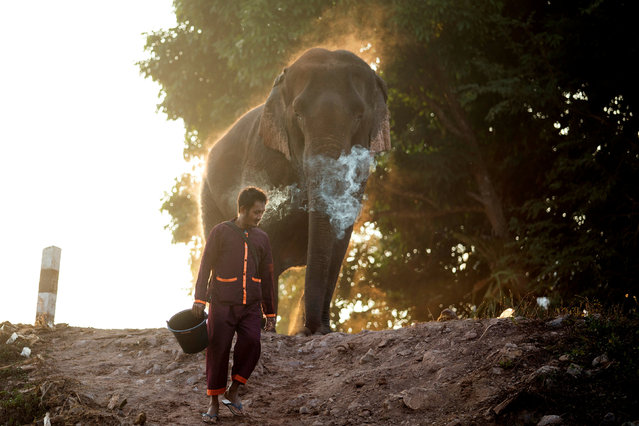
A mahout walks with an elephant after bathing him in a river, before taking part in an elephant festival, which organisers say aims to raise awareness about elephants, in Sayaboury province, Laos February 17, 2017. (Photo by Phoonsab Thevongsa/Reuters)

A mahout walks with an elephant after bathing him in a river, before taking part in an elephant festival, which organisers say aims to raise awareness about elephants, in Sayaboury province, Laos February 17, 2017. (Photo by Phoonsab Thevongsa/Reuters)
Details
19 Feb 2017 00:06:00
People take part in the “The Burial of the Sardine” funeral procession, which marks the end of carnival festivities, in Madrid, Spain, February 10, 2016. (Photo by Juan Medina/Reuters)

People take part in the “The Burial of the Sardine” funeral procession, which marks the end of carnival festivities, in Madrid, Spain, February 10, 2016. “Mourners” carry a coffin with a mock sardine through the streets to celebrate the countdown to Lent. Spanish painter Francisco de Goya's painting “El entierro de la sardina” (The Burial of the Sardine) was inspired by this tradition, which started in Madrid in the 18th century, around the time of Spanish King Carlos III. (Photo by Juan Medina/Reuters)
Details
11 Feb 2016 12:29:00