Loading...
Done
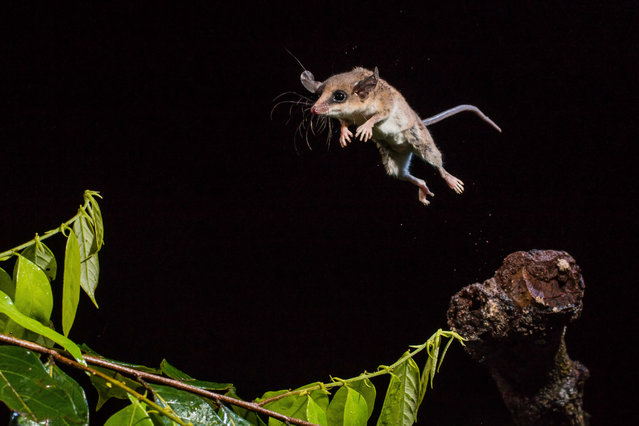
Tropical acrobatics by Adrià López Baucells in Manaus, Brazil. An unidentified South American marsupial, although the characteristic black markings on its face indicate it may be a mouse opossum. These small creatures are nocturnal and feed on bugs, fruit and bird eggs. (Photo by Adrià López Baucells/2019 Royal Society of Biology Photography Competition)

Tropical acrobatics by Adrià López Baucells in Manaus, Brazil. An unidentified South American marsupial, although the characteristic black markings on its face indicate it may be a mouse opossum. These small creatures are nocturnal and feed on bugs, fruit and bird eggs. (Photo by Adrià López Baucells/2019 Royal Society of Biology Photography Competition)
Details
10 Oct 2019 00:03:00
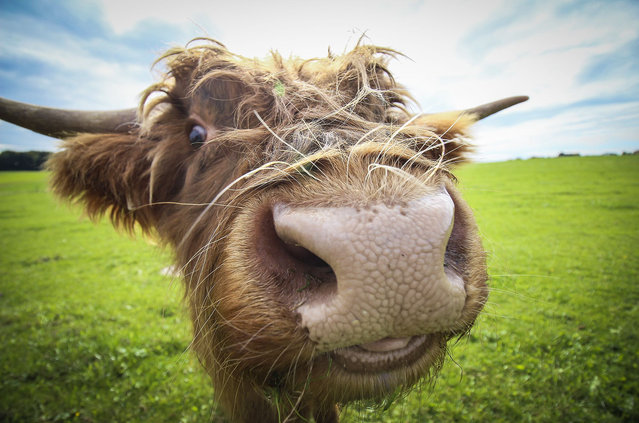
A hungry cow smiles for the camera in Salzburg, Austria. One of a series of funny animal mugshots taken by Chanel Cartell and Stevo Dirnberger during their travels around the globe. (Photo by Chanel Cartell/Stevo Dirnberger/Rex Features/Shutterstock)

A hungry cow smiles for the camera in Salzburg, Austria. One of a series of funny animal mugshots taken by Chanel Cartell and Stevo Dirnberger during their travels around the globe. (Photo by Chanel Cartell/Stevo Dirnberger/Rex Features/Shutterstock)
Details
13 Jun 2016 11:03:00
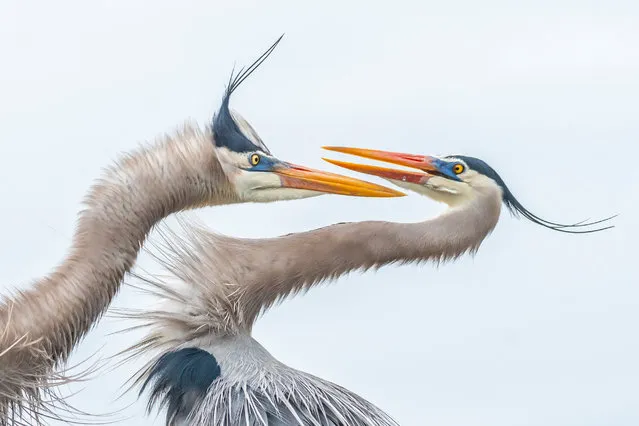
Melissa Rowell, amateur honourable mention. Wakodahatchee wetlands, Delray Beach, Florida, US. Equipped with sinewy necks and spear-like bills, great blue herons can lunge with fearsome speed to strike their aquatic prey. Adults will also employ rapid stabbing motions as one aspect of their complex courtship displays; they’re seemingly dangerous moves, but fitting to the intensity of mating season. (Photo by Melissa Rowell/Audubon photography awards)

Wakodahatchee wetlands, Delray Beach, Florida, US. Equipped with sinewy necks and spear-like bills, great blue herons can lunge with fearsome speed to strike their aquatic prey. Adults will also employ rapid stabbing motions as one aspect of their complex courtship displays; they’re seemingly dangerous moves, but fitting to the intensity of mating season. (Photo by Melissa Rowell/Audubon Photography Awards)
Details
17 Jul 2019 00:03:00
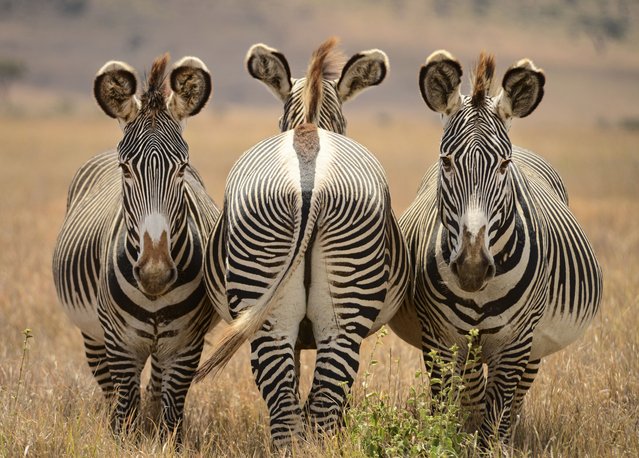
It doesn’t make for the most flattering photoshoot, but there is a reason these zebras at Lewa wildlife conservancy in Kenya in the second decade of August 2025 are stood head to tail: they use their tails to swat flies from each others’ faces. (Photo by Andrew Campbell/Solent News & Photo Agency)

It doesn’t make for the most flattering photoshoot, but there is a reason these zebras at Lewa wildlife conservancy in Kenya in the second decade of August 2025 are stood head to tail: they use their tails to swat flies from each others’ faces. (Photo by Andrew Campbell/Solent News & Photo Agency)
Details
17 Aug 2025 03:01:00
Two 70 thousand RMB (about 11,310 USD) robots carry dishes and offer service for customers at a robot themed restaurant at Chunxi Road in Chengdu, China, December 11, 2014. The restaurant has 10 robots to serve as waiters. Each robot can carry simple dishes and offer simple greetings. (Photo by ChinaFotoPress/ChinaFotoPress via Getty Images)

Two 70 thousand RMB (about 11,310 USD) robots carry dishes and offer service for customers at a robot themed restaurant at Chunxi Road in Chengdu, China, December 11, 2014. The restaurant has 10 robots to serve as waiters. Each robot can carry simple dishes and offer simple greetings. (Photo by ChinaFotoPress/ChinaFotoPress via Getty Images)
Details
13 Dec 2014 13:01:00
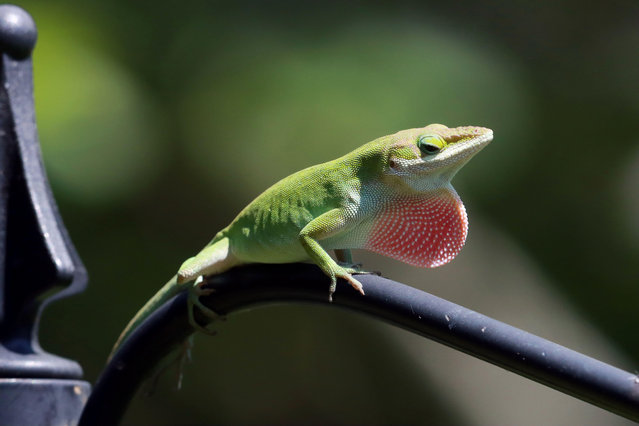
A male green anole lizard flares his throat fan in a backyard in Cary, North Carolina on April 27, 2021. This pink section is actually a thin flap of skin that hangs down below the green anole's throat. Anoles are renowned for their displays in which they do pushups, bob their heads up and down, and unfurl their colorful dewlaps. The male anole uses it for two primary purposes: to protect his territory and attract a mate. (Photo by Bob Karp/ZUMA Press Wire/Alamy Live News)

A male green anole lizard flares his throat fan in a backyard in Cary, North Carolina on April 27, 2021. This pink section is actually a thin flap of skin that hangs down below the green anole's throat. Anoles are renowned for their displays in which they do pushups, bob their heads up and down, and unfurl their colorful dewlaps. The male anole uses it for two primary purposes: to protect his territory and attract a mate. (Photo by Bob Karp/ZUMA Press Wire/Alamy Live News)
Details
15 May 2022 05:18:00
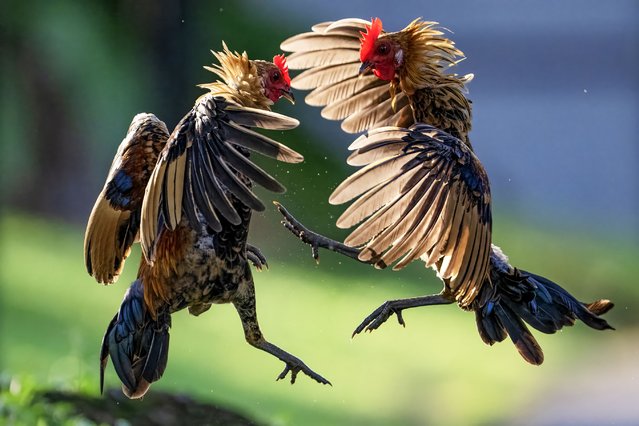
A pair of red junglefowl fight over territory in Pasir Ris Park, Singapore in the second decade of February 2025. (Photo by Liew Tong Leng/Solent News)

A pair of red junglefowl fight over territory in Pasir Ris Park, Singapore in the second decade of February 2025. (Photo by Liew Tong Leng/Solent News)
Details
23 Feb 2025 03:16:00
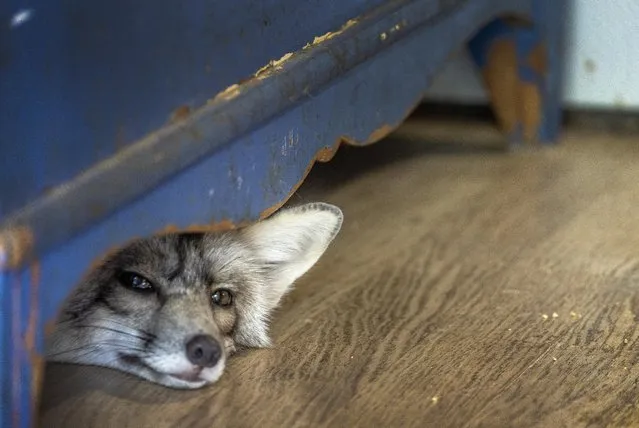
A rescued red fox rests under a closet at “Pawsitive Beginnings” fox rescue sanctuary in Key Largo, Florida, USA on August 1, 2023. Pawsitive Beginnings is a nonprofit group that works closely with organizations in parts of the USA where fur farming takes place to find permanent placement for foxes when needed. According to Pawsitive Beginnings, about 300 fur farms operate in the United States and there are very few federal laws to regulate the treatment of these animals born in captivity, raised for one year, and then killed for their coats. (Photo by Cristobal Herrera-Ulashkevich/EPA/EFE)

A rescued red fox rests under a closet at “Pawsitive Beginnings” fox rescue sanctuary in Key Largo, Florida, USA on August 1, 2023. Pawsitive Beginnings is a nonprofit group that works closely with organizations in parts of the USA where fur farming takes place to find permanent placement for foxes when needed. According to Pawsitive Beginnings, about 300 fur farms operate in the United States and there are very few federal laws to regulate the treatment of these animals born in captivity, raised for one year, and then killed for their coats. (Photo by Cristobal Herrera-Ulashkevich/EPA/EFE)
Details
13 Aug 2023 05:02:00