Loading...
Done
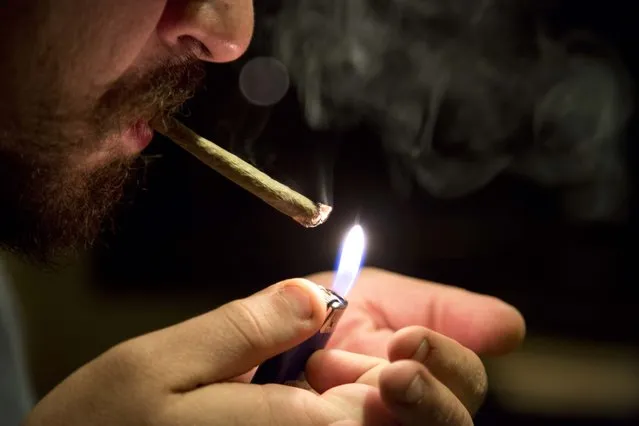
In this October 29, 2013 photo, Daniel smokes marijuana inside his apartment where he uses a hydroponics system to grow his weed in Mexico City. “I'm not a narco, dude. I just like to smoke”, said Daniel, who spoke on condition that his last name not be used because, he said, his home-grow operation is "super-illegal" despite being for personal use only. (Photo by Eduardo Verdugo/AP Photo)

In this October 29, 2013 photo, Daniel smokes marijuana inside his apartment where he uses a hydroponics system to grow his weed in Mexico City. “I'm not a narco, dude. I just like to smoke”, said Daniel, who spoke on condition that his last name not be used because, he said, his home-grow operation is "super-illegal" despite being for personal use only. (Photo by Eduardo Verdugo/AP Photo)
Details
17 Mar 2015 11:49:00
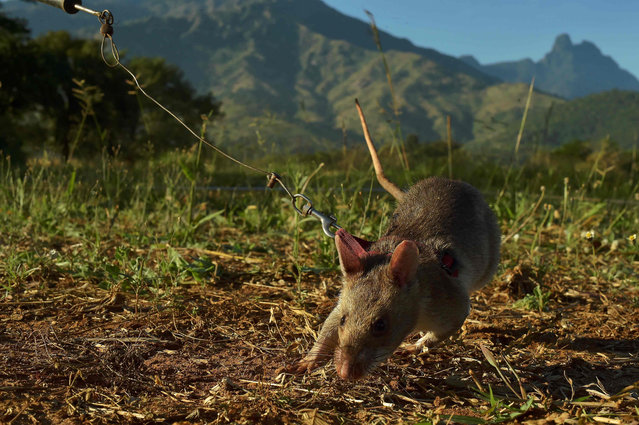
An African giant pouched rat sniffs for traces of landmine explosives at APOPO's training facility in Morogoro on June 17, 2016. (Photo by Carl De Souza/AFP Photo)

An African giant pouched rat sniffs for traces of landmine explosives at APOPO's training facility in Morogoro on June 17, 2016. APOPO trains the rats to detect both tuberculosis and landmines at its facility. Every year landmines kill or maim thousands of people worldwide. The trained rats sniff for explosive and so are able to detect the presence of landmines far faster than conventional methods which involve metal detection. (Photo by Carl De Souza/AFP Photo)
Details
19 Jun 2016 09:52:00
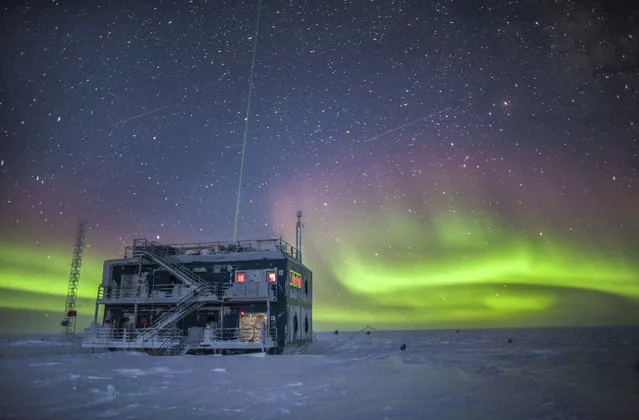
This undated photo provided by NOAA in May 2018 shows aurora australis near the South Pole Atmospheric Research Observatory in Antarctica. When a hole in the ozone formed over Antarctica, countries around the world in 1987 agreed to phase out several types of ozone-depleting chemicals called chlorofluorocarbons (CFCs). Production was banned, emissions fell and the hole shriveled. But according to a study released on Wednesday, May 16, 2018, scientists say since 2013, there’s more of a banned CFC going into the atmosphere. (Photo by Patrick Cullis/NOAA via AP Photo)

This undated photo provided by NOAA in May 2018 shows aurora australis near the South Pole Atmospheric Research Observatory in Antarctica. When a hole in the ozone formed over Antarctica, countries around the world in 1987 agreed to phase out several types of ozone-depleting chemicals called chlorofluorocarbons (CFCs). Production was banned, emissions fell and the hole shriveled. But according to a study released on Wednesday, May 16, 2018, scientists say since 2013, there’s more of a banned CFC going into the atmosphere. (Photo by Patrick Cullis/NOAA via AP Photo)
Details
15 Aug 2018 00:05:00
Sunrise at Rockford Common in the New Forest, UK where the heather is in bloom on July 28, 2024. (Photo by Steve Hogan/Picture Exclusive)

Sunrise at Rockford Common in the New Forest, UK where the heather is in bloom on July 28, 2024. (Photo by Steve Hogan/Picture Exclusive)
Details
22 Oct 2024 04:29:00
Brtukan. “Being a girl of colour in a society where the majority of the people are white, I have had to get used to all the different ways people approach me. From being asked what kind of rap music you listen to and how you wash your hair, to getting told, “you don’t sound black”, “you’re pretty for a black girl” or “you’re not that black so it’s OK”, as if being black is such a bad thing”. (Photo by Lisa Minogue/The Guardian)

As part of FLAIR Melbourne – a Flinders Lane art festival – Melbourne’s Lisa Minogue presents stylised photographic portraits of Australian women of colour, their faces painted vibrantly to accentuate their individuality and encourage the viewer to study each face more closely. Minogue asked each woman the same question: “What do the words “coloured girl” mean to you?”. (Photo by Lisa Minogue/The Guardian)
Details
17 Aug 2016 11:16:00
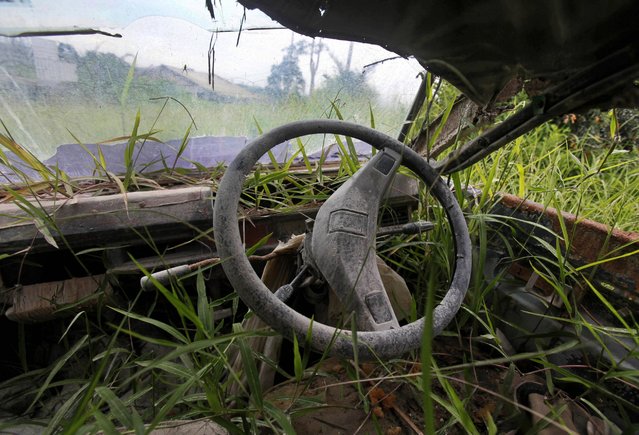
The wreckage of a van is overgrown by plants in Simacem village in North Sumatra, Indonesia, November 16, 2015. The village was abandoned following the eruption of Mount Sinabung as it was considered too close to the still rumbling volcano. (Photo by Binsar Bakkara/AP Photo)

The wreckage of a van is overgrown by plants in Simacem village in North Sumatra, Indonesia, November 16, 2015. The village was abandoned following the eruption of Mount Sinabung as it was considered too close to the still rumbling volcano. (Photo by Binsar Bakkara/AP Photo)
Details
11 Dec 2015 08:03:00
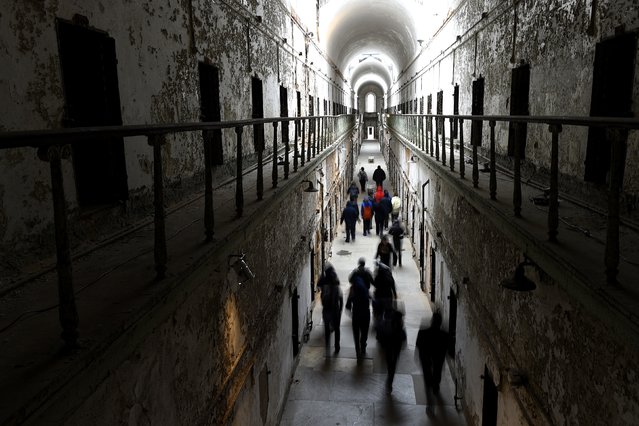
A tour group wanders through block 7 of Eastern State Penitentiary in Philadelphia, Pennsylvania April 30, 2014. Opened in 1829, with the original corrective system of “confinement in solitude with labor”, the penitentiary housed about 75,000 inmates in its 142 years of operation. At Eastern State reunions, former inmates, staff and guard gather to share memories and trade stories and get a chance to describe their experiences in question-and-answer sessions with the public. (Photo by Mark Makela/Reuters)

A tour group wanders through block 7 of Eastern State Penitentiary in Philadelphia, Pennsylvania April 30, 2014. Opened in 1829, with the original corrective system of “confinement in solitude with labor”, the penitentiary housed about 75,000 inmates in its 142 years of operation. At Eastern State reunions, former inmates, staff and guard gather to share memories and trade stories and get a chance to describe their experiences in question-and-answer sessions with the public. (Photo by Mark Makela/Reuters)
Details
07 May 2014 09:36:00
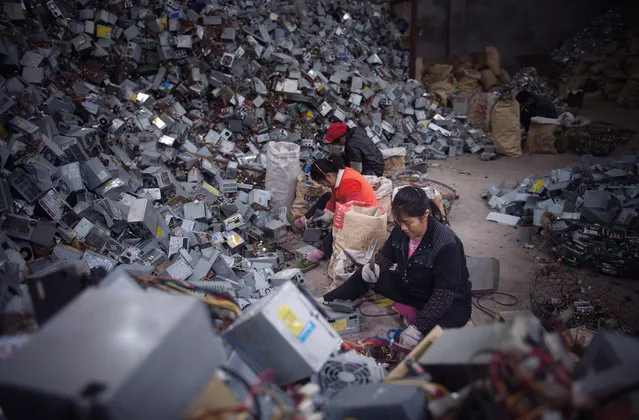
“The sustainable development goals cannot be met unless waste management is addressed as a priority”, says UK waste management charity Waste Aid. “E-waste is one of the fastest growing categories of the 7-10bn tonnes of waste produced globally every year”, adds director Mike Webster. “In our view, decent waste management is a basic right and we want governments around the world take this issue much more seriously – in 2012 only 0.2% of international aid went on improving solid waste management – it’s just not enough”. (Photo by Kai Loeffelbein/laif Agentur)

Sustainable development goal target 12.5 is to reduce waste. But with a planet increasingly dependent on technology, is that even possible? As of today, over 30m tonnes of electronic waste has been thrown out so far this year, according to the World Counts. Most e-waste is sent to landfills in Asia and Africa where it is recycled by hand, exposing the people who do it to environmental hazards. Kai Loeffelbein’s photographs of e-waste recycling in Guiyu, southern China show what happens to discarded computers. (Photo by Kai Loeffelbein/laif Agentur)
Details
19 Oct 2016 12:14:00