Loading...
Done
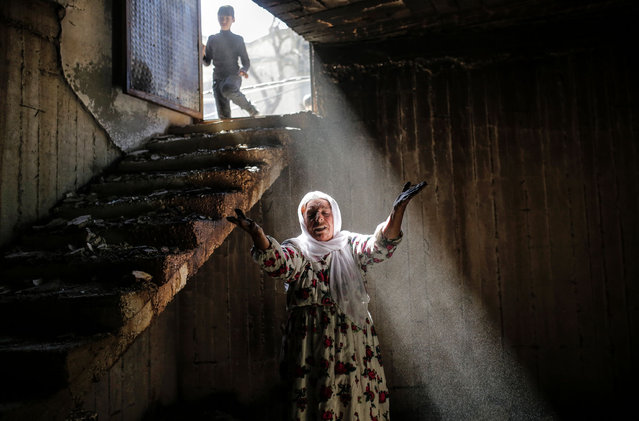
A woman reacts while walking among the ruins of damaged buildings following heavy fighting between government troops and Kurdish fighters, on March 2, 2016 in the southeastern Turkey Kurdish town of Cizre, near the border with Syria and Iraq. Thousands in Turkey's Kurdish-majority town of Cizre started returning to their homes today after authorities partially lifted a curfew in place since December for a controversial military operation to root out separatist rebels. (Photo by Yasin Akgül/AFP Photo)

A woman reacts while walking among the ruins of damaged buildings following heavy fighting between government troops and Kurdish fighters, on March 2, 2016 in the southeastern Turkey Kurdish town of Cizre, near the border with Syria and Iraq. Thousands in Turkey's Kurdish-majority town of Cizre started returning to their homes today after authorities partially lifted a curfew in place since December for a controversial military operation to root out separatist rebels. (Photo by Yasin Akgül/AFP Photo)
Details
03 Mar 2016 11:29:00
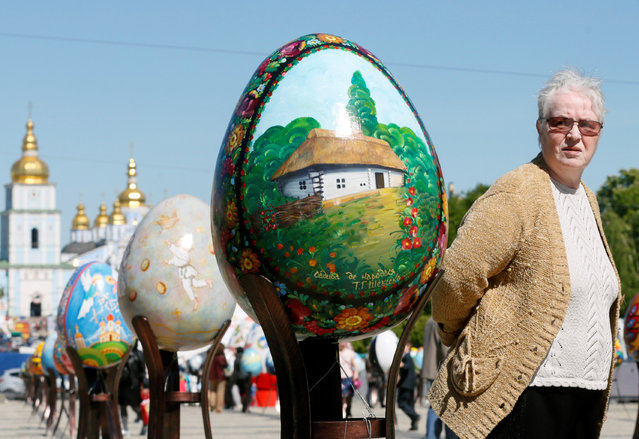
A woman looks at traditional Ukrainian Easter eggs “Pysanka”, installed as part of the upcoming celebrations of Easter, in central Kiev, Ukraine, April 29, 2016. A pysanka is a Ukrainian Easter egg, decorated with traditional Ukrainian folk designs using a wax-resist (batik) method. The word pysanka comes from the verb pysaty, “to write”, as the designs are not painted on, but written with beeswax. Many other eastern European ethnic groups decorate eggs using wax resist for Easter. These include the Belarusians, Bulgarians, Croats, Czechs, Hungarians, Lithuanians, Poles, Romanians, Serbs, Slovaks, Slovenes and Sorbs. (Photo by Valentyn Ogirenko/Reuters)

A woman looks at traditional Ukrainian Easter eggs “Pysanka”, installed as part of the upcoming celebrations of Easter, in central Kiev, Ukraine, April 29, 2016. A pysanka is a Ukrainian Easter egg, decorated with traditional Ukrainian folk designs using a wax-resist (batik) method. The word pysanka comes from the verb pysaty, “to write”, as the designs are not painted on, but written with beeswax. Many other eastern European ethnic groups decorate eggs using wax resist for Easter. These include the Belarusians, Bulgarians, Croats, Czechs, Hungarians, Lithuanians, Poles, Romanians, Serbs, Slovaks, Slovenes and Sorbs. (Photo by Valentyn Ogirenko/Reuters)
Details
30 Apr 2016 09:00:00
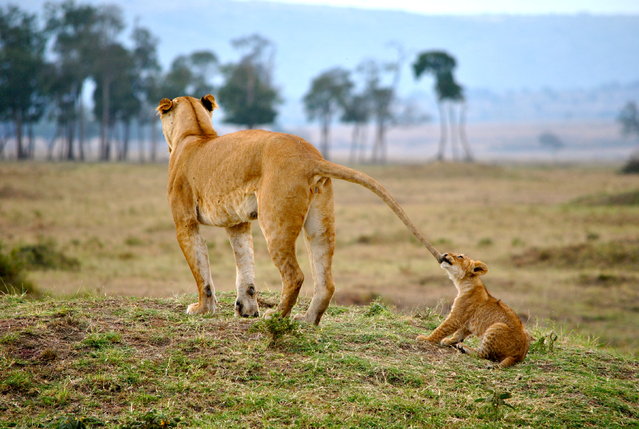
“A Mothers Tail”. A baby cub pulls on his mother's tail to get attention. Photo location: Masai Mara, Kenya. (Photo and caption by Tori Marsh/National Geographic Photo Contest)

“A Mothers Tail”. A baby cub pulls on his mother's tail to get attention. Photo location: Masai Mara, Kenya. (Photo and caption by Tori Marsh/National Geographic Photo Contest)
Details
21 Oct 2014 12:40:00
A man takes pictures at the finish line during the Colour Run at Centennial Park in Sydney August 25, 2013. According to organizers, 15,000 runners registered to complete the 5km (3 miles) course in Centennial Park on Sunday, being covered in blue, pink, orange and yellow powder on their way to the finish line. (Photo by Daniel Munoz/Reuters)

A man takes pictures at the finish line during the Colour Run at Centennial Park in Sydney August 25, 2013. According to organizers, 15,000 runners registered to complete the 5km (3 miles) course in Centennial Park on Sunday, being covered in blue, pink, orange and yellow powder on their way to the finish line. (Photo by Daniel Munoz/Reuters)
Details
27 Aug 2013 11:06:00
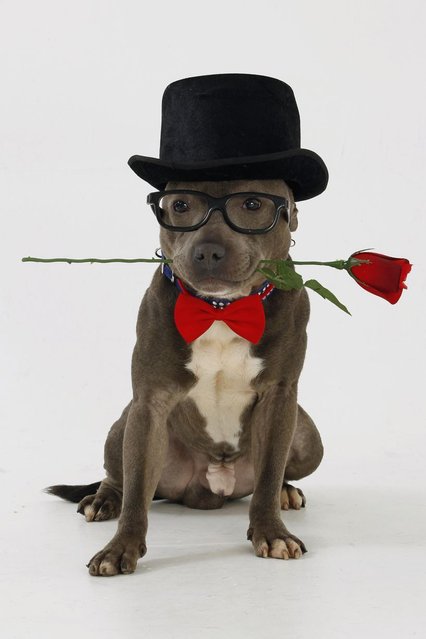
Bailey the Staffordshire bull terrier, holding a red rose. (Photo by Helen Yates/Barcroft Media)

“Like most Brits, Emmie Stevens is dog mad. But the 25-year-old has taken it to the next level, spending £30,000 on her nine pets. Emmie’s dogs enjoy regular manicures and fur dyes and have their own walk in wardrobe to store their £15,000 clothing collection”. – Daily Record. Photo: Bailey the Staffordshire bull terrier, holding a red rose. (Photo by Helen Yates/Barcroft Media)
Details
09 Mar 2014 04:45:00
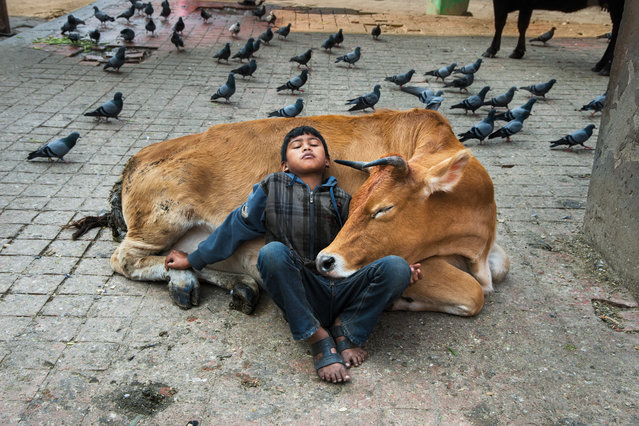
A boy rests against a cow, Kathmandu, Nepal, 2013. “Cows have been designated the national animal in Nepal. They roam freely, and are considered sacred by the 80% of Nepalis who are Hindu”. (Photo by Steve McCurry/The Guardian)

The legendary US photographer’s favourite shots of creatures and how they interact with humans feature in “Animals”, his latest book. Here: A boy rests against a cow, Kathmandu, Nepal, 2013. “Cows have been designated the national animal in Nepal. They roam freely, and are considered sacred by the 80% of Nepalis who are Hindu”. (Photo by Steve McCurry/The Guardian)
Details
07 Nov 2019 00:01:00
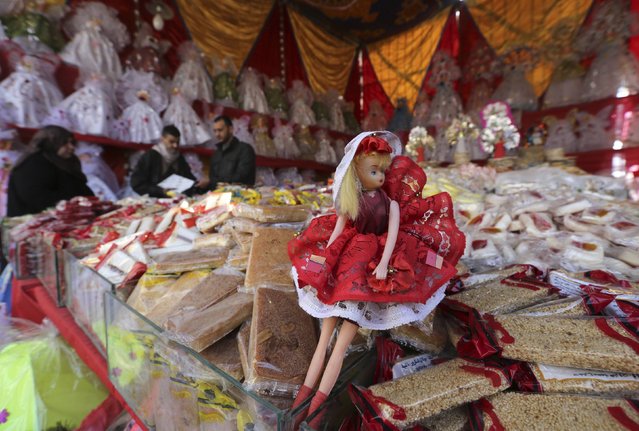
A man sells traditional doll toys and sweets for children to celebrate the birthday of prophet Muhammad, also known as “mawlid al nabi”, which will fall next week, in a makeshift tent in Cairo, December 30, 2014. (Photo by Mohamed Abd El Ghany/Reuters)

A man sells traditional doll toys and sweets for children to celebrate the birthday of prophet Muhammad, also known as “mawlid al nabi”, which will fall next week, in a makeshift tent in Cairo, December 30, 2014. (Photo by Mohamed Abd El Ghany/Reuters)
Details
31 Dec 2014 14:21:00
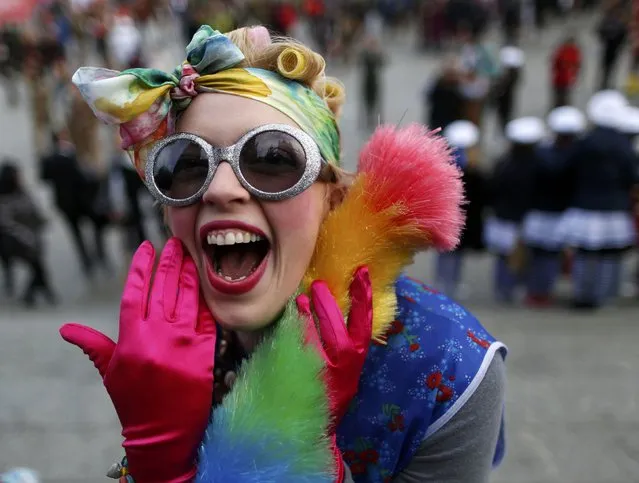
A woman dressed as a cleaning lady laughs during “Weiberfastnacht” (Women's Carnival) in Cologne February 12, 2015. (Photo by Ina Fassbender/Reuters)

A woman dressed as a cleaning lady laughs during “Weiberfastnacht” (Women's Carnival) in Cologne February 12, 2015. Women's Carnival marks the start of a week of street festivals, the highlight of the event being “Rosenmontag” (Rose Monday), the final day of the carnival where mass processions are held. (Photo by Ina Fassbender/Reuters)
Details
13 Feb 2015 13:22:00