Members of a cheerleading team warm- up during the Russian Cheerleading Championship of students in Moscow on November 20, 2016. (Photo by Natalia Kolesnikova/AFP Photo)
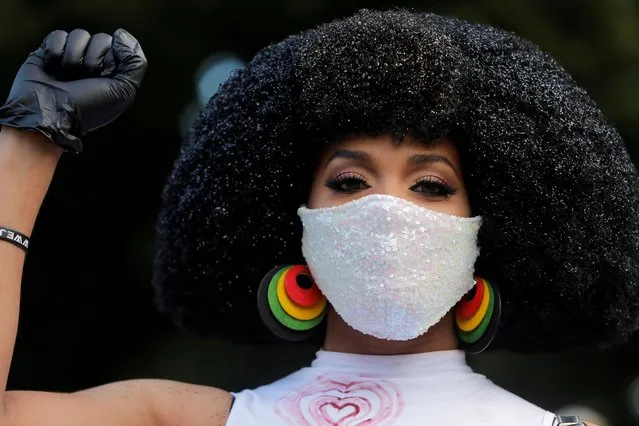
A woman raises her fist during events to mark Juneteenth, which commemorates the end of slavery in Texas, two years after the 1863 Emancipation Proclamation freed slaves elsewhere in the United States, amid nationwide protests against racial inequality, in the Harlem neighbourhood of Manhattan, in New York City, New York, June 19, 2020. (Photo by Andrew Kelly/Reuters)
Mother Nesrin Mehre, mourns near the body of Muhammad Mehre was killed in an Israeli attack on al-Nasr neighborhood in northwestern Gaza, on September 23, 2025. His body was taken from al-Shifa Hospital for burial. (Photo by Khames Alrefi/Anadolu via Getty Images)
A couple wearing protective masks take a picture of a rose on Valentine's Day in Kuala Lumpur, Malaysia on February 14, 2022. (Photo by Hasnoor Hussain/Reuters)
Supporters react as U.S. President Donald Trump walks from Marine One to the White House in Washington, U.S., October 3, 2019. (Photo by Tom Brenner/Reuters)
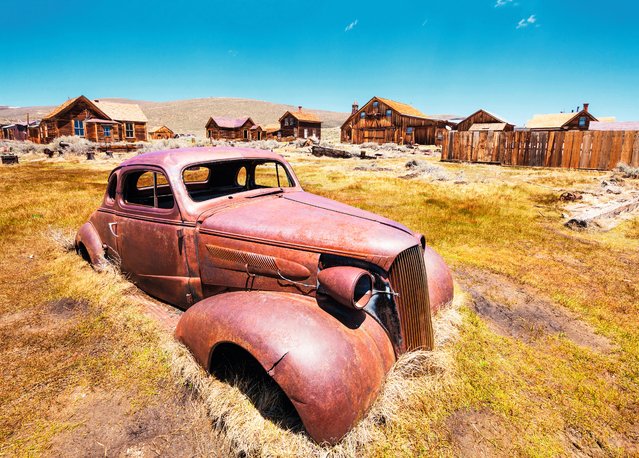
Kieron Connolly’s new book of photographs of more than 100 once-busy and often elegant buildings gives an idea of how the world might look if humankind disappeared. Here: Bodie, Mono County, California. Gold was discovered at Bodie in 1859 (just after the initial California gold rush) and it went from mining camp to boomtown. Its decline began in 1880, when word spread of new boomtowns elsewhere. The Standard Consolidated Mine closed in 1913, and four years later the Bodie Railway was abandoned. By 1940 the population was down to 40. Today, Bodie is maintained in a state of arrested decay as a visitor attraction. (Photo by Alamy Stock Photo)