Loading...
Done
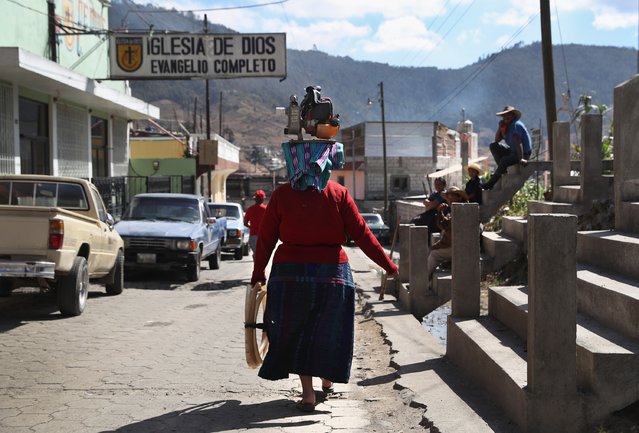
A woman carries a water pump to work on February 11, 2017 in Almolonga, Guatemala. (Photo by John Moore/Getty Images)

A woman carries a water pump to work on February 11, 2017 in Almolonga, Guatemala. The Mayan town in the western highlands district of Quetzaltenango has surged in prosperity in recent years with high-productivity vegetable farming, exporting much of its excess crops to neighborning El Salvador. (Photo by John Moore/Getty Images)
Details
25 Feb 2017 00:00:00


“Kumbh Mela is a mass Hindu pilgrimage in which Hindus gather at the Ganges river. The normal Kumbh Mela is celebrated every 3 years, the Ardh (half) Kumbh Mela is celebrated every six years at Haridwar and Prayag, the Purna (complete) Kumbh takes place every twelve years, at four places (Prayag (Allahabad), Haridwar, Ujjain, and Nashik). The Maha (great) Kumbh Mela which comes after 12 “Purna Kumbh Melas”, or 144 years, is held at Allahabad.

The last Ardh Kumbh Mela was held over a period of 45 days beginning in January 2007, more than 70 million Hindu pilgrims took part in the Ardh Kumbh Mela at Prayag, and on January 15, the most auspicious day of the festival of Makar Sankranti, more than 5 million participated. The previous Maha Kumbh Mela, held in 2001, was attended by around 60 million people, making it at the time the largest gathering anywhere in the world in recorded history”. – Wikipedia

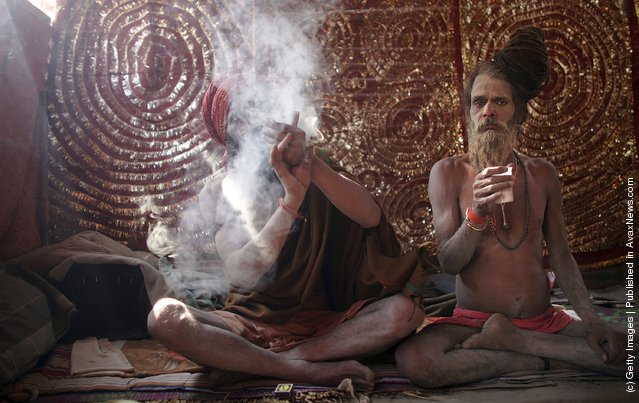
Photo: Sadhus (holy men) smoke at their camp near the ritual site at Sangam, the confluence of the Ganges, Yamuna and mythical Saraswati rivers during the Ardh Kumbh Mela festival (Half Pitcher festival) January 18, 2007 in Allahabad, India. Millions of Hindu pilgrims have flocked to the largest religious gathering in the world which lasts for 45 days in northern India. The festival commemorates the mythical conflict between gods and demons over a pitcher filled with the “nectar of immortality”. Devotees believe that taking a holy dip in the Ganges at this time washes away their sins and paves the path to salvation. (Photo by Mario Tama/Getty Images)

Details
30 Jun 2011 10:27:00


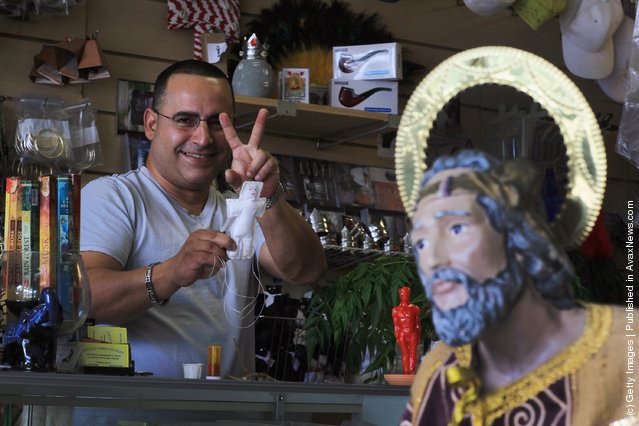
Nelson Hernandez flashes the victory sign as he shows off one of the voodoo dolls that he is selling at El Viejo Lazaro Botanica to try and help the Miami Heat fans root their team on against the Dallas Mavericks in the NBA finals on June 9, 2011 in Miami, Florida. The dolls made from cotton come in white or black and they are all the same size. The user of the doll must have the name of the player attached to the doll, which is filled with cotton, herbs, sticks and a special powder. (Photo by Joe Raedle/Getty Images)
Details
10 Jun 2011 08:42:00
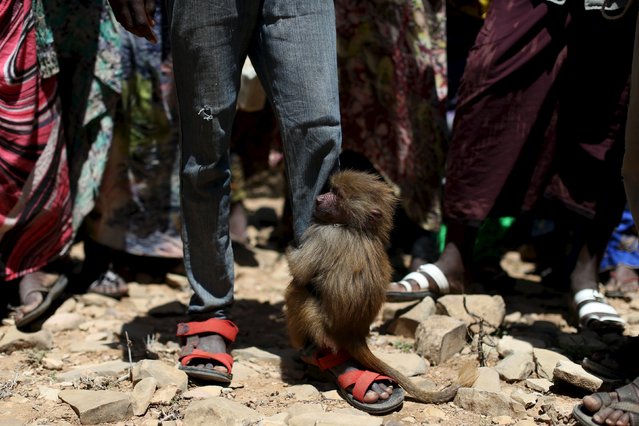
A baboon clings to the leg of an internally displaced boy at a camp on the outskirts of the town of Qol Ujeed, on the border with Ethiopia, Somaliland April 17, 2016. (Photo by Siegfried Modola/Reuters)

A baboon clings to the leg of an internally displaced boy at a camp on the outskirts of the town of Qol Ujeed, on the border with Ethiopia, Somaliland April 17, 2016. Across the Horn of Africa, millions have been hit by the severe El Nino-related drought. In Somaliland and its neighbouring, also semi-autonomous, Puntland region, 1.7 million people are in need of aid, according to the United Nations. In Somaliland itself, the most affected areas include the northwest Awdal region bordering Ethiopia. (Photo by Siegfried Modola/Reuters)
Details
29 Apr 2016 11:19:00
Pinky Ghelani and Suzzy Wokabi watch a TV broadcast of Britain's Prince Harry and Meghan Markle's royal wedding at the Windsor golf and country club in Nairobi, Kenya May 19, 2018. (Photo by Thomas Mukoya/Reuters)

Pinky Ghelani and Suzzy Wokabi watch a TV broadcast of Britain's Prince Harry and Meghan Markle's royal wedding at the Windsor golf and country club in Nairobi, Kenya May 19, 2018. (Photo by Thomas Mukoya/Reuters)
Details
20 May 2018 09:17:00
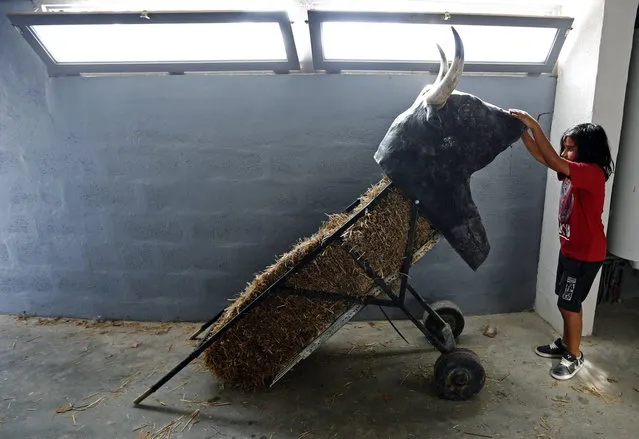
Nino, a ten-year-old toreador apprentice of the French Tauromachy Centre, nicknamed El Nino, touches a practice bull at the bullring of Garons, near Nimes, September 25, 2013. (Photo by Jean-Paul Pelissier/Reuters)

Nino, a ten-year-old toreador apprentice of the French Tauromachy Centre, nicknamed El Nino, touches a practice bull at the bullring of Garons, near Nimes, September 25, 2013. Since 1983, the French Tauromachy Centre in Nimes has trained some 1,000 youths in the art of bullfighting. Twenty of them have gone on to become professional matadors, facing fighting bulls in the arena. Twice a week, students take courses with a matador to learn the movements and gestures of the bullfighter in the ring, but without an animal present. Students train with calves in the surrounding fields during spring, and regularly participate in beginner's bullfights (becerradas) without killing calves. Solal has been taking courses for three years and Nino, for just a year now. Both are normally enrolled in French public schools, but have one thought in mind – bullfighting. They share a passion linked to the city of Nimes, famous for its ferias and bullring. (Photo by Jean-Paul Pelissier/Reuters)
Details
06 Nov 2013 10:12:00
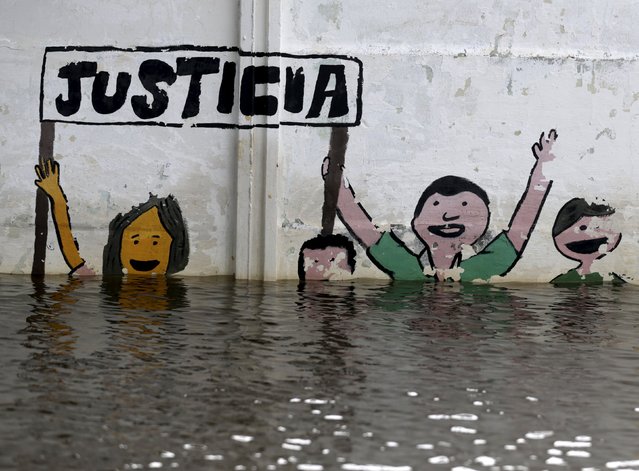
Graffiti saying “justice” partially seen above flood waters in Asuncion, December 27, 2015. (Photo by Jorge Adorno/Reuters)

Graffiti saying “justice” partially seen above flood waters in Asuncion, December 27, 2015. More than 100,000 people have had to evacuate from their homes in the bordering areas of Paraguay, Uruguay, Brazil and Argentina due to severe flooding in the wake of heavy summer rains brought on by El Nino, authorities said on Saturday. (Photo by Jorge Adorno/Reuters)
Details
29 Dec 2015 08:02:00
People take part in the “The Burial of the Sardine” funeral procession, which marks the end of carnival festivities, in Madrid, Spain, February 10, 2016. (Photo by Juan Medina/Reuters)

People take part in the “The Burial of the Sardine” funeral procession, which marks the end of carnival festivities, in Madrid, Spain, February 10, 2016. “Mourners” carry a coffin with a mock sardine through the streets to celebrate the countdown to Lent. Spanish painter Francisco de Goya's painting “El entierro de la sardina” (The Burial of the Sardine) was inspired by this tradition, which started in Madrid in the 18th century, around the time of Spanish King Carlos III. (Photo by Juan Medina/Reuters)
Details
11 Feb 2016 12:29:00