Loading...
Done
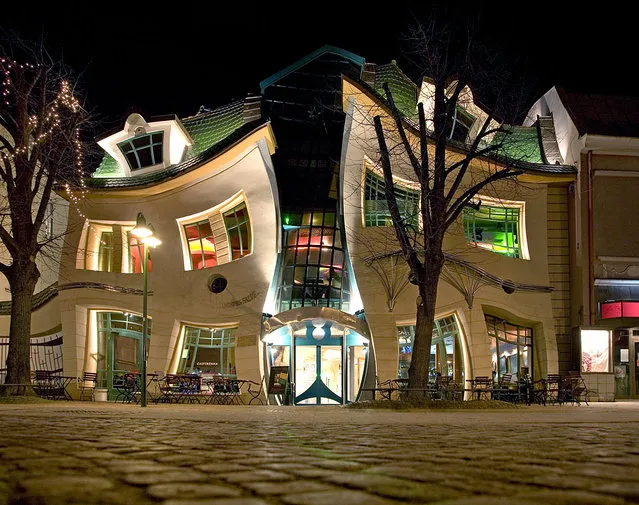
Crooked House


The Krzywy Domek is an irregularly-shaped building in Sopot, Poland. Its name translates in to English as the Crooked House. The Krzywy Domek was built in 2004. It is approximately 4,000 square meters in size and is part of the Rezydent shopping center. It was designed by Szotyńscy & Zaleski who were inspired by the fairytale illustrations and drawings of Jan Marcin Szancer and Per Dahlberg. It can be entered from either Monte Cassino or Morska Streets.
Details
29 Jun 2012 12:00:00
Blue Dragon

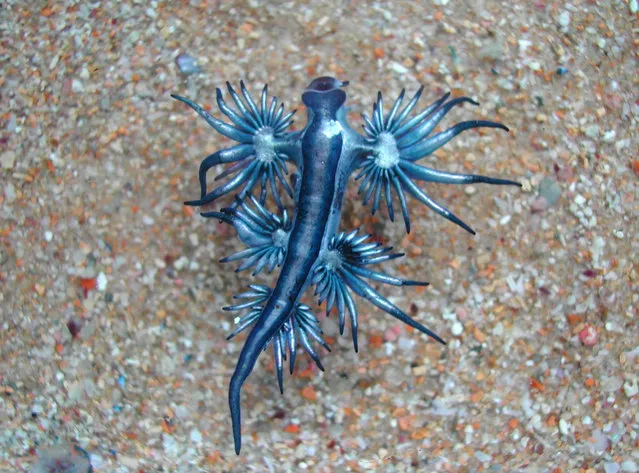
Glaucus atlanticus (common names sea swallow, blue glaucus, blue sea slug and blue ocean slug) is a species of small-sized blue sea slug, a pelagic aeolid nudibranch, a marine gastropod mollusk in the family Glaucidae. This is the only species in the genus Glaucus, but is closely related to Glaucilla marginata, which sometimes is included in Glaucus.
Details
12 Sep 2012 08:21:00
Lawn Mower Endurance Race

Competitors in action during a qualifying heat for the 12 hour Lawn Mower Endurance Race on September 24, 2011 in Billingshurst, England. First started in 1973 as a motorsport that would be accessible to as many as possible, there is little commercialism or sponsorship, no cash prizes and no modifying of engines. The trophies are donated from various sources with famous names such as Sir Stirling Moss found engraved on the plaques from previous races. (Photo by Matthew Lloyd/Getty Images)
Details
25 Sep 2011 11:45:00
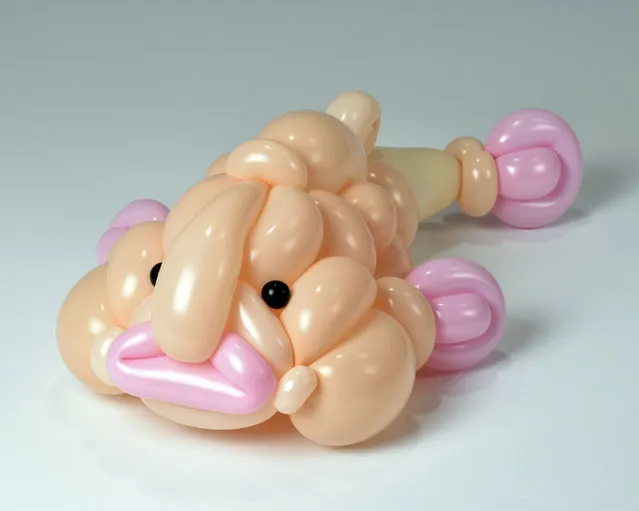
Blobfish by Masayoshi Matsumoto. (Photo by Masayoshi Matsumoto/Caters News Agency)

A Japanese artist is making a name for himself by creating animal sculptures out of balloons. Masayoshi Matsumoto, 29, has thus far created a wide range of intricate figures from the animal kingdom. Here: Blobfish by Masayoshi Matsumoto. (Photo by Masayoshi Matsumoto/Caters News Agency)
Details
01 Oct 2019 00:03:00
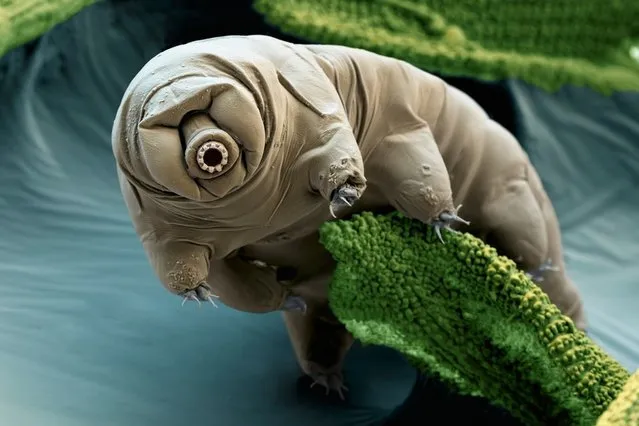
Tardigrades (commonly known as waterbears or moss piglets). (Photo by SPL/East News)

“Tardigrades (commonly known as waterbears or moss piglets) are small, water-dwelling, segmented animals with eight legs. Tardigrades were first discovered in 1773 by Johann August Ephraim Goeze, who called them kleiner Wasserbär, meaning “little water bear” in German. The name Tardigrada means “slow walker” and was given by Lazzaro Spallanzani in 1777. The name water bear comes from the way they walk, reminiscent of a bear's gait. The biggest adults may reach a body length of 1.5 millimetres (0.059 in), the smallest below 0.1 mm. Freshly hatched tardigrades may be smaller than 0.05 mm”. – Wikipedia. Photo: Tardigrades. (Photo by SPL/East News)
Details
26 Sep 2012 09:55:00


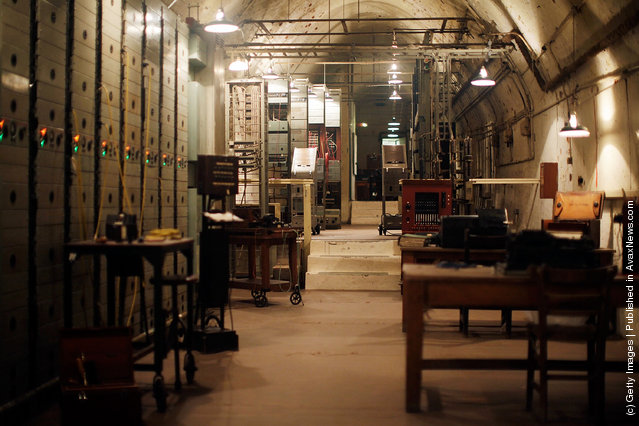
“Dover Castle is a medieval castle in the town of the same name in the English county of Kent. It was founded in the 12th century and has been described as the “Key to England” due to its defensive significance throughout history. It is the largest castle in England.

The outbreak of the Second World War in 1939 saw the tunnels converted first into an air-raid shelter and then later into a military command centre and underground hospital. In May 1940, Admiral Sir Bertram Ramsey directed the evacuation of French and British soldiers from Dunkirk, code-named Operation Dynamo, from his headquarters in the cliff tunnels”. – Wikipedia

Photo: The Repeater Station in the subterranean tunnels underneath Dover Castle, which has been restored by English Heritage for a public exhibition on June 3, 2011 in Dover, England. The evacuation of allied soldiers from Dunkirk was masterminded and co-ordinated from the secret command and control centre in the tunnels deep below the castle. (Photo by Matthew Lloyd/Getty Images)
Details
07 Jun 2011 09:26:00
Baby Fennec Fox

“The fennec fox is a small nocturnal fox found in the Sahara of North Africa. Its most distinctive feature is unusually large ears. The name “fennec” comes from the Arabic word for fox, and the species name zerda has a Greek origin that refers to its habitat. The fennec is the smallest species of canid in the world; coat, ears and kidney functions have adapted to a high-temperature, low-water, desert environment. In addition, its hearing is sensitive enough to hear prey moving underground”. – Wikipedia

Photo: A Baby Fennec is seen at Sunshine International Aquarium on June 24, 2009 in Tokyo, Japan. The small nocturnal fox babies were born on May 17 2009. (Photo by Junko Kimura/Getty Images)
Details
16 Sep 2011 12:02:00
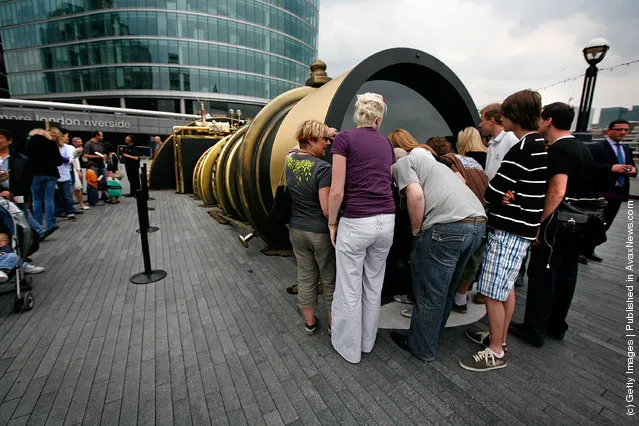
Telectroscope

“The telectroscope (also referred to as “electroscope”) was the first non-working prototype (i.e. conceptual model) of a television or videophone system. The term was used in the 19th century to describe science-based systems of distant seeing. The name and its concept came into being not long after the telephone was patented in 1876, and its original concept evolved from that of remote facsimile reproductions onto paper, into the live viewing of remote images”. – Wikipedia

Photo: Visitors to London wave to people they can see in New York as they peer through the Telectroscope situated by Tower Bridge on May 23, 2008 in London, England. The device named the Telectroscope provides a live visual link up between London and New York, to another Telectroscope by Brooklyn Bridge. (Photo by Cate Gillon/Getty Images)
Details
16 Sep 2011 12:19:00