Loading...
Done
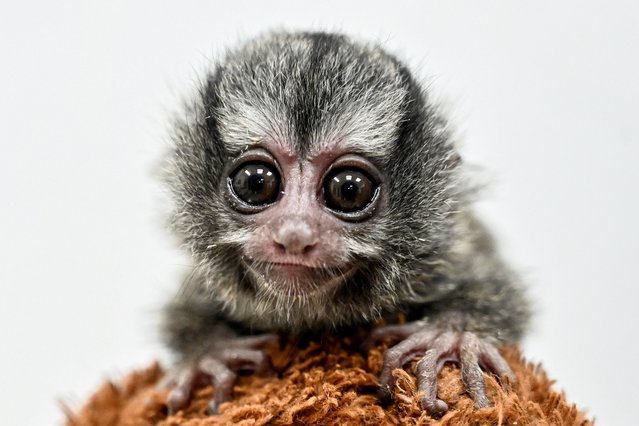
A grey-bellied Night Monkey (Aotus Lemurinus) plays with a teddy bear at the veterinary clinic of the Cali Zoo in Cali, Colombia on January 27, 2020. They monkey is being raised by personnel of the Cali Zoo after a worker found it near the complex. Apparently it fall from a tree with his father who had health problems. (Photo by Luis Robayo/AFP Photo)

A grey-bellied Night Monkey (Aotus Lemurinus) plays with a teddy bear at the veterinary clinic of the Cali Zoo in Cali, Colombia on January 27, 2020. They monkey is being raised by personnel of the Cali Zoo after a worker found it near the complex. Apparently it fall from a tree with his father who had health problems. (Photo by Luis Robayo/AFP Photo)
Details
02 Feb 2020 00:03:00
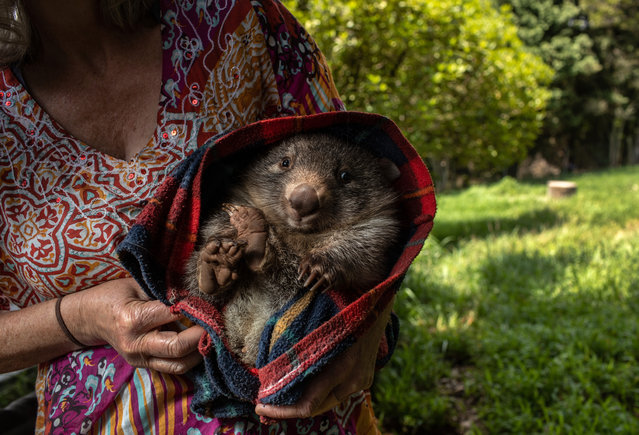
A wildlife caregiver holds an orphaned wombat at the Native Wildlife Rescue center on January 29, 2020 in Robertson, Australia. The center has taken in many burned kangaroos and wallabies injured in recent bushfires. Wombat orphans are often rescued from the pouch of their mothers struck by vehicles. (Photo by John Moore/Getty Images)

A wildlife caregiver holds an orphaned wombat at the Native Wildlife Rescue center on January 29, 2020 in Robertson, Australia. The center has taken in many burned kangaroos and wallabies injured in recent bushfires. Wombat orphans are often rescued from the pouch of their mothers struck by vehicles. (Photo by John Moore/Getty Images)
Details
16 Feb 2020 00:03:00
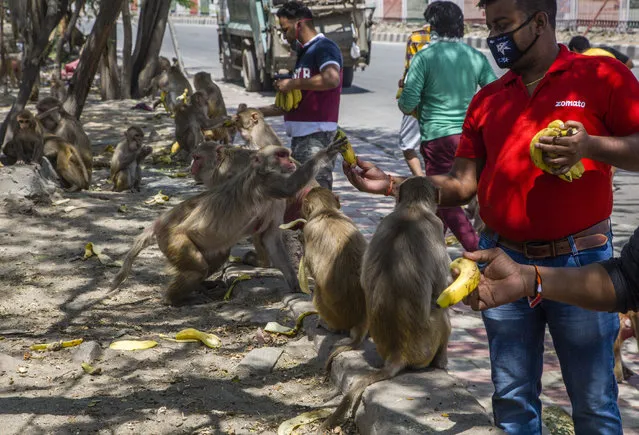
Men give bananas to monkeys gathered on the side of the road as India remains under an unprecedented lockdown over the highly contagious coronavirus (COVID-19) on April 08, 2020 in New Delhi, India. Wild animals, including monkeys, are roaming human settlements in India as people are staying indoors due to the 21-day lockdown. With India's 1.3 billion population and tens of millions of cars off the roads, wildlife is moving towards areas inhabited by humans. Wild animals in many countries have been seen roaming streets. A study says some 60 percent of the new diseases found around the globe every year are zoonotic, meaning they originate in animals and are passed on to humans. COVID-19 is a zoonotic disease that is suspected to have come from the wet markets of Wuhan, China. (Photo by Yawar Nazir/Getty Images)

Men give bananas to monkeys gathered on the side of the road as India remains under an unprecedented lockdown over the highly contagious coronavirus (COVID-19) on April 08, 2020 in New Delhi, India. Wild animals, including monkeys, are roaming human settlements in India as people are staying indoors due to the 21-day lockdown. (Photo by Yawar Nazir/Getty Images)
Details
12 Apr 2020 00:05:00
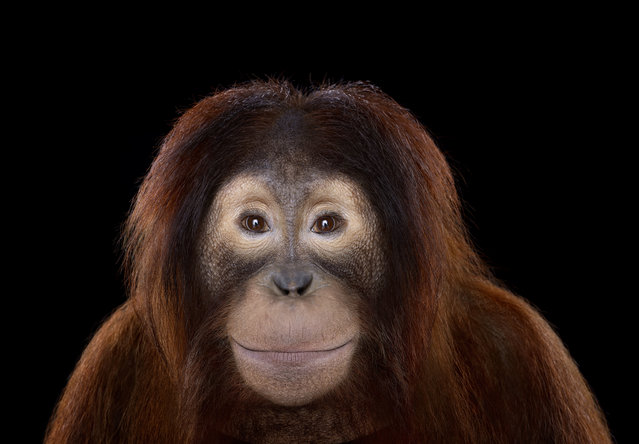
A talented portrait photographer has moved on from capturing traditional human subjects – instead photographing a stunning variety of wild animals. Brad Wilson, 51, stands just feet away from the likes of tigers, rhinos, elephants and primates. Each animal is given the same respect and dignity as any human subject, with Brad setting up a full photographic studio, either at or near sanctuaries and zoos across the U.S. (Photo by Brad Wilson/Caters News)

A talented portrait photographer has moved on from capturing traditional human subjects – instead photographing a stunning variety of wild animals. Brad Wilson, 51, stands just feet away from the likes of tigers, rhinos, elephants and primates. Each animal is given the same respect and dignity as any human subject, with Brad setting up a full photographic studio, either at or near sanctuaries and zoos across the U.S. The works are the second part of Brad's Affinity series, which the photographer – based in Los Angeles, California, first started working on in 2010. Here: Orangutan. (Photo by Brad Wilson/Caters News)
Details
16 Sep 2015 14:53:00
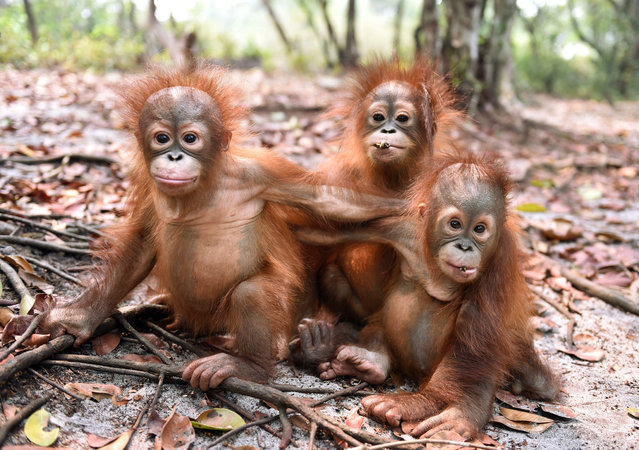
This handout picture taken and released by the Borneo Orangutan Survival Foundation (BOSF) on October 26, 2015 shows baby orangutans, which had previously suffered from respiratory problems, playing at a nursery in the rehabilitation centre operated by the BOSF on the outskirts of Palangkaraya in Central Kalimantan. (Photo by AFP Photo/Borneo Orangutan Survival Foundation/Indrayana)

This handout picture taken and released by the Borneo Orangutan Survival Foundation (BOSF) on October 26, 2015 shows baby orangutans, which had previously suffered from respiratory problems, playing at a nursery in the rehabilitation centre operated by the BOSF on the outskirts of Palangkaraya in Central Kalimantan. Endangered orangutans are falling victim to a devastating haze crisis that has left them sick, malnourished and severely traumatised as fires rage through Indonesia's forests, reducing their habitat to a charred wasteland. (Photo by AFP Photo/Borneo Orangutan Survival Foundation/Indrayana)
Details
02 Nov 2015 08:05:00
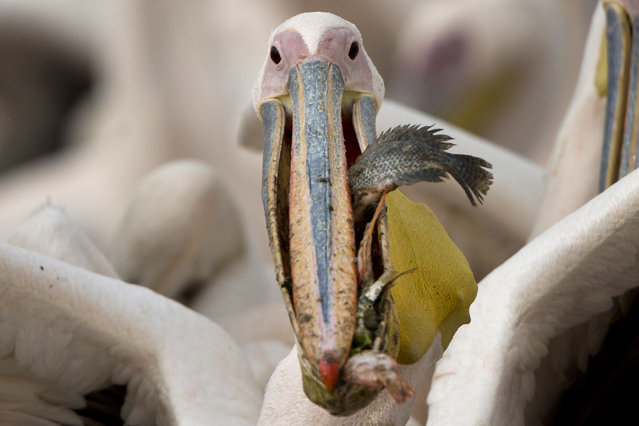
A Great White Pelicans eats fish in the Mishmar HaSharon reservoir, Israel, Wednesday, November 4, 2015. Thousands of Pelicans stop in the reservoir for food provided by the Israeli nature reserves authority as they make their way to Africa. (Photo by Ariel Schalit/AP Photo)

A Great White Pelicans eats fish in the Mishmar HaSharon reservoir, Israel, Wednesday, November 4, 2015. Thousands of Pelicans stop in the reservoir for food provided by the Israeli nature reserves authority as they make their way to Africa. (Photo by Ariel Schalit/AP Photo)
Details
11 Nov 2015 08:04:00
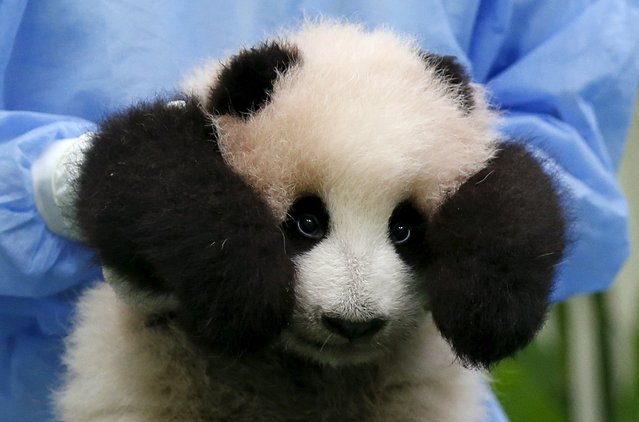
A zoo employee carries three-month-old female giant panda cub, born to mother Liang Liang  and father Xing Xing, on display to the public for the first time at the national zoo in Kuala Lumpur, Malaysia, November 17, 2015. (Photo by Olivia Harris/Reuters)

A zoo employee carries three-month-old female giant panda cub, born to mother Liang Liang and father Xing Xing, on display to the public for the first time at the national zoo in Kuala Lumpur, Malaysia, November 17, 2015. (Photo by Olivia Harris/Reuters)
Details
20 Nov 2015 08:06:00
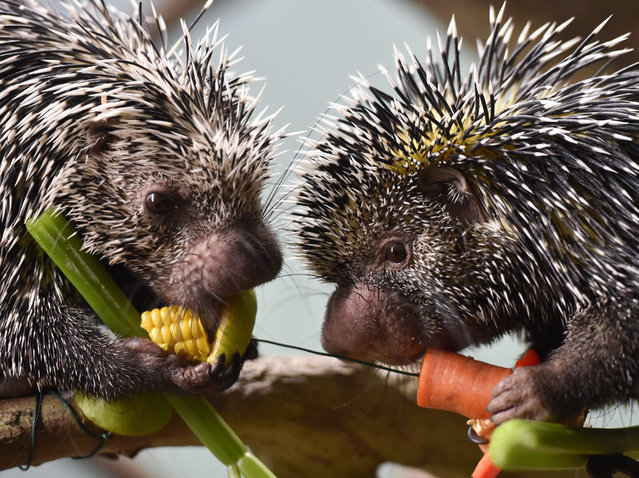
The coendou porcupine couple 'Joppi' (L) and 'Fletcher' nibble at a vegetables in their enclosure at the zoo in Frankfurt am Main, Germany, 03 December 2015. Coendou porcupines are nocturnal rodents related to porcupines and guinea pigs and native to the rain forests of Central and South America as well as Trinidad. (Photo by Arne Dedert/EPA)

The coendou porcupine couple 'Joppi' (L) and 'Fletcher' nibble at a vegetables in their enclosure at the zoo in Frankfurt am Main, Germany, 03 December 2015. Coendou porcupines are nocturnal rodents related to porcupines and guinea pigs and native to the rain forests of Central and South America as well as Trinidad. (Photo by Arne Dedert/EPA)
Details
05 Dec 2015 08:03:00