Loading...
Done
Takeoka Chisaka, Hiroshima, Japan. “One morning in August 1945, I was walking home from the night shift at a factory in Hiroshima. As I reached my door, there was a huge explosion. When I came to, my head was bleeding and I had been blasted 30m away”. (Photo and caption by Sasha Maslov)

Takeoka Chisaka, Hiroshima, Japan. “One morning in August 1945, I was walking home from the night shift at a factory in Hiroshima. As I reached my door, there was a huge explosion. When I came to, my head was bleeding and I had been blasted 30m away. The atomic bomb had detonated. When I found my mother, her eyes were badly burned. A doctor said they had to come out, but he didn’t have the proper tools so used a knife instead. It was hellish. I became a peace-worker after the war. In the 1960s, at a meeting at the UN, I met one of the people who created the atomic bomb. He apologised”. (Photo and caption by Sasha Maslov)
Details
11 May 2015 11:56:00


Indian ivory furniture legs in the shape of a goddess from the first century AD are displayed in the 'Afghanistan Crossroads of the Ancient World' exhibition at The British Museum on March 1, 2011 in London, England. Displaying treasures that were in great danger during the years of civil war and Taliban rule, these surviving artifacts reveal Afghanistan's ancient culture, its fragility and its remarkable place in world history. The exhibition opens to the public on March 3 and runs until July 3, 2011. (Photo by Peter Macdiarmid/Getty Images). LONDON, ENGLAND – MARCH 01
Details
07 Mar 2011 14:39:00


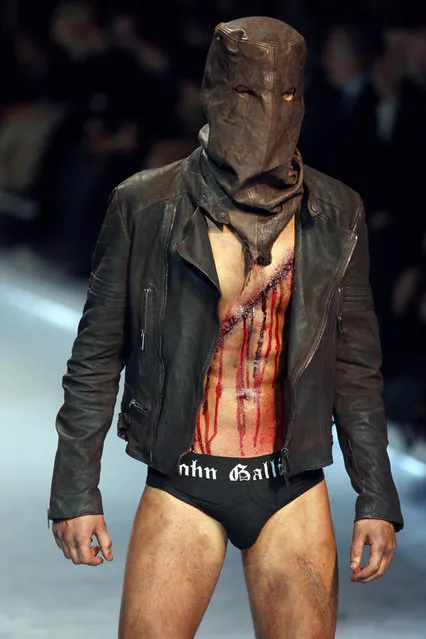
Fashion designer John Galliano brought another batch of his Mad Max-inspired fashion to the Ready-To-Wear show in Paris today. You have the bloody chiseled bodies, the bizarre headgear and the decorative nooses. Maybe fetishizing the collapse of civilization is one step towards making peace with it? Or maybe it's just a weird run-off from our current end-of-days obsession. Either way, enjoy our gallery of buff men in survivalist rags.
Details
28 Mar 2013 10:47:00
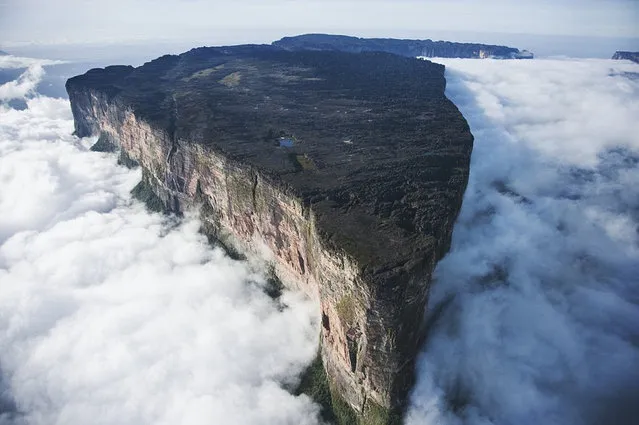
Mount Roraima

Mount Roraima (Spanish: Monte Roraima, also known as Tepuy Roraima and Cerro Roraima; Portuguese: Monte Roraima [ˈmõtʃi ʁoˈɾajmɐ]) is the highest of the Pakaraima chain of tepui plateau in South America. First described by the English explorer Sir Walter Raleigh in 1596, its 31 km2 summit area is defended by 400-metre-tall cliffs on all sides. The mountain includes the triple border point of Venezuela, Brazil and Guyana.
Details
11 Sep 2012 08:04:00
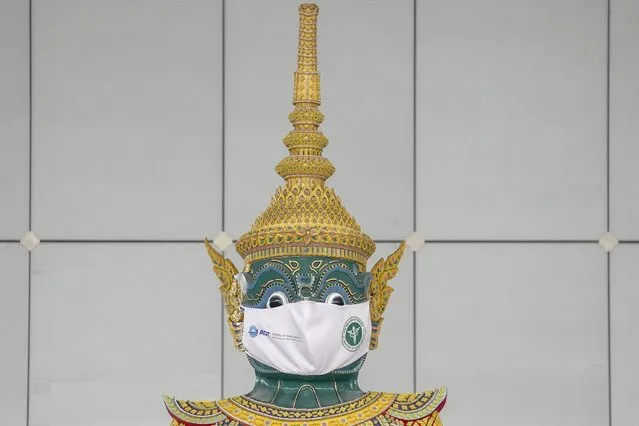
A giant classic Hindu Ramayana statue dons a face mask to remind passengers to keep to coronavirus precautions at the Suvarnabhumi airport in Bangkok, Thailand, Wednesday, July 21, 2021. The Civil Aviation Authority of Thailand has ordered a halt to all domestic flights operating from the most severely affected provinces effective Wednesday. Exceptions are allowed for flights to destinations that are part of a plan that allows vaccinated travelers from abroad to stay for two weeks on popular islands such as Phuket and Samui without quarantine confinement. (Photo by Sakchai Lalit/AP Photo)

A giant classic Hindu Ramayana statue dons a face mask to remind passengers to keep to coronavirus precautions at the Suvarnabhumi airport in Bangkok, Thailand, Wednesday, July 21, 2021. The Civil Aviation Authority of Thailand has ordered a halt to all domestic flights operating from the most severely affected provinces effective Wednesday. Exceptions are allowed for flights to destinations that are part of a plan that allows vaccinated travelers from abroad to stay for two weeks on popular islands such as Phuket and Samui without quarantine confinement. (Photo by Sakchai Lalit/AP Photo)
Details
20 Aug 2021 08:37:00
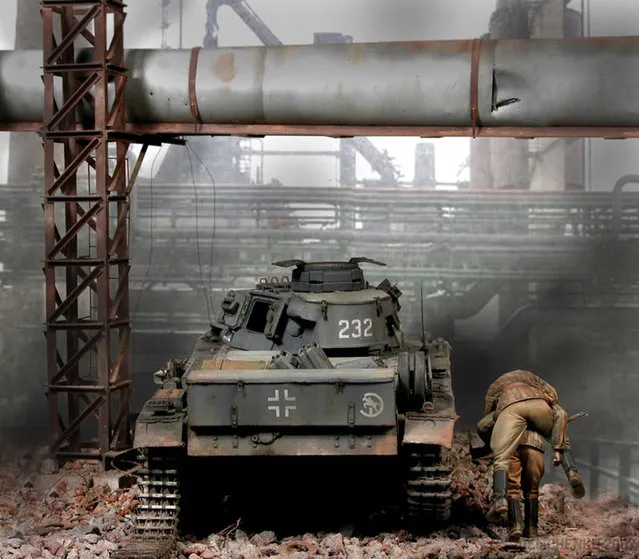
Diorama of the Battle of Stalingrad By Vladimir Demchenko

The Battle of Stalingrad was a major and decisive battle of World War II in which Nazi Germany and its allies fought the Soviet Union for control of the city of Stalingrad (now Volgograd) in the southwestern Soviet Union.
Details
16 Apr 2013 14:09:00
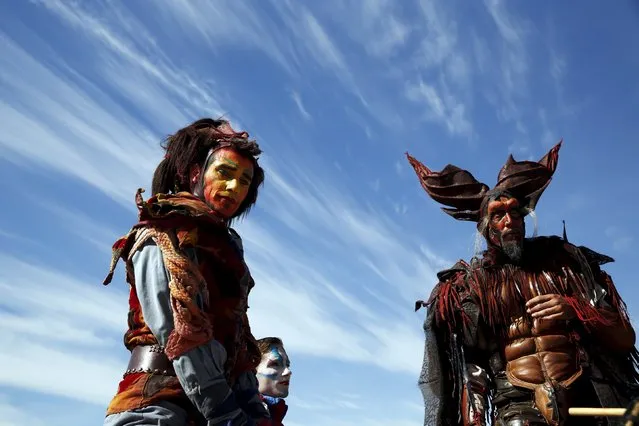
Performers take part in a parade during the annual Cervantes market (Mercado Cervantino) in the hometown of famous Spanish writer Miguel de Cervantes, Alcala de Henares, Spain, October 9, 2015. (Photo by Susana Vera/Reuters)

Performers take part in a parade during the annual Cervantes market (Mercado Cervantino) in the hometown of famous Spanish writer Miguel de Cervantes, Alcala de Henares, Spain, October 9, 2015. The Mercado Cervantino, which represents a market and fair from the 16th and 17th centuries, takes place in the city's historic centre and commemorates Miguel de Cervantes' baptism, which took place on October 9, 1547. (Photo by Susana Vera/Reuters)
Details
13 Oct 2015 08:06:00
People take part in the “The Burial of the Sardine” funeral procession, which marks the end of carnival festivities, in Madrid, Spain, February 10, 2016. (Photo by Juan Medina/Reuters)

People take part in the “The Burial of the Sardine” funeral procession, which marks the end of carnival festivities, in Madrid, Spain, February 10, 2016. “Mourners” carry a coffin with a mock sardine through the streets to celebrate the countdown to Lent. Spanish painter Francisco de Goya's painting “El entierro de la sardina” (The Burial of the Sardine) was inspired by this tradition, which started in Madrid in the 18th century, around the time of Spanish King Carlos III. (Photo by Juan Medina/Reuters)
Details
11 Feb 2016 12:29:00