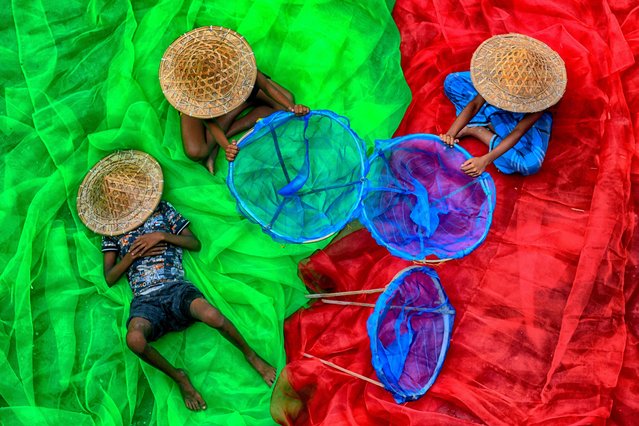
Fishermen repair brightly coloured nets before their next trip to the River Matla in West Bengal, India in the last decade of July 2025. (Photo by Avishek Das/Solent News & Photo Agency)
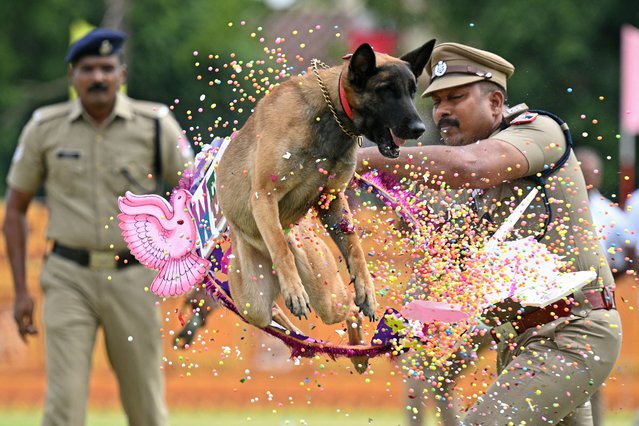
India's Railway Protection Force (RPF) personnel assists a dog to perform a stunt during the celebrations to mark country's Independence Day, in Chennai on August 15, 2025. (Photo by R.Satish Babu/AFP Photo)
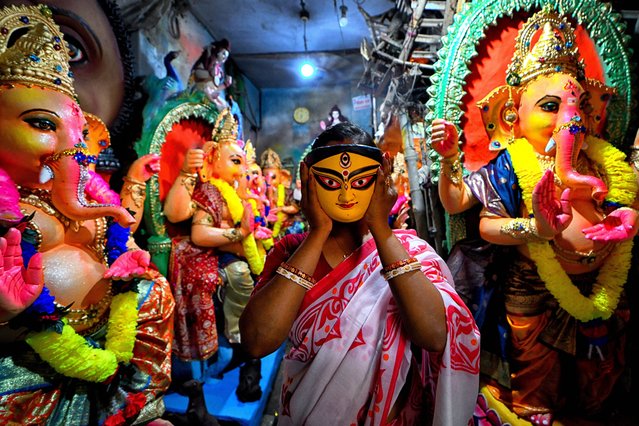
A model, Mousumi Das wearing a traditional Indian saree and holding a Clay face of the Durga idol poses for an Agomoni Concept photoshoot at the Artist hub Kumortuli in Kolkata on August 23, 2025. (Photo by ZUMAPRESS.com/The Mega Agency)
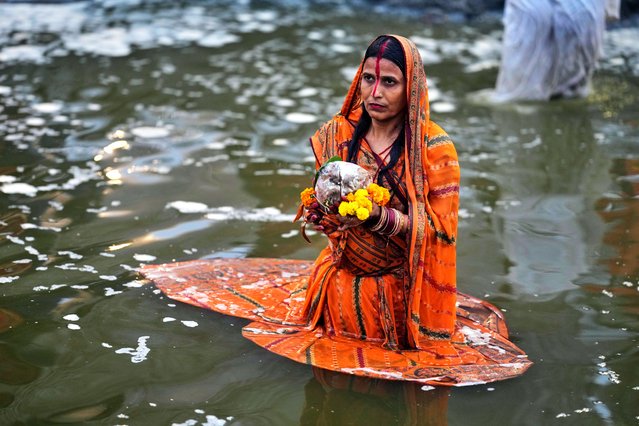
A devotee prays to the sun standing from the banks of the river Yamuna during the Chhath festival, which is celebrated for the well-being and prosperity of one's family, in New Delhi, India, Monday, October 27, 2025. (Photo by Manish Swarup/AP Photo)
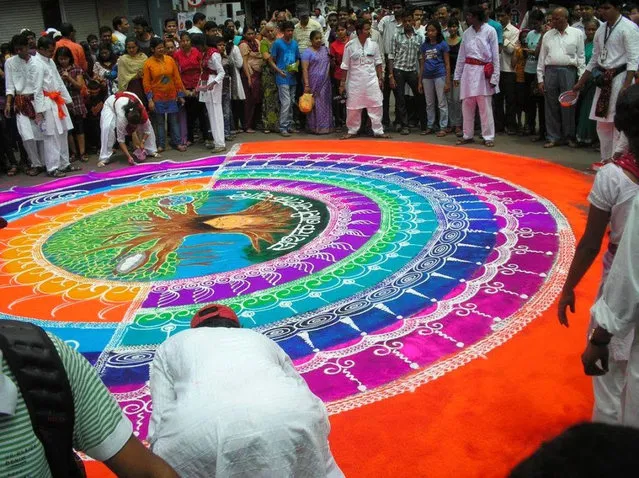
Rangoli, also known as kolam or Muggu, is a folk art from India in which patterns are created on the floor in living rooms or courtyards using materials such as colored rice, dry flour, colored sand or flower petals. It is usually made during Diwali, Onam, Pongal and other Indian festivals. They are meant to be sacred welcoming areas for the Hindu deities. The ancient symbols have been passed down through the ages, from each generation to the next, keeping both the art form and the tradition alive. Similar practices are followed in different Indian states: in Tamil Nadu, there is Kolam in Tamil Nadu; Mandana in Rajasthan; Chaookpurna in Chhattisgarh; Alpana in West Bengal; Aripana in Bihar; Chowk pujan in Uttar Pradesh; Muggu in Andhra Pradesh and others.