Loading...
Done
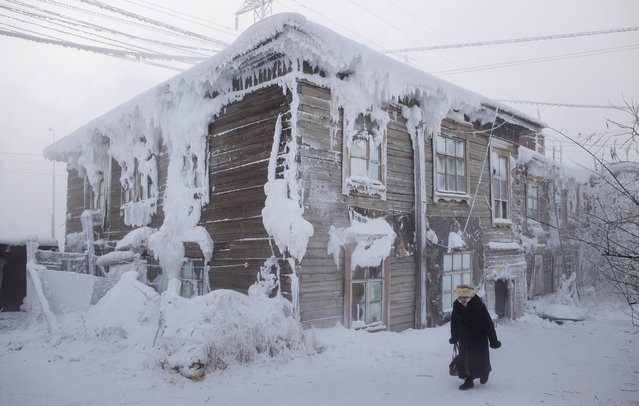
Yakutsk, with a population of around 270,000, holds its own title: that of the coldest city on Earth. Here: Frost-encrusted house in the city centre. (Photo by Amos Chapple/Courtesy Images/RFE/RL)

Yakutsk, with a population of around 270,000, holds its own title: that of the coldest city on Earth. Here: Frost-encrusted house in the city centre. (Photo by Amos Chapple/Courtesy Images/RFE/RL)
Details
23 Jan 2018 06:52:00
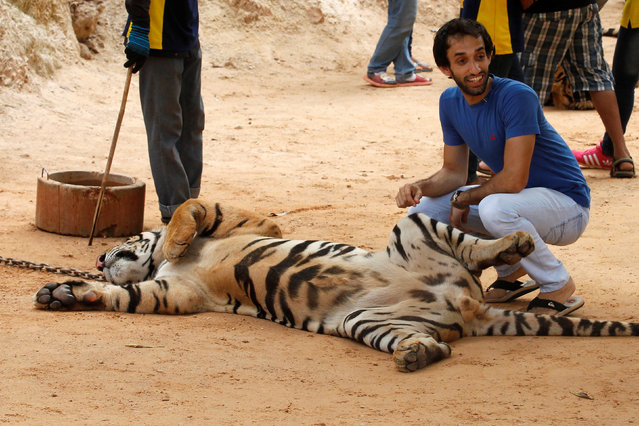
A tourist poses next to a tiger before officials start moving tigers from Thailand's controversial Tiger Temple, a popular tourist destination which has come under fire in recent years over the welfare of its big cats in Kanchanaburi province, west of Bangkok, Thailand, May 30, 2016. (Photo by Chaiwat Subprasom/Reuters)

A tourist poses next to a tiger before officials start moving tigers from Thailand's controversial Tiger Temple, a popular tourist destination which has come under fire in recent years over the welfare of its big cats in Kanchanaburi province, west of Bangkok, Thailand, May 30, 2016. Wildlife authorities raid a Buddhist temple that has more than 100 tigers, taking away three cats and vowing to confiscate scores more in response to global pressure over wildlife trafficking. (Photo by Chaiwat Subprasom/Reuters)
Details
31 May 2016 11:51:00
A Cavalier King Charles Spaniel competes in the  Masters Agility Championship Finals competition during the 141st Westminster Kennel Club Dog Show in New York City, U.S. February 11, 2017. (Photo by Brendan McDermid/Reuters)

A Cavalier King Charles Spaniel competes in the Masters Agility Championship Finals competition during the 141st Westminster Kennel Club Dog Show in New York City, U.S. February 11, 2017. (Photo by Brendan McDermid/Reuters)
Details
14 Feb 2017 00:05:00
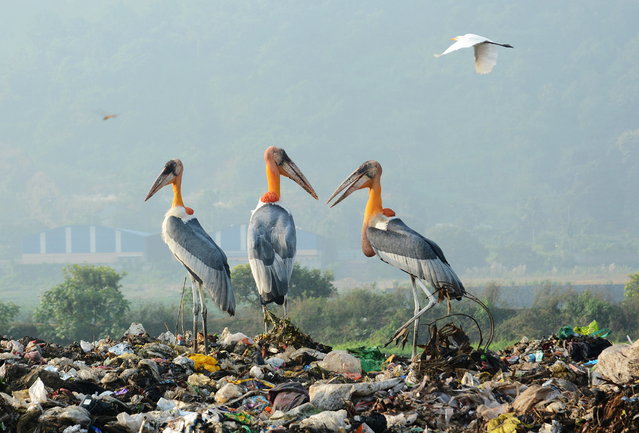
A flock of Adjutants storks sit on a garbage dump at Borgaon in Guwahati, Assam, India, 17 October 2019. Wildlife activists and environmentalists have protested in the past for shifting the garbage dump to another site since it is situated near the Deepor Beel Bird Sanctuary. (Photo by EPA/EFE/Stringer)

A flock of Adjutants storks sit on a garbage dump at Borgaon in Guwahati, Assam, India, 17 October 2019. Wildlife activists and environmentalists have protested in the past for shifting the garbage dump to another site since it is situated near the Deepor Beel Bird Sanctuary. (Photo by EPA/EFE/Stringer)
Details
20 Oct 2019 00:03:00
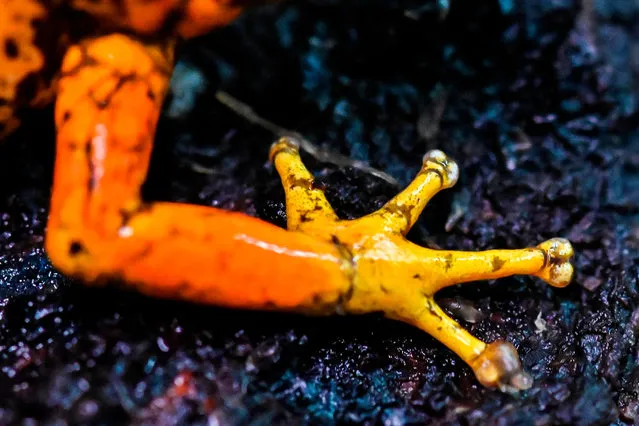
A leg of a “diablito” frog (Oophaga sylvatica) is photographed in a laboratory at a laboratory in the zoo of Cali, Colombia, on July 19, 2019. Colombia is the second country with the largest number of amphibians in the world after Brazil. More than 40% of amphibian species worldwide are in danger of extinction. (Photo by Luis Robayo/AFP Photo)

A leg of a “diablito” frog (Oophaga sylvatica) is photographed in a laboratory at a laboratory in the zoo of Cali, Colombia, on July 19, 2019. Colombia is the second country with the largest number of amphibians in the world after Brazil. More than 40% of amphibian species worldwide are in danger of extinction. (Photo by Luis Robayo/AFP Photo)
Details
28 Nov 2020 00:03:00
Giant panda Xiao Qi Ji plays at his enclosure at the Smithsonian National Zoo in Washington, Thursday, September 28, 2023. (Photo by Jose Luis Magana/AP Photo)

Giant panda Xiao Qi Ji plays at his enclosure at the Smithsonian National Zoo in Washington, Thursday, September 28, 2023. (Photo by Jose Luis Magana/AP Photo)
Details
07 Nov 2023 00:17:00
Aerial view of Taxodium Distichum in full blossom at a maze area of a wetland park on January 6, 2023 in Xiamen, Fujian Province of China. (Photo by Wu Wei/VCG via Getty Images)

Aerial view of Taxodium Distichum in full blossom at a maze area of a wetland park on January 6, 2023 in Xiamen, Fujian Province of China. (Photo by Wu Wei/VCG via Getty Images)
Details
31 Jan 2023 23:58:00
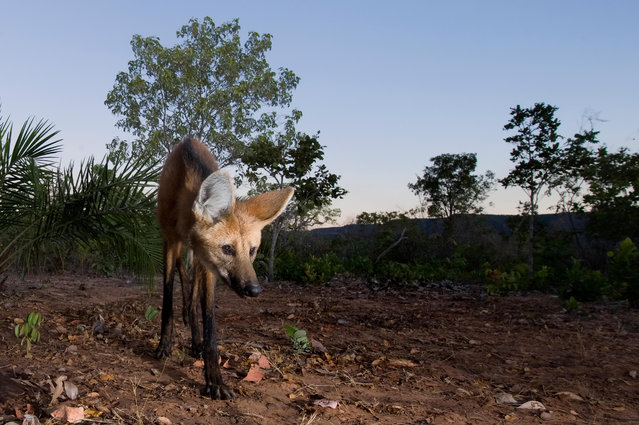
The maned wolf is among the large mammals in the Brazilian Cerrado that are threatened by the increasing conversion of grasslands into farmland for grazing and growing crops. (Photo by Ben Cranke/Nature Picture Library/Alamy Stock Photo)

Global wildlife populations will decline by 67% by 2020 unless urgent action is taken to reduce human impact on species and ecosystems, warns the biennial Living Planet Index report from WWF (World Wide Fund for Nature) and ZSL (Zoological Society of London). From elephants to eels, here are some of the wildlife populations most affected by human activity. Here: The maned wolf is among the large mammals in the Brazilian Cerrado that are threatened by the increasing conversion of grasslands into farmland for grazing and growing crops. (Photo by Ben Cranke/Nature Picture Library/Alamy Stock Photo)
Details
28 Oct 2016 10:47:00