Loading...
Done


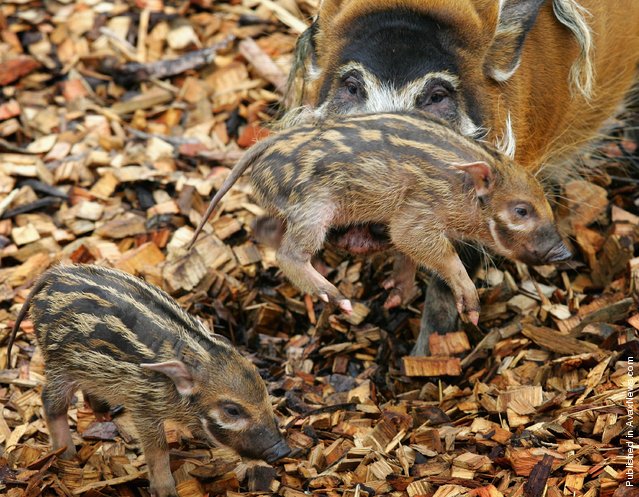
“The Red River Hog (Potamochoerus porcus), also known as the Bush Pig (but not to be confused with P. larvatus, common name “Bushpig”), is a wild member of the pig family living in Africa, with most of its distribution in the Guinean and Congolian forests. It is rarely seen away from rainforests, and generally prefers areas near rivers or swamps.

Red River Hogs eat grass, berries, roots, insects, molluscs, small vertebrates and carrion. They are capable of causing damage to plantations. Red River Hogs typically live in herds of 6-20 members led by a dominant boar. Sows rear 3-6 piglets at a time.”

Photo: Two 17 day old red river hoglet twins forage for food next to their mother Bahiti at London Zoo on August 23, 2007 in London, England. Red River hoglets inhabit the forests and swamps of West and Central Africa. The recent additions to the London Zoo pig pen have been eagerly awaited by zoo keepers. (Photo by Chris Jackson/Getty Images)
Details
18 Mar 2011 15:15:00
A lonely dog watches the mailboxes in a typical Moscow residential block. (Photo by by Frank Herfort/The Guardian)

From stuffed elephants to picnics under power lines, Leipzig-born photographer Frank Herfort coaxes magical, colour-saturated tableaux from intriguing slices of everyday Russian life. Here: A lonely dog watches the mailboxes in a typical Moscow residential block. (Photo by by Frank Herfort/The Guardian)
Details
06 Jun 2017 08:36:00
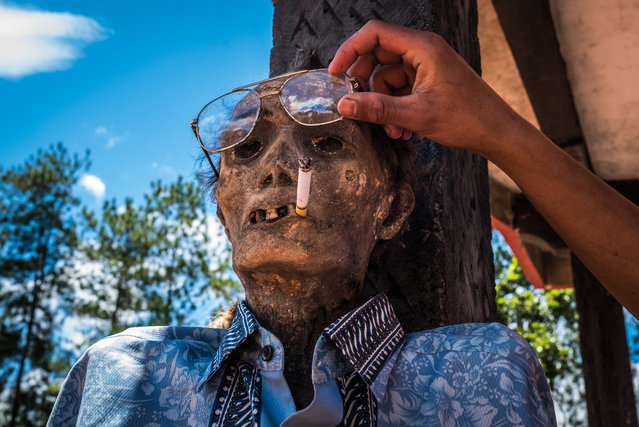
Todeng died in 2009. A young relative of his, Sam, lights him a cigarette and changes his glasses. (Photo by Claudio Sieber Photography/The Guardian)

For the Torajan people of Indonesia, death is part of a spiritual journey: families keep the mummified remains of their deceased relatives in their homes for years – and traditionally invite them to join for lunch on a daily basis – before they are eventually buried. Here: Todeng died in 2009. A young relative of his, Sam, lights him a cigarette and changes his glasses. (Photo by Claudio Sieber Photography/The Guardian)
Details
14 Oct 2017 09:34:00
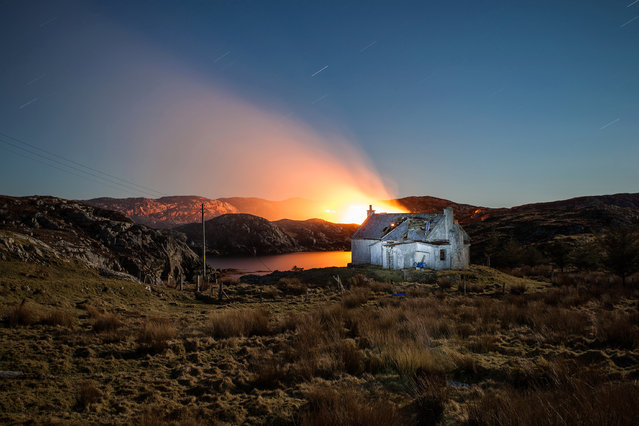
“Peat Fire”. Taken in March 2013 on the east coast of Harris. The fire is from muir-burning, when farmers burn off grasses and heather to improve grazing for their sheep. (Photo by John Maher/The Guardian)

Photographer John Maher, once the drummer with punk bank Buzzcocks, travelled to the Outer Hebrides to photograph abandoned crofters’ cottages – many of which, like this one, have seemingly been untouched since. Here: “Peat Fire”. Taken in March 2013 on the east coast of Harris. The fire is from muir-burning, when farmers burn off grasses and heather to improve grazing for their sheep. (Photo by John Maher/The Guardian)
Details
19 Aug 2016 11:39:00
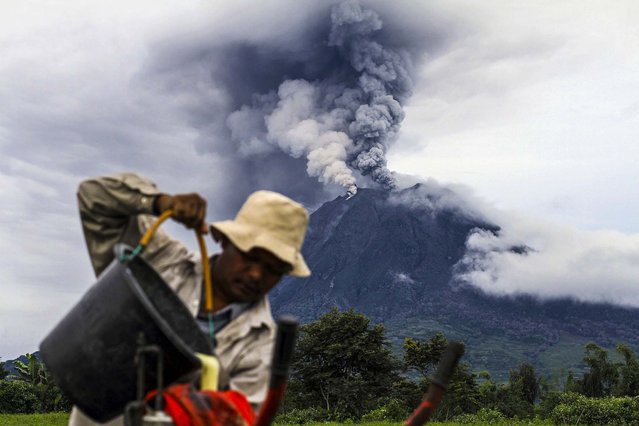
A villager pours pesticide from a bucket as Mount Sinabung spews ash at Kebayaken village in Karo district, Indonesia's North Sumatra province, on December 4, 2013. The country has ordered the evacuation of 15,000 residents near the active volcano. (Photo by Roni Bintang/Reuters)

A villager pours pesticide from a bucket as Mount Sinabung spews ash at Kebayaken village in Karo district, Indonesia's North Sumatra province, on December 4, 2013. The country has ordered the evacuation of 15,000 residents near the active volcano. (Photo by Roni Bintang/Reuters)
Details
07 Dec 2013 11:48:00
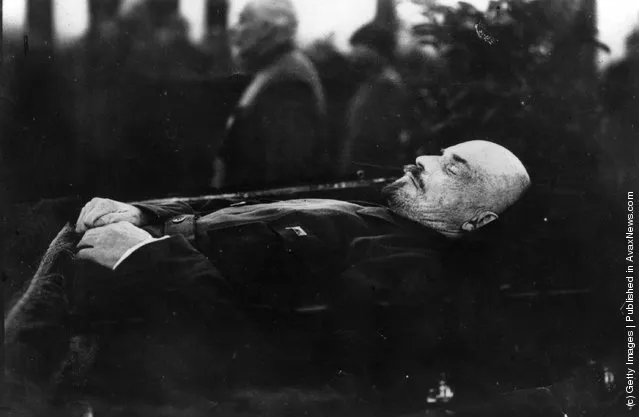
1924:  Vladimir Ilyich Lenin lying in state in the Kremlin

Photo: Vladimir Ilyich Lenin (1870 – 1924) lying in state in the Kremlin. (Photo by Hulton Archive/Getty Images). 1924

Important! For the same article in Russian language click here.

Something quite intriguing is happening within Russian-speaking internet during the last few – should you type a fully academic inquiry (at least, according to Russian academic requirements) in national search engines for "Lenin's mausoleum" – the first thing you get (even in top 10 searches) is website pages talking about black magic and occult. Website authors view this construction differently, but unconditionally agree on one thing: the mausoleum of the "leader of the world proletariat” – the essence of a magical artifact, a sort of “energy vampire”. It was built with a certain purpose: to drain the energy out of miserable Soviet citizens on one hand; and to poison the anthroposphere of one-sixth part of the earth with its vibes (the exact territory that was occupied by the former Soviet Union), depriving the Russian people of will to resist on the other hand. Complete nonsense? No doubt. Nevertheless, an intriguing one. Well, probably because some oddities do exist in mausoleum's history. These oddities are the thing we are going to discuss this time. First, let me refresh you memory on the subject.
Details
16 Oct 2011 11:27:00
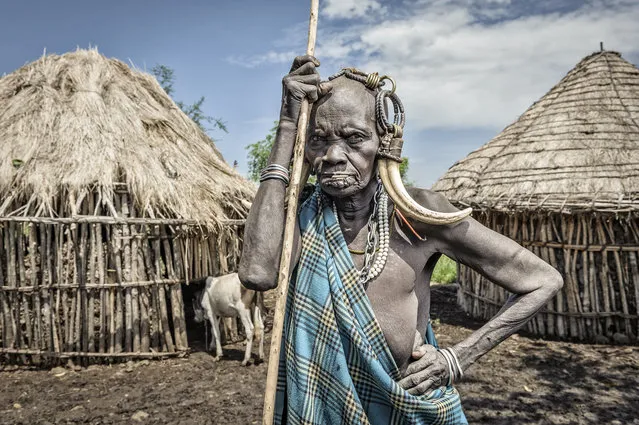
“Old Mursi woman”. Old woman by the huts of her village. Location: Marenke, Omo valley, Ethiopia. (Photo and caption by Jorge Fernandez/National Geographic Traveler Photo Contest)

“Old Mursi woman”. Old woman by the huts of her village. Location: Marenke, Omo valley, Ethiopia. (Photo and caption by Jorge Fernandez/National Geographic Traveler Photo Contest)

ATTENTION! All pictures are presented in high resolution. To see Hi-Res images – just TWICE click on any picture. In other words, click small picture – opens the BIG picture. Click BIG picture – opens VERY BIG picture.
Details
24 Jun 2013 09:55:00
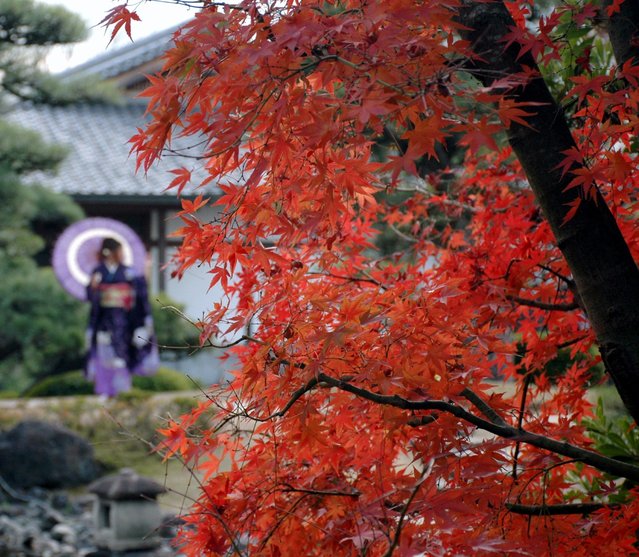
“Touring the Koko-en Gardens adjacent to the Himeji castle was an unexpected highlight of our visit”, wrote Jeff Solar, 64, of Silver Spring, Md., about his trip to Japan. “The fall colors were outstanding and the gardens were both amazing and a bargain (just a few Yen added to the cost of the Himeji Castle admission)”. (Photo by Jeff Solar/2017 Washington Post Travel Photo Contest)

“Touring the Koko-en Gardens adjacent to the Himeji castle was an unexpected highlight of our visit”, wrote Jeff Solar, 64, of Silver Spring, Md., about his trip to Japan. “The fall colors were outstanding and the gardens were both amazing and a bargain (just a few Yen added to the cost of the Himeji Castle admission)”. (Photo by Jeff Solar/2017 Washington Post Travel Photo Contest)
Details
26 Jul 2017 10:38:00