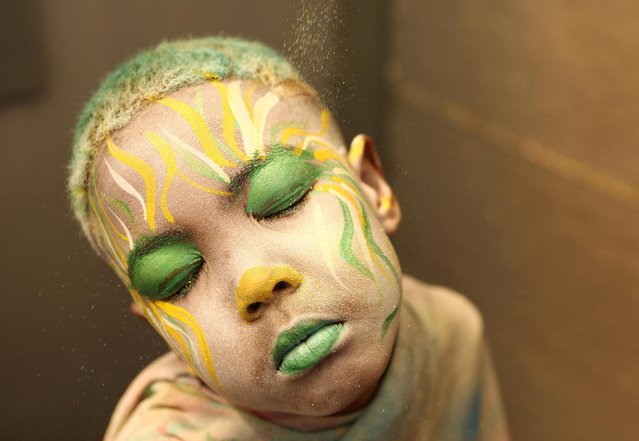
Junior Lambrechts has his face painted in preparation for the Cape Minstrel Carnival in Cape Town, South Africa on January 2, 2023. (Photo by Shelley Christians/Reuters)
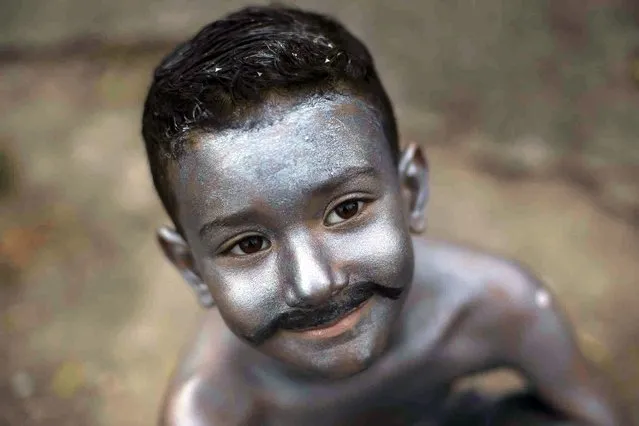
A child coated in silver body paint, smiles during the “Loucura Suburbana”, or Suburban Madness pre-Carnival parade, in Rio de Janeiro, Brazil, Thursday, February 8, 2024. (Photo by Bruna Prado/AP Photo)
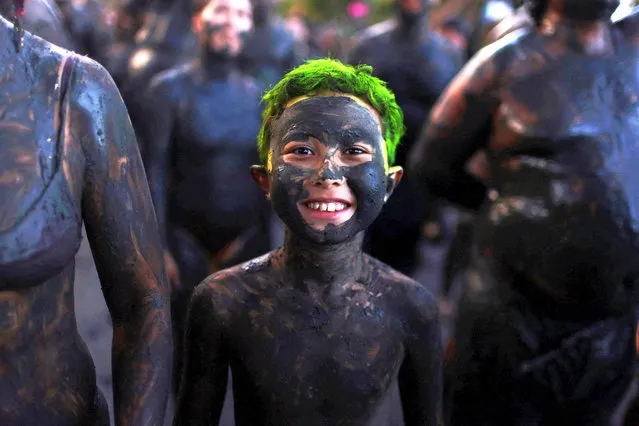
A boy attends the “Bloco da Lama” (Block of Mud) group during the carnival festivities, in Paraty, Brazil on February 11, 2024. (Photo by Pilar Olivares/Reuters)
Raquel Poti poses for photographers during the “Amigos da Onça” street party on the second day of Carnival on February 10, 2024 in Rio de Janeiro, Brazil. (Photo by Buda Mendes/Getty Images)
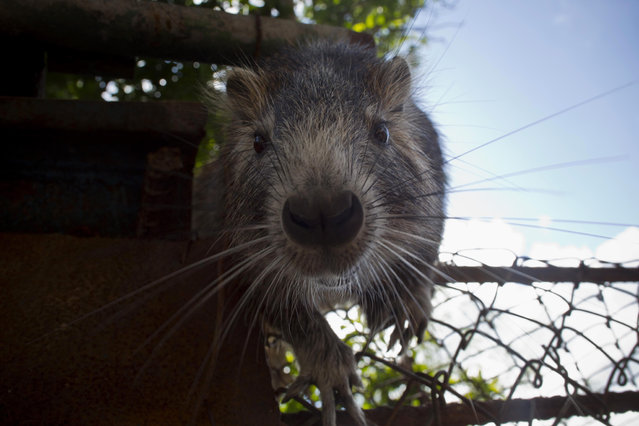
In this November 17, 2014 photo, Pancho, a domesticated huitia, confronts a camera, in Bainoa, Cuba. With their rope-like, dark tails, long front teeth, and whiskers that appear to be vibrating, huitias look like giant rats. They measure nearly a foot long (about 30 centimeters), with the largest ones weighing in bigger than a small dog. (Photo by Ramon Espinosa/AP Photo)
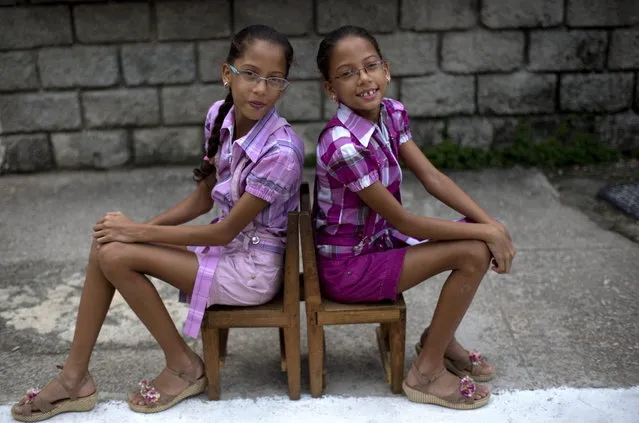
A street in the Cuban capital, Havana, is home to 12 sets of twins, ranging from toddlers to senior citizens. Some say it could be something in the water. Others point to a tree with mystical significance for locals. And maybe it's just chance. Photo: In this September 29, 2013 photo, nine-year-old twin sisters Camila, left, and Carla Rodriguez pose for a portrait along their street in Havana, Cuba. 12 sets of twins live along two consecutive blocks in western Havana, ranging in age from newborns to senior citizens. “We love living on this block because we have twin friends”, said Carla. (Photo by Ramon Espinosa/AP Photo)
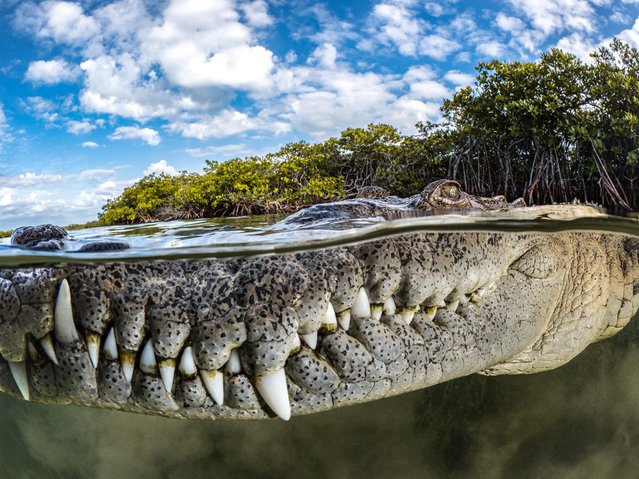
Guardian of the Mangroves – Overall Winner. Tanya Houppermans, Cuba. A curious American crocodile (Crocodylus acutus) swims right up to Tanya, at Gardens of the Queen (Jardines De La Reina), an archipelago off the coast of Cuba. It has been strictly protected since 1996, and is one of the most untouched marine ecosystems in the world. “The healthy population of American crocodiles is down to the pristine condition of the mangroves and I wanted to capture close ups of this gentle giant in its natural habitat. I hope this image can illustrate that protecting areas like this is so critical”. (Photo by Tanya Griffin Houppermans/Mangrove Photographer of the Year)