Loading...
Done
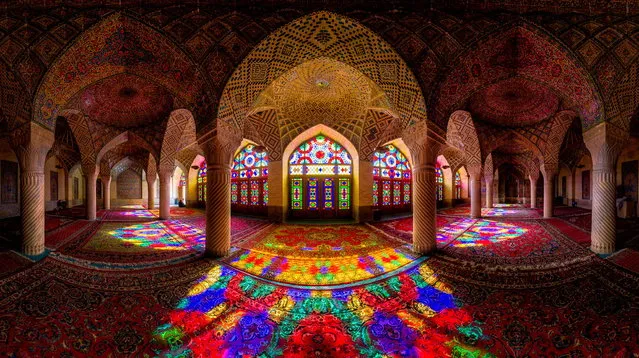
The Nasir Al-Mulk Mosque

The Nasīr al-Mulk Mosque or Pink Mosque is a traditional mosque in Shiraz, Iran, located in Goade-e-Araban place (near the famous Shah Cheragh mosque). The mosque was built during the Qājār era, and is still in use under protection by Nasir al Mulk's Endowment Foundation. It was built by the order of Mirza Hasan Ali Nasir al Molk, one of the lords of the Qajar Dynasty, in 1876 and was finished in 1888. The designers were Muhammad Hasan-e-Memar and Muhammad Reza Kashi Paz-e-Shirazi. The mosque extensively uses colored glass in its facade, and displays other traditional elements such as panj kāseh-i (five concaves) in its design, it is also named in popular culture as Pink Mosque due to the usage of beautiful pink color tiles for its interior design.
Details
26 Mar 2014 14:04:00
Colorful Strips By Colorful Strips

lasgow-based artist Jim Lambie can transform any space into a visual delight with his geometric tape designs. Using everyday vinyl tape, he creates angles and lines of contrasting colors that suggest movement and optical illusions. He can convert a once empty and quiet room into a space filled with energy. As viewers enter a converted space, they instantly have a visual interaction with the artwork.
Details
08 Apr 2014 14:16:00
Rice Paddy Art

Tanbo Art is the strategic planting of four varieties of rice which have different colored leaves in order to create a giant image in the rice paddy. This type of aesthetic planting began in the Japanese village of Inakadate in 1993 in order to celebrate the village’s over 2000 year history of rice farming. The practice has spread to other rice cultivating communities in Japan and even other countries such as Thailand and South Korea.
Details
13 May 2014 12:53:00
The London Eye -Giant Ferris Wheel

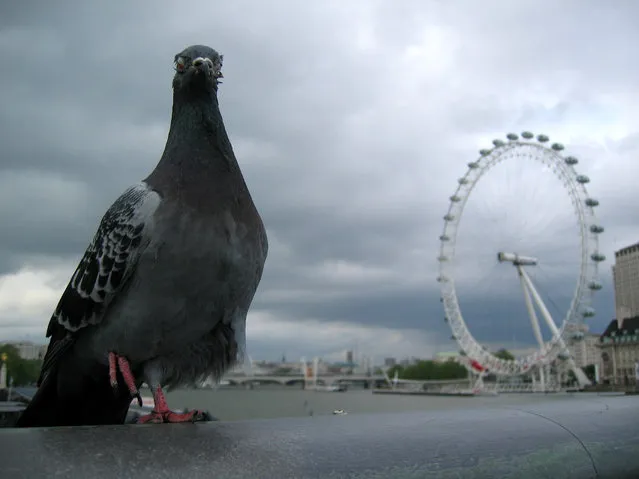
The London Eye is a giant Ferris wheel on the South Bank of the River Thames in London. Also known as the Millennium Wheel, its official name was originally the British Airways London Eye, then the Merlin Entertainments London Eye, and since January 2011, the EDF Energy London Eye.
Details
10 Jun 2014 12:08:00
Atlantic Puffin Is AKA Puffins Or Puffin Birds

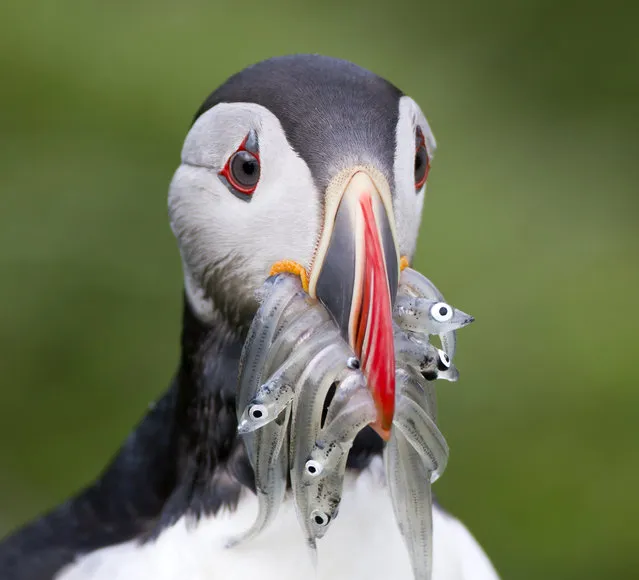
The Atlantic Puffin is definitely a curious-looking bird. The special coloring that this bird develops for the breeding season in the spring is very reminiscent of tropical birds. The bright colors of the beak and the markings around the eyes serve no particular advantage and have evolved as a result of sexual selection. However, Puffins don’t look that pretty all year round. They shed all these festive colors in partial moult after the breeding season is over. They lose the ornaments around their eyes, their face becomes darker, and their beak becomes very different. The natural habitat of these birds is the cold waters of the North Atlantic Ocean.
Details
12 Nov 2014 13:40:00
The Machines Of The Isle Of Nantes

Due to the influence of Sci-Fi movies, many of us have an obsession with giant robots. How cool would it be to ride a gigantic robotic dinosaur or elephant? It would be even cooler to control one! Regretfully, the modern technologies are not yet sophisticated enough to fulfill this dream. Pierre Orefice and François Delarozière, however, came very close. These two artists have made it their goal to turn Nantes, France, into a hot tourist destination spot for people who love robots. In their project of Machines de l'île in Nantes, they have created a whole park of robotic monstrosities, ranging from a giant 3 story high elephant to a 2 meter long centipede crawling on a rail track.
Details
05 Jan 2015 13:21:00
The Skeleton Coast, Namibia

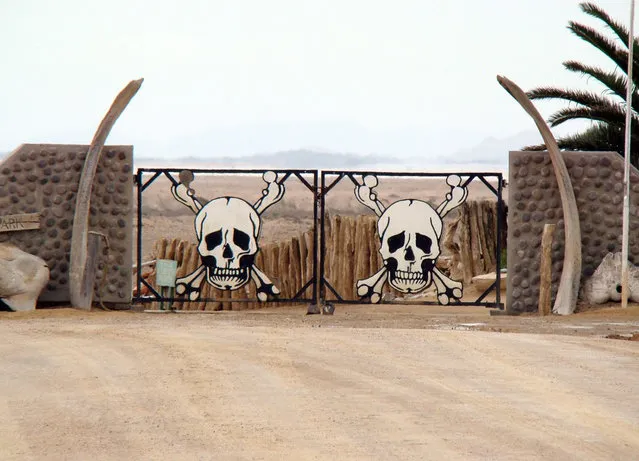
The Skeleton Coast is the northern part of the Atlantic Ocean coast of Namibia and south of Angola from the Kunene River south to the Swakop River, although the name is sometimes used to describe the entire Namib Desert coast. The Bushmen of the Namibian interior called the region "The Land God Made in Anger", while Portuguese sailors once referred to it as "The Gates of Hell".
Details
23 Feb 2014 09:27:00
Corinth Canal

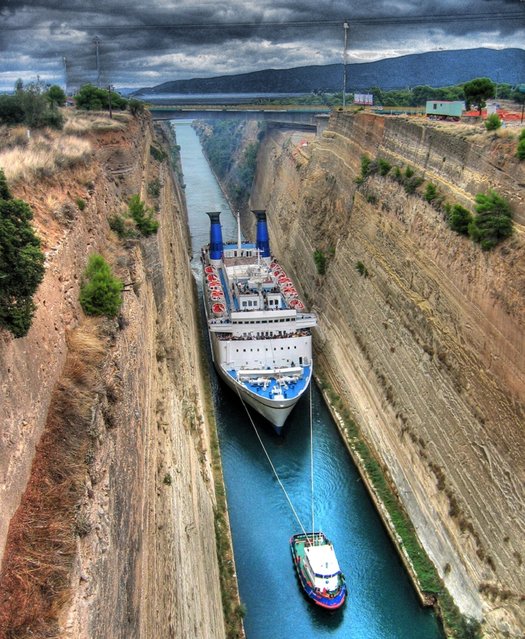
The Corinth Canal is a canal that connects the Gulf of Corinth with the Saronic Gulf in the Aegean Sea. It cuts through the narrow Isthmus of Corinth and separates the Peloponnesian peninsula from the Greek mainland, thus effectively making the former an island. The builders dug the canal through the Isthmus at sea level; no locks are employed. It is 6.4 kilometres (4.0 mi) in length and only 21.3 metres (70 ft) wide at its base, making it unpassable for most modern ships. It now has little economic importance.

Details
12 Mar 2013 12:21:00