Loading...
Done
Photographers: Helmut Newton

“Newton was born in Berlin, the son of Klara “Claire” (Marquis) and Max Neustädter, a button factory owner. His family was Jewish. Newton attended the Heinrich-von-Treitschke-Realgymnasium and the American School in Berlin. Interested in photography from the age of 12 when he purchased his first camera, he worked for the German photographer Yva (Elsie Neulander Simon) from 1936. The increasingly oppressive restrictions placed on Jews by the Nuremberg laws meant that his father lost control of the factory in which he manufactured buttons and buckles; he was briefly interned in a concentration camp on “Kristallnacht”, November 9, 1938, which finally compelled the family to leave Germany. Newton's parents fled to South America. He was issued with a passport just after turning 18, and left Germany on December 5, 1938. At Trieste he boarded the “Conte Rosso” (along with about 200 others escaping the Nazis) intending to journey to China. After arriving in Singapore he found he was able to remain there, first and briefly as a photographer for the Straits Times and then as a portrait photographer”. – Wikipedia

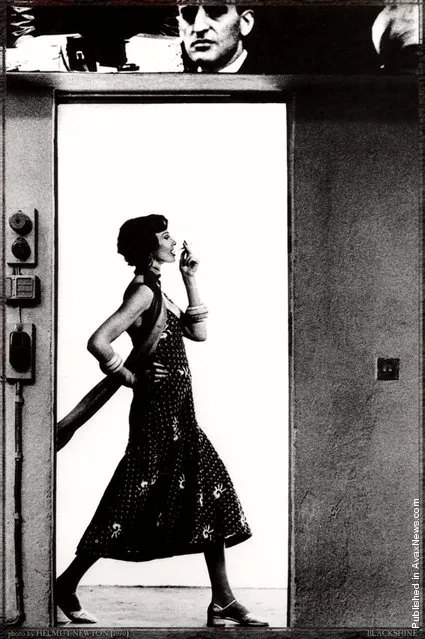
Photo: Sigourney Weaver by Helmut Newton, 1995.
Details
08 Apr 2012 13:49:00


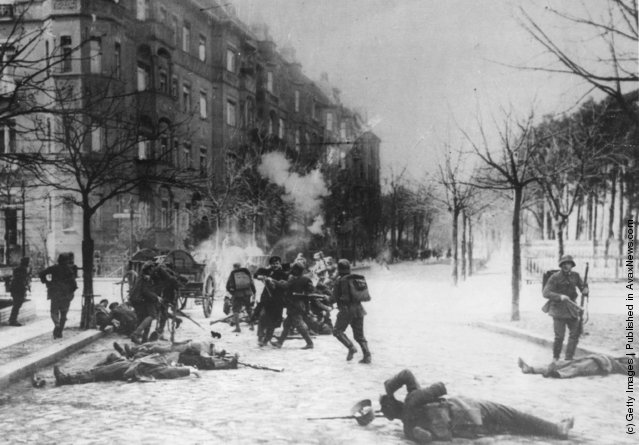
Street fighting in Berlin between Government troops and Spartacists, during the Spartacist uprising which followed Germany's defeat in World War I. (Photo by Keystone/Getty Images). 1919
Details
03 May 2011 09:09:00


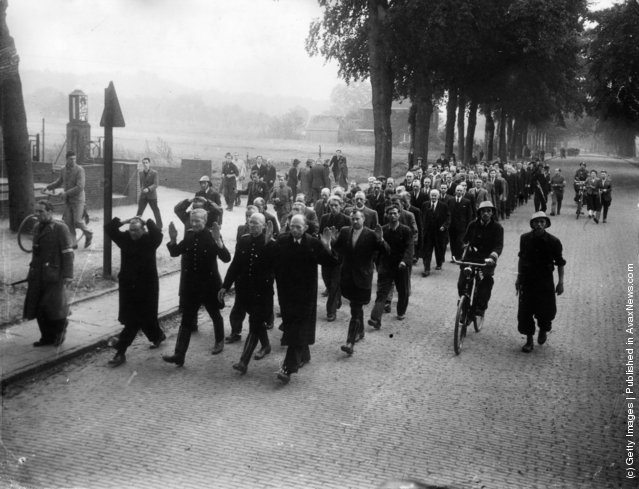
Dutch collaborators under arrest at Nijmegan, Holland. They were rounded up after the capture of Nijmegan Bridge by the Allies. (Photo by H. Warhurst/PNA Rota/Getty Images). 1945
Details
10 Apr 2011 10:52:00


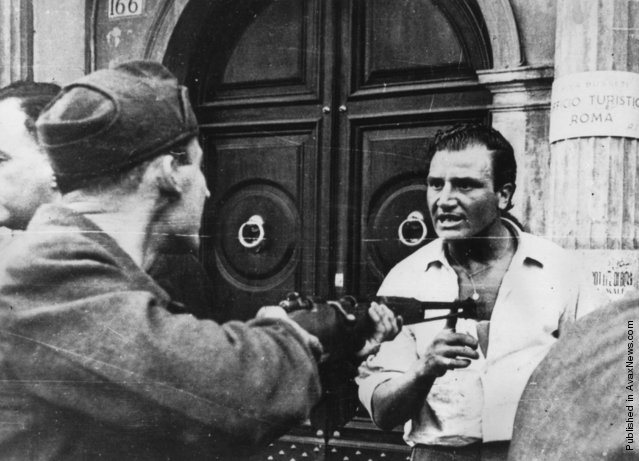
Partisans arresting suspected fascists in Rome. (Photo by Keystone/Getty Images). Circa 1946
Details
17 Mar 2011 11:55:00


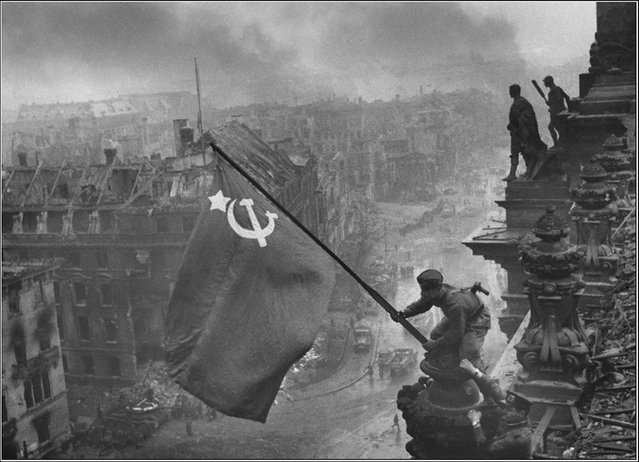
Raising a flag over the Reichstag is a historic World War II photograph taken during the Battle of Berlin on 2 May 1945, by Yevgeny Khaldei.
Details
09 May 2012 02:27:00


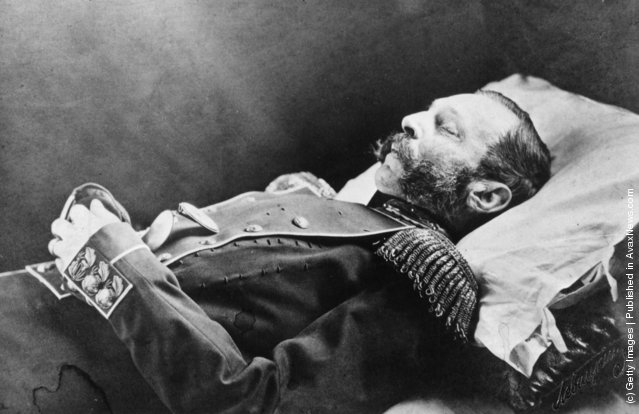
Tsar Alexander II (1818–1881) known as “The Liberator” lying in state. He was mortally wounded by an assassination attack in St Petersburg. (Photo by Hulton Archive/Getty Images). March 1881
Details
31 Jan 2014 10:19:00
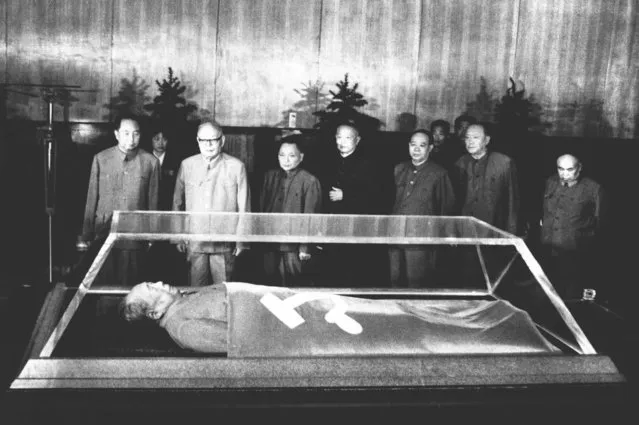
In this September 10, 1977, file photo, from left, Hua Guofeng, Chinese Communist Party (CCP) chairman and Mao Zedong's immediate successor; Ye Jianying, CCP vice chairman and future ceremonial head of state; Deng Xiaoping, no formal titles at the time but soon to emerge as paramount leader during the reform era; Li Xiannian, CCP vice chairman and future president; Wang Dongxing, head of the leadership bodyguard unit who helped topple the Gang of Four, view the body of later Chinese leader Mao Zedong in Beijing. (Photo via AP Photo)

In this September 10, 1977, file photo, from left, Hua Guofeng, Chinese Communist Party (CCP) chairman and Mao Zedong's immediate successor; Ye Jianying, CCP vice chairman and future ceremonial head of state; Deng Xiaoping, no formal titles at the time but soon to emerge as paramount leader during the reform era; Li Xiannian, CCP vice chairman and future president; Wang Dongxing, head of the leadership bodyguard unit who helped topple the Gang of Four, view the body of later Chinese leader Mao Zedong in Beijing. (Photo via AP Photo)
Details
13 Jun 2016 10:34:00
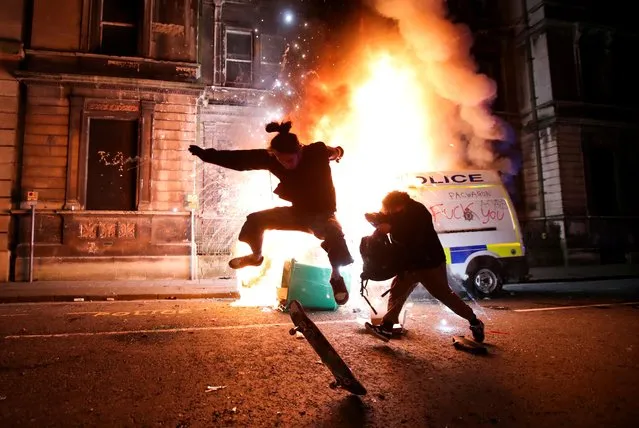
A demonstrator skateboards in front of a burning police vehicle during a protest against a new proposed policing bill, in Bristol, Britain, March 21, 2021. (Photo by Peter Cziborra/Reuters)

A demonstrator skateboards in front of a burning police vehicle during a protest against a new proposed policing bill, in Bristol, Britain, March 21, 2021. The Police, Crime, Sentencing and Courts Bill would give forces in England and Wales more power to impose conditions on non- violent protests, including those deemed too noisy or a nuisance, with fines or jail for those convicted. (Photo by Peter Cziborra/Reuters)
Details
22 Mar 2021 09:12:00