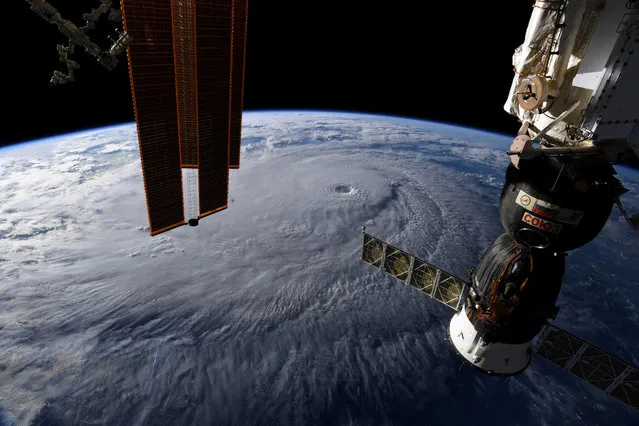
A photo taken from the International Space Station shows Hurricane Lane in the early morning hours near Hawaii, August 22, 2018. (Photo by Courtesy @astro_ricky/NASA/Handout via Reuters)
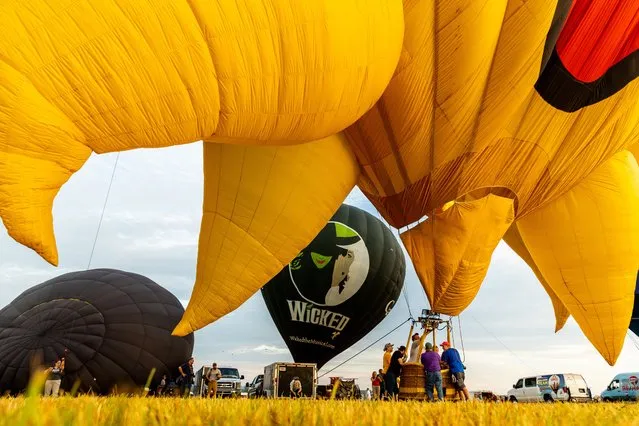
Crews inflate hot air balloons during the 39th annual New Jersey Lottery Festival of Ballooning at Solberg Airport Friday, July 29, 2022, in Readington, N.J. The festival, which runs through Sunday, July 31, will feature as many as 100 balloons. (Photo by Julia Nikhinson/AP Photo)
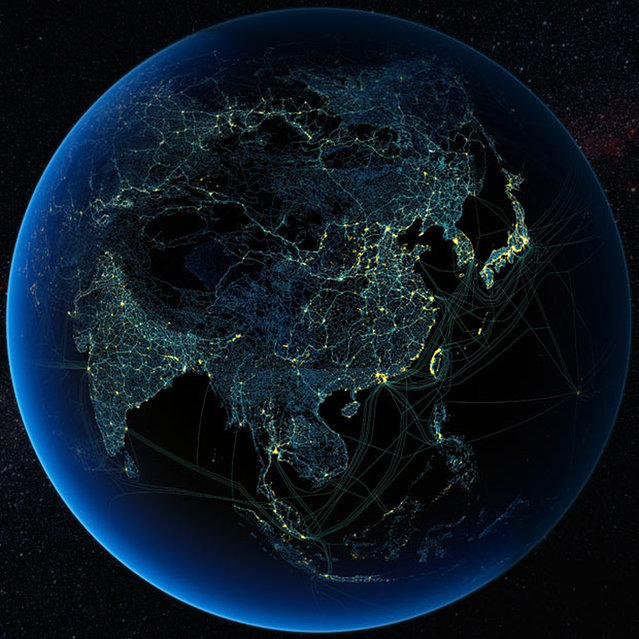
Defined according to wikipedia it is “a recent and informal geologic chronological term that serves to mark the evidence and extent of human activities that have had a significant global impact on the Earth’s ecosystems. The term was coined by ecologist Eugene Stoermer but has been widely popularized by the Nobel Prize-winning atmospheric chemist Paul Crutzen.”
The images here where created by Felix Pharand-Deschenes depicting how various human influences, from road and rail, to internet cables and airlines create significant patterns covering the Earth. What can we learn from these patterns in how they are influencing the environment
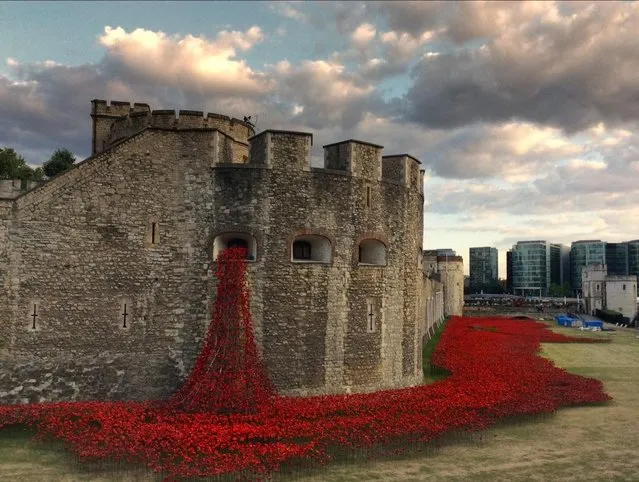
To commemorate the centennial of Britain’s involvement in the First World War, ceramic artist Paul Cummins and stage designer Tom Piper conceived of a staggering installation of ceramic poppies planted in the famous dry moat around the Tower of London. Titled “Blood Swept Lands and Seas of Red,” the final work will consist of 888,246 red ceramic flowers—each representing a British or Colonial military fatality—that flow through grounds around the tower.
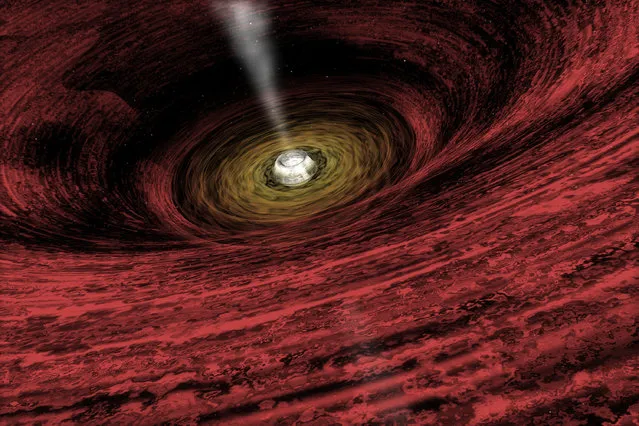
An artist's impression of a growing supermassive black hole located in the early Universe is seen in this NASA handout illustration released on June 15, 2011. Using the deepest X-ray image ever taken, astronomers found the first direct evidence that massive black holes were common in the early universe. This discovery from NASA's Chandra X-Ray Observatory shows that very young black holes grew more aggressively than previously thought, in tandem with the growth of their host galaxies. (Photo by Reuters/NASA/Chandra X-Ray Observatory/A.Hobart)
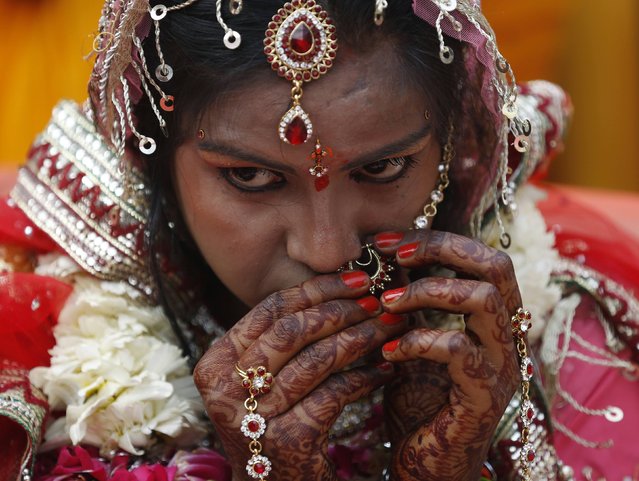
A bride gets ready during a mass wedding ceremony in the old quarters of Delhi February 20, 2015. A total of 12 couples took their wedding vows on Friday during the mass wedding ceremony organised by a Hindu religious organisation, an organiser said. (Photo by Ahmad Masood/Reuters)
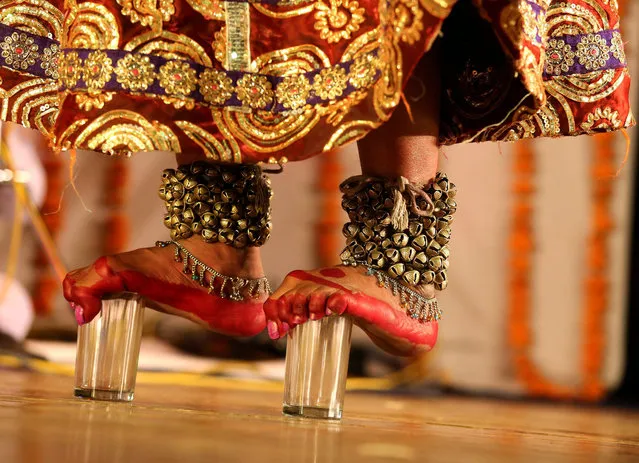
A Rajasthani folk dance artist performs while standing on two glasses during the “Dhora Ri Mahak” festival in Bhopal, India, 07 January 2015. The event is being organised by the “Indira Gandhi Rashtriya Manav Sangrahalaya” anthropology museum. (Photo by Sanjeev Gupta/EPA)
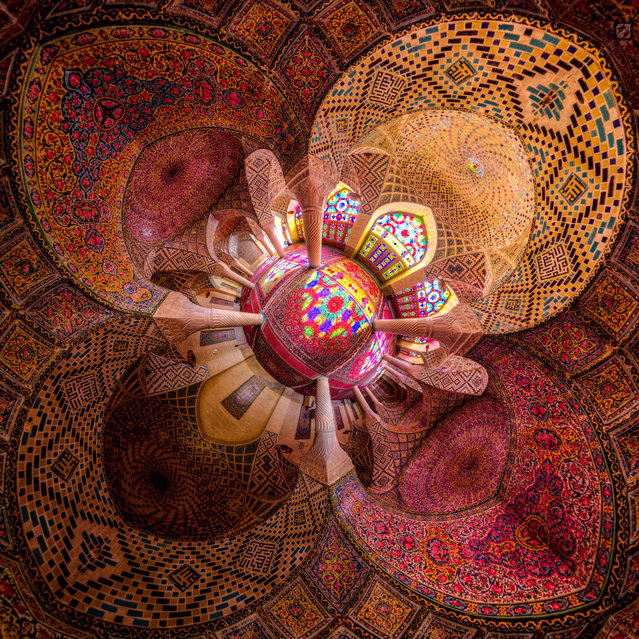
Amateur Iranian photographer Mohammad Reza Domiri Ganji, 23 likes to learn as much as he can about a site before he photographs it. Then he utilizes a variety of wide-angle and fisheye lenses, as well as occasional panoramic techniques to create beautiful new, often mind-bending images. He usually shoots the architectural wonders of Iran, and hopes that the Iranian government will allow him to travel further from home in pursuit of other iconic architectural treasures. Photo: The Nasir al-mulk or “Pink” mosque in Shiraz, Iran. (Photo by Mohammad Reza Domiri Ganj)