Loading...
Done
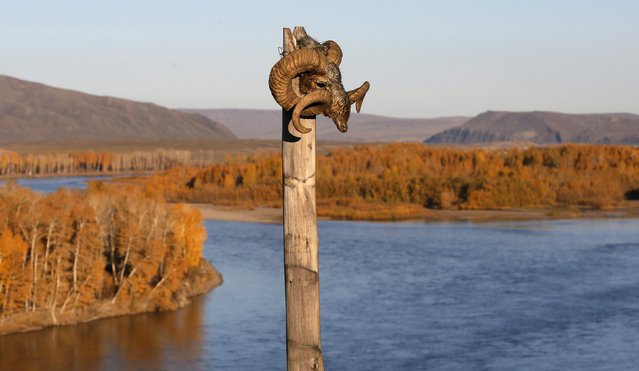
The head of a mountain ram is attached to a wooden column at the site used for shamans' rituals in the Aldyn Bulak area on the bank of the Yenisei River during sunset outside the village of Elegest, Tuva region, Southern Siberia, Russia, October 7, 2015. (Photo by Ilya Naymushin/Reuters)

The head of a mountain ram is attached to a wooden column at the site used for shamans' rituals in the Aldyn Bulak area on the bank of the Yenisei River during sunset outside the village of Elegest, Tuva region, Southern Siberia, Russia, October 7, 2015. The region is inhabited by Tuvans, historically cattle-herding nomads, who nowadays practise two main confessions – Buddhism and Shamanism. (Photo by Ilya Naymushin/Reuters)
Details
19 Oct 2015 08:05:00
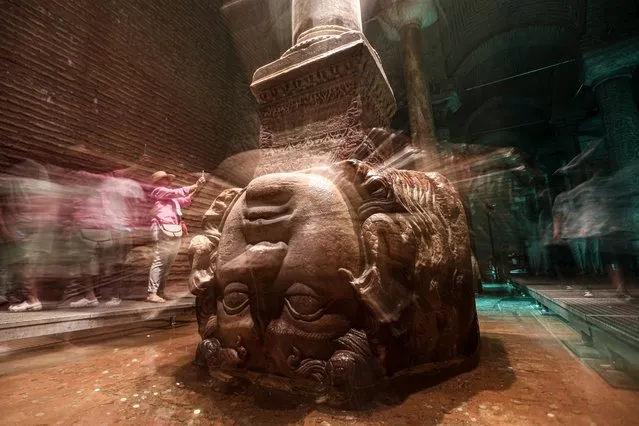
People walk behind the Medusa head in the Basilica Cistern in Istanbul, Turkey, 24 July 2022. (Photo by Sedat Suna/EPA/EFE)

People walk behind the Medusa head in the Basilica Cistern in Istanbul, Turkey, 24 July 2022. The site has been restored by the Istanbul Metropolitan Municipality and is now open for visitors again. The Byzantine structure was commissioned by Emperor Justinian and built in 532. The underground Basilica, also called Underground Cistern, is the largest well preserved cistern in Istanbul, which rests on a total of 336 columns. According to historical texts, more than 7,000 slaves were involved in the construction of the cistern. (Photo by Sedat Suna/EPA/EFE)

Details
07 Aug 2022 05:22:00
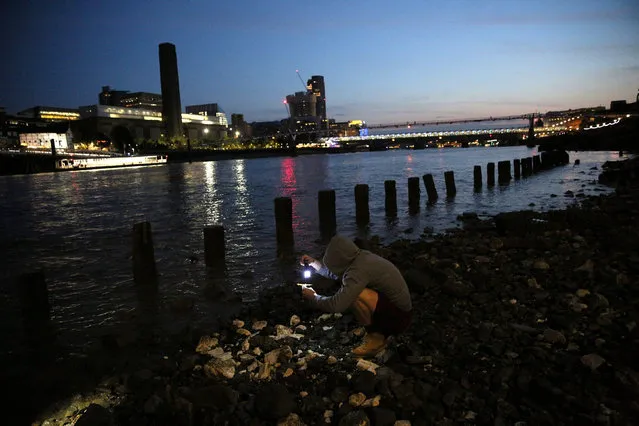
A mudlark uses a torch to look for items on the bank of the River Thames in London, Britain June 06, 2016. Mudlarking is believed to trace its origins to the 18th and 19th century, when scavengers searched the Thames' shores for items to sell. These days, history and archaeology fans are the ones hoping to find old relics such as coins, ceramics, artifacts or everyday items from across centuries. They wait for the low tide and then scour specific areas of exposed shores. "If you're in a field you could be out all day long, with the river you're restricted to about two or three hours," mudlark Nick Stevens said. While many just use the naked eye for their searches, others rely on metal detectors for which a permit from the Port of London Authority is needed. Digging also requires consent. (Photo by Neil Hall/Reuters)

A mudlark uses a torch to look for items on the bank of the River Thames in London, Britain June 06, 2016. Mudlarking is believed to trace its origins to the 18th and 19th century, when scavengers searched the Thames' shores for items to sell. These days, history and archaeology fans are the ones hoping to find old relics such as coins, ceramics, artifacts or everyday items from across centuries. their finds with the Portable Antiquities Scheme. Any item over 300 years old must be recorded. (Photo by Neil Hall/Reuters)
Details
27 Aug 2016 10:43:00
A member of the Pakistani Anti-Narcotic Force (ANF) takes a selfie beside a pile of burning drugs and liquor during a ceremony at the Kacha Ghari army firing range, on the outskirts of Peshawar on October 16, 2018, after the contraband was seized in raids across the province. (Photo by Abdul Majeed/AFP Photo)

A member of the Pakistani Anti-Narcotic Force (ANF) takes a selfie beside a pile of burning drugs and liquor during a ceremony at the Kacha Ghari army firing range, on the outskirts of Peshawar on October 16, 2018, after the contraband was seized in raids across the province. (Photo by Abdul Majeed/AFP Photo)
Details
20 Oct 2018 00:07:00
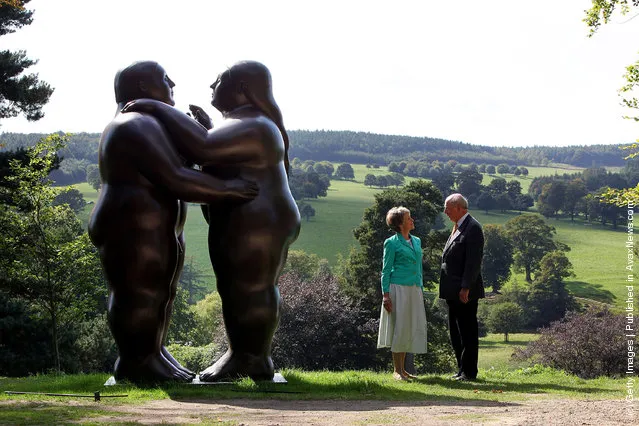
Dancers  by artist Fernando Botero

“Fernando Botero Angulo (born April 19, 1932) is a Colombian figurative artist. His works feature a figurative style, called by some “Boterismo”, which gives them an unmistakable identity. Botero depicts women, men, daily life, historical events and characters, milestones of art, still-life, animals and the natural world in general, with exaggerated and disproportionate volumetry, accompanied by fine details of scathing criticism, irony, humor, and ingenuity”. – Wikipedia

Photo: The Duke and Duchess of Devonshire view “Dancers” by artist Fernando Botero in the gardens of their home Chatsworth House on September 10, 2009, Chatsworth, England. (Photo by Christopher Furlong/Getty Images)
Details
29 Nov 2011 10:02:00
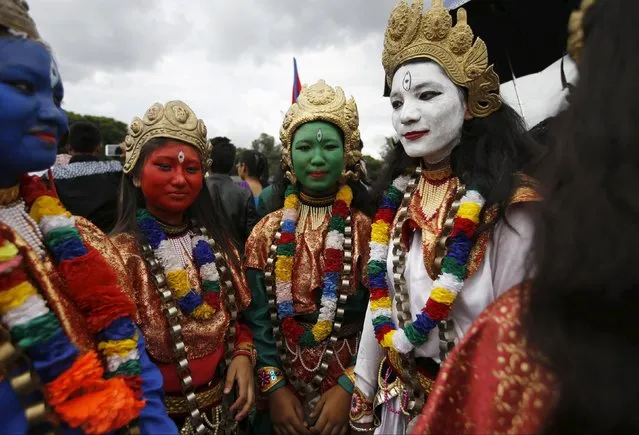
Women with their faces painted as various Hindu deities take part in a celebration a day after the first democratic constitution was announced in Kathmandu, Nepal September 21, 2015. (Photo by Navesh Chitrakar/Reuters)

Women with their faces painted as various Hindu deities take part in a celebration a day after the first democratic constitution was announced in Kathmandu, Nepal September 21, 2015. Nepal adopted its first full democratic constitution on Sunday, a historic step for a nation that has witnessed war, a palace massacre and devastating earthquakes since a campaign to create a modern state began more than 65 years ago. (Photo by Navesh Chitrakar/Reuters)
Details
22 Sep 2015 08:07:00
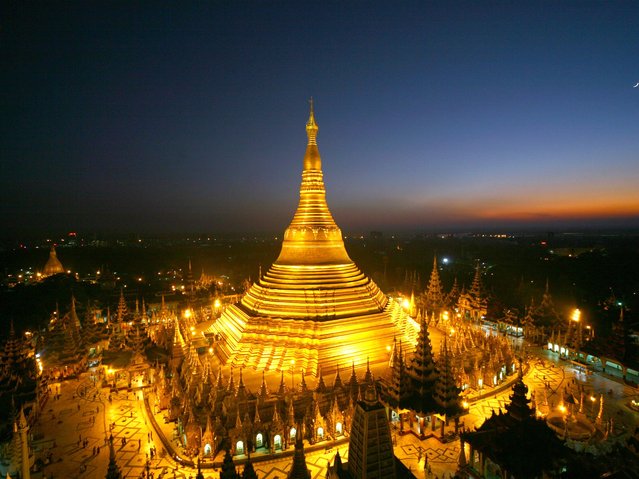
The Shwedagon Pagoda

The Shwedagon Pagoda officially titled Shwedagon Zedi Daw, also known in English as the Great Dagon Pagoda and the Golden Pagoda, is a 99 metres (325 ft)[citation needed] gilded pagoda and stupa located in Yangon, Burma. The pagoda lies to the west of Kandawgyi Lake, on Singuttara Hill, thus dominating the skyline of the city. It is the most sacred Buddhist pagoda for the Burmese with relics of the past four Buddhas enshrined within: the staff of Kakusandha, the water filter of Koṇāgamana, a piece of the robe of Kassapa and eight strands of hair from Gautama, the historical Buddha. Uppatasanti Pagoda is an exact replica of Shwedagon Pagoda in Naypyidaw, the new capital of Burma.
Details
19 Aug 2013 14:37:00
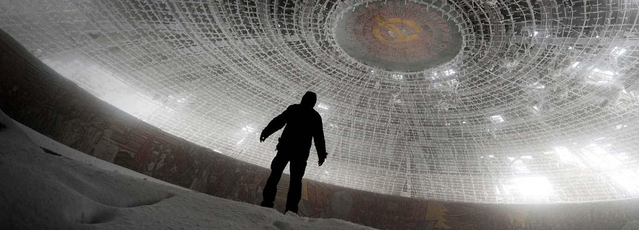
Monument of Buzludja

Buzludzha is a historical peak in the Central Stara Planina, Bulgaria and is 1441 metres high. In 1868 it was the place of the final battle between Bulgarian rebels led by Hadji Dimitar and Stefan Karadzha and the Ottoman Empire. The Buzludzha Monument on the peak was built by the Bulgarian communist regime to commemorate the events in 1891 when the socialists led by Dimitar Blagoev assembled secretly in the area to form an organised socialist movement with the founding of the Bulgarian Social Democratic Party, a fore-runner of the Bulgarian Communist Party. The Monument was opened in 1981. No longer maintained by the Bulgarian government, it has fallen into disuse. Buzludzha is reached by a 12 km side road from the Shipka Pass.
Details
12 Nov 2013 08:16:00