Loading...
Done
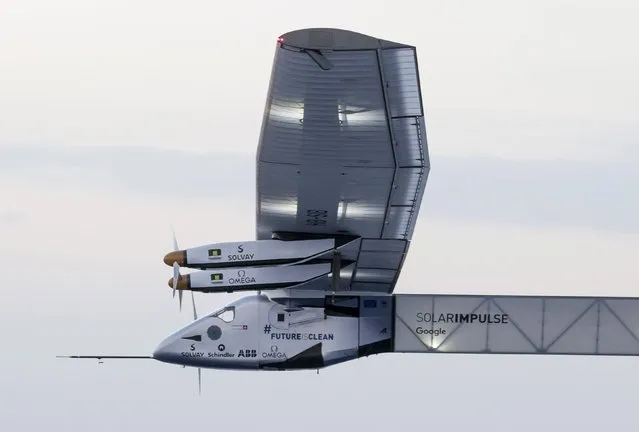
The Solar Impulse 2 airplane, flown by test pilot Markus Scherdel, flies off the coast of Oahu during a test flight from Kalaealoa Airfield in Kapolei, Hawaii, March 3, 2016. (Photo by Eugene Tanner/Reuters)

The Solar Impulse 2 airplane, flown by test pilot Markus Scherdel, flies off the coast of Oahu during a test flight from Kalaealoa Airfield in Kapolei, Hawaii, March 3, 2016. The solar-powered plane is ready to continue its revolutionary voyage around the world. After the craft was grounded in Hawaii last July due to overheated batteries, it was repaired and upgraded, and a recent initial test flight proved successful. (Photo by Eugene Tanner/Reuters)
Details
04 Mar 2016 12:03:00
In Extremis By Sandro Giordano

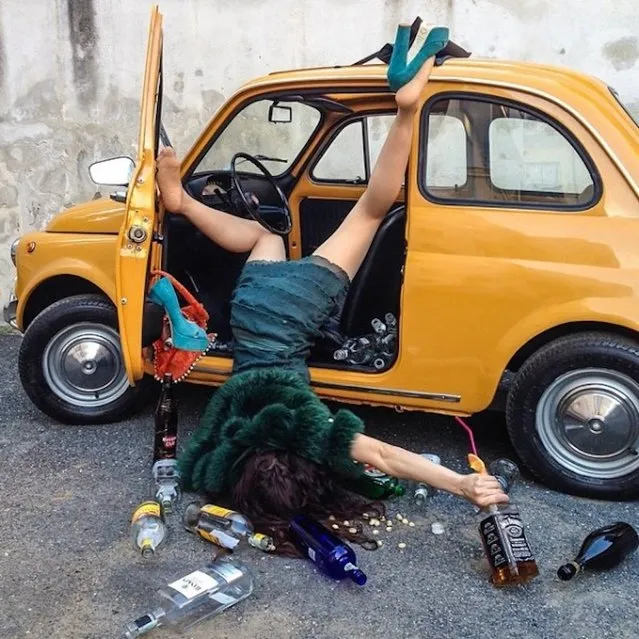
There is something strangely appealing about the set of pictures created by Sandro Giordano in a series “In Extremis (Bodies With No Regret)”. Could it be the absurdity of the situation? Or the fact that our brain tries to make up some bizarre story to justify what is happening in the pictures? Of course it is impossible to explain why a pair of tennis players ended up lying flat on the ground with a pack of bananas hanging on the net, even if we forget about the tennis racket lodged in the neck of one of the players. Nevertheless, it is fun to recreate these scenes in your mind just seconds before the tragedy took place. (Photo by Sandro Giordano)
Details
18 Oct 2014 07:09:00
Arctic Hare

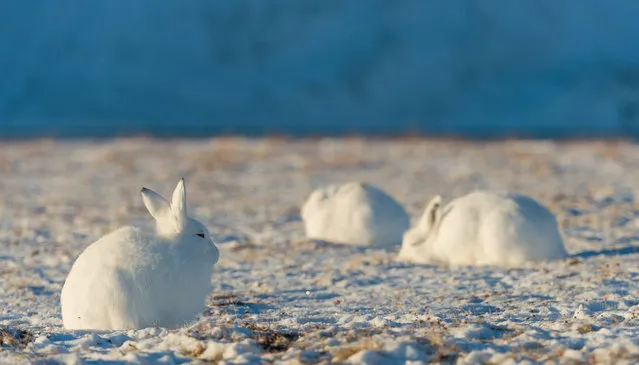
The arctic hare, or polar rabbit, is a species of hare which is adapted largely to polar and mountainous habitats. The arctic hare survives with a thick coat of fur and usually digs holes in the ground or under snow to keep warm and sleep. Arctic hares look like rabbits but have shorter ears, are taller when standing, and, unlike rabbits, can thrive in cold climates. They can travel together with many other hares, sometimes huddling with dozens or more, but are usually found alone, taking, in some cases, more than one partner. The arctic hare can run up to 60 kilometres per hour (40 mph). Its predators include the arctic wolf, arctic fox, and ermine.
Details
17 Mar 2014 13:56:00
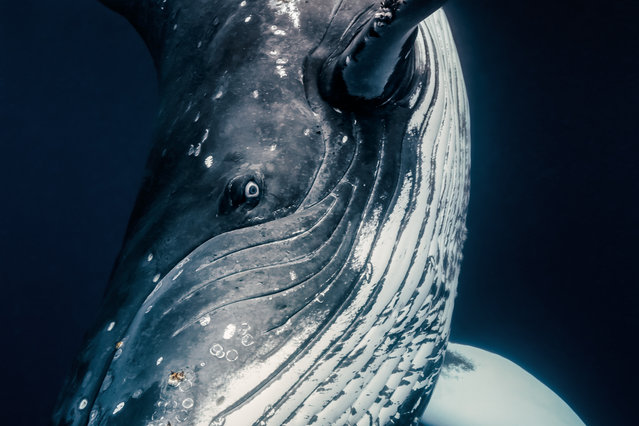
“To look into a whale’s eye is life-changing and humbling. Well, it’s the same with dolphins but they are mostly very fast in the water. A whale’s eye is unexpectedly looking, just like a human eye, kinda checking you out”. (Photo by Rita Kluge/The Guardian)

With the humpback calving season drawing to a close, here’s a look at some of Rita Kluge’s distinctive marine photos from the south Pacific. The Sydney-based photographer fell in love with whales after witnessing southern rights from the New South Wales coastline as they travelled to and from their feeding grounds in the Antarctic. She has since been to Tonga, where humpbacks breed and calf in winter months, to photograph them in the water. (Photo by Rita Kluge/The Guardian)
Details
26 Oct 2016 11:09:00
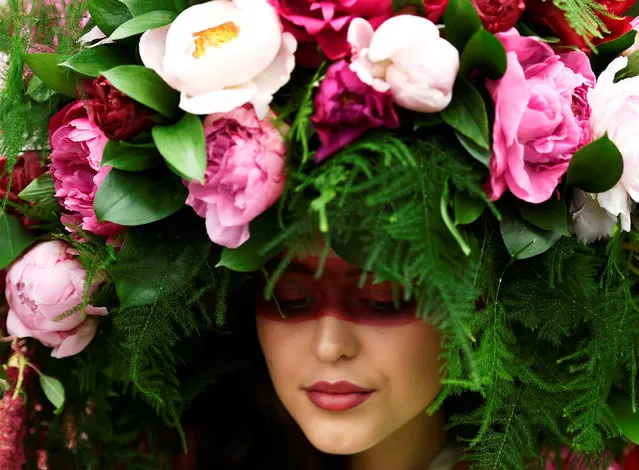
A model wears a floral headdress at the Royal Horticultural Society's Chelsea Flower show in London, Britain, May 22, 2017. (Photo by Dylan Martinez/Reuters)

A model wears a floral headdress at the Royal Horticultural Society's Chelsea Flower show in London, Britain, May 22, 2017. The prestigious Chelsea Flower Show, held annually since 1913 in the Royal Hospital Chelsea grounds, is open to the public from the 23rd to the 27th of May, 2017. (Photo by Dylan Martinez/Reuters)
Details
25 May 2017 08:31:00
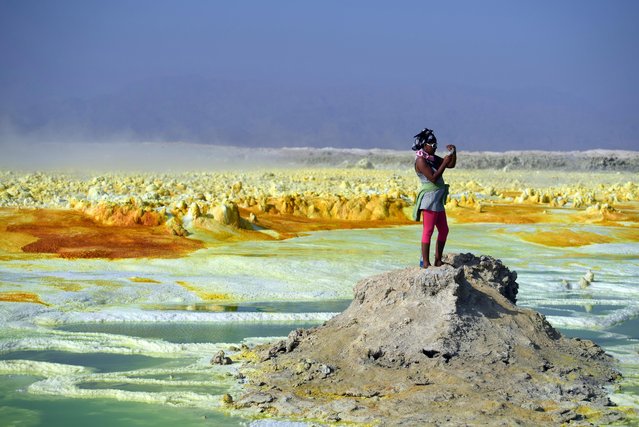
A tourist take a photograph of a sulphur lake in the Danakil Depression on January 23, 2017 near Dallol, Ethiopia. (Photo by Carl Court/Getty Images)

A tourist take a photograph of a sulphur lake in the Danakil Depression on January 23, 2017 near Dallol, Ethiopia. The depression lies 100 metres below sea level and is one of the hottest and most inhospitable places on Earth. Despite the gruelling conditions, Ethiopians continue a centuries old industry of mining salt from the ground by hand in temperatures that average 34.5 degrees centigrade but have risen to over 50 degrees. (Photo by Carl Court/Getty Images)
Details
25 Jan 2017 11:36:00
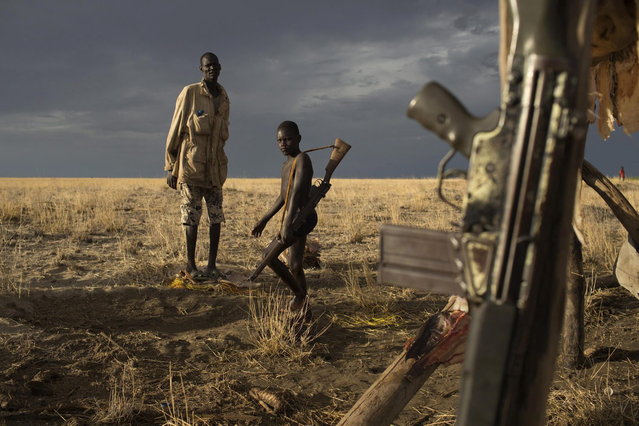
A Turkana man and a boy carrying a gun look on as a G3 battle rifle hangs from a structure used to dry fish at a fishing camp on the shores of Lake Turkana, some kilometres from Todonyang near the Kenya-Ethiopia border in northwestern Kenya October 12, 2013. (Photo by Siegfried Modola/Reuters)

A Turkana man and a boy carrying a gun look on as a G3 battle rifle hangs from a structure used to dry fish at a fishing camp on the shores of Lake Turkana, some kilometres from Todonyang near the Kenya-Ethiopia border in northwestern Kenya October 12, 2013The Turkana are traditionally nomadic pastoralists, but they have seen the pasture that they need to feed their herds suffer from recurring droughts and many have turned to fishing. However, Lake Turkana is overfished, and scarcity of food and pastureland is fuelling long-standing conflict with Ethiopian indigenous Dhaasanac, who have seen grazing grounds squeezed by large-scale government agricultural schemes in southern Ethiopia. The Dhaasanac now venture ever deeper into Kenyan territory in search of fish and grass, clashing with neighbours. Fighting between the communities has a long history, but the conflict has become ever more fatal as automatic weapons from other regional conflicts seep into the area. While the Turkana region is short of basics like grass and ground-water, it contains other resources including oil reserves and massive, newly discovered underground aquifers. (Photo by Siegfried Modola/Reuters)

Details
05 Dec 2013 12:08:00
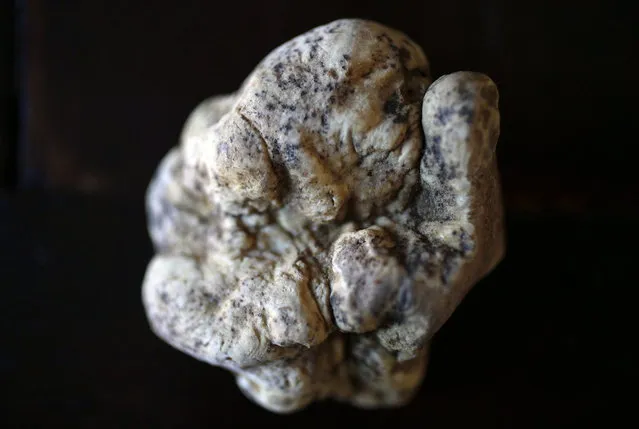
A truffle is seen on a table in Alba, north-western Italy November 11, 2013. Located in the heart of the Langhe – the hilly southern area of Italy's northwestern Piedmont region – Alba is the country's capital of white truffles, a variety of the prized fungus which grows underground. Truffles are found two to eight inches (5-20cm) below the ground near the roots of trees. (Photo by Stefano Rellandini/Reuters)

A truffle is seen on a table in Alba, north-western Italy November 11, 2013. Located in the heart of the Langhe – the hilly southern area of Italy's northwestern Piedmont region – Alba is the country's capital of white truffles, a variety of the prized fungus which grows underground. Truffles are found two to eight inches (5-20cm) below the ground near the roots of trees. They give off an odour which lasts for a limited period of time and can be detected with the assistance of well-trained dogs and experienced hunters. Output of white truffles, which are not cultivated and only grow naturally in forests, has fallen in Italy over the past few years, largely because climate change has brought a damaging mix of drought and torrential rains. (Photo by Stefano Rellandini/Reuters)
Details
31 Dec 2013 11:22:00