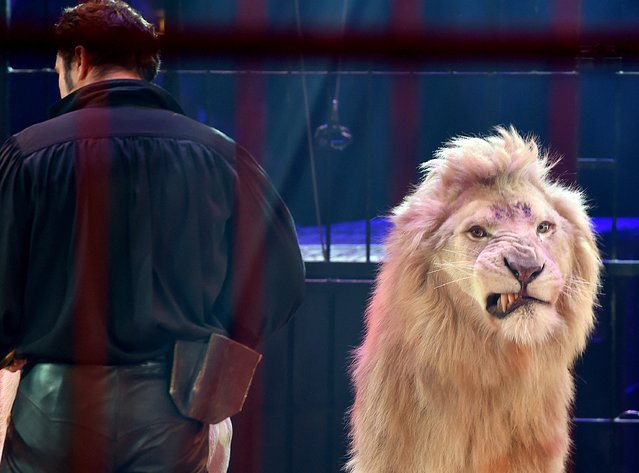
Martin Lacey Jr. with a lion during the premiere of the Circus Krone program “Circus der Preistraeger” at Circus Krone on February 2, 2016 in Munich, Germany. (Photo by Hannes Magerstaedt/Getty Images)
Amy Rimmer, Research Engineer at Jaguar Land Rover, demonstrates the car manufacturer's Advanced Highway Assist in a Range Rover, which drives the vehicle, overtakes and can detect vehicles in the blind spot, during the first demonstrations of the UK Autodrive Project at HORIBA MIRA Proving Ground in Nuneaton, Warwickshire on Friday October 21, 2016. (Photo by Fabio De Paola/PA Wire)
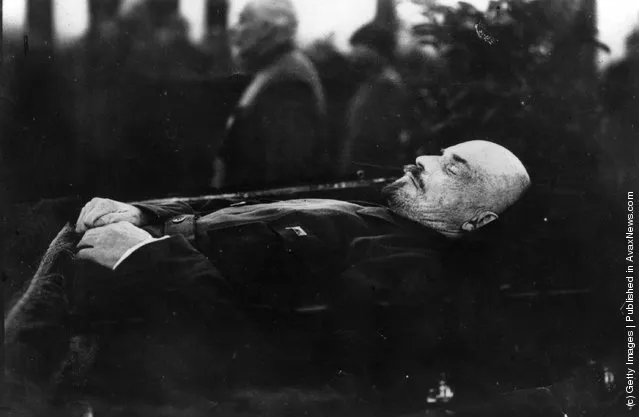
Photo: Vladimir Ilyich Lenin (1870 – 1924) lying in state in the Kremlin. (Photo by Hulton Archive/Getty Images). 1924
Important! For the same article in Russian language click here.
Something quite intriguing is happening within Russian-speaking internet during the last few – should you type a fully academic inquiry (at least, according to Russian academic requirements) in national search engines for "Lenin's mausoleum" – the first thing you get (even in top 10 searches) is website pages talking about black magic and occult. Website authors view this construction differently, but unconditionally agree on one thing: the mausoleum of the "leader of the world proletariat” – the essence of a magical artifact, a sort of “energy vampire”. It was built with a certain purpose: to drain the energy out of miserable Soviet citizens on one hand; and to poison the anthroposphere of one-sixth part of the earth with its vibes (the exact territory that was occupied by the former Soviet Union), depriving the Russian people of will to resist on the other hand. Complete nonsense? No doubt. Nevertheless, an intriguing one. Well, probably because some oddities do exist in mausoleum's history. These oddities are the thing we are going to discuss this time. First, let me refresh you memory on the subject.
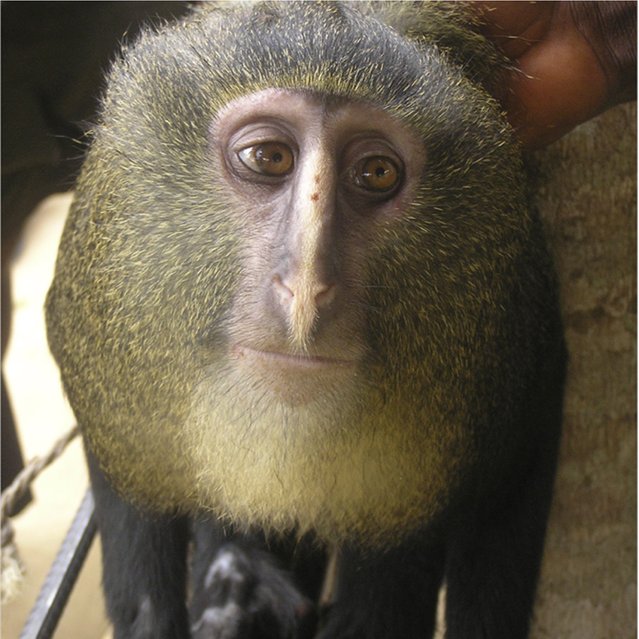
A new species of monkey found in the Democratic Republic of the Congo and identified as Lesula (Cercopithecus lomamiensis) is seen in this undated photograph from an article published September 12, 2012 in the science journal PLOS One. The monkey was first seen in 2007 by researchers John and Terese Hart of the Peabody Museum of Natural History at Yale Research Project. The finding of C. lomamiensis represents only the second new species of African monkey to be discovered in the past 28 years, according to the research article. (Photo by Hart J. A., Detwiler K. M., Gilbert C. C./Reuters)
Robot Xian'er is placed in the main building of Longquan Buddhist temple for photographs by the temple's staff, on the outskirts of Beijing, April 20, 2016. (Photo by Kim Kyung-Hoon/Reuters)
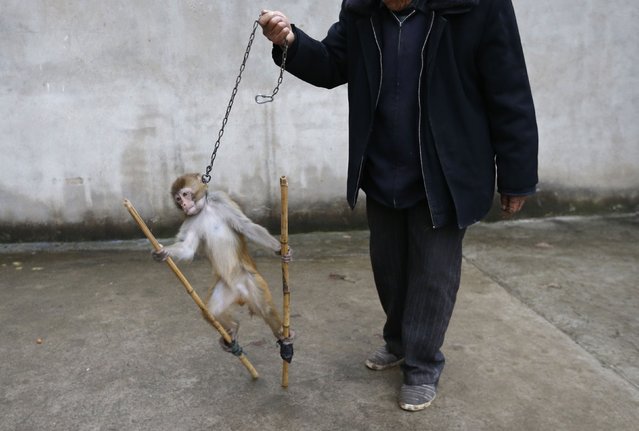
A monkey is led by its trainer Qi Defang during training for a circus in Suzhou, Anhui province, November 29, 2014. Suzhou is known as the hometown of circus troupes in China and has more than 300 circus troupes. (Photo by William Hong/Reuters)
Carlos Cure holds packets of corn flour made in Colombia as he poses for a picture at a stall that sells food and staple items at a market in La Fria, Venezuela, June 2, 2016. (Photo by Carlos Garcia Rawlins/Reuters)
Smithfield meat porters march on the Home Office, bearing a petition which calls for an end to all immigration into Britain, 25th August 1972. (Photo by Keystone/Hulton Archive/Getty Images)