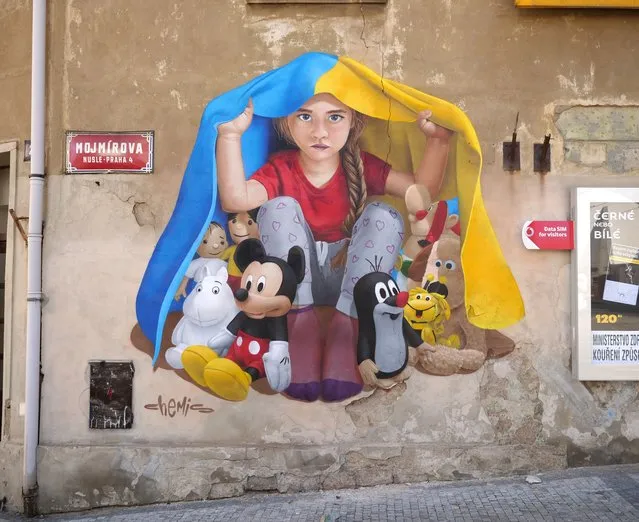
The graffiti against the war in Ukraine of the street artist ChemiS in Prague, Czech Republic, March 19, 2022. (Photo by Amos Chapple/Radio Free Europe/Radio Liberty)
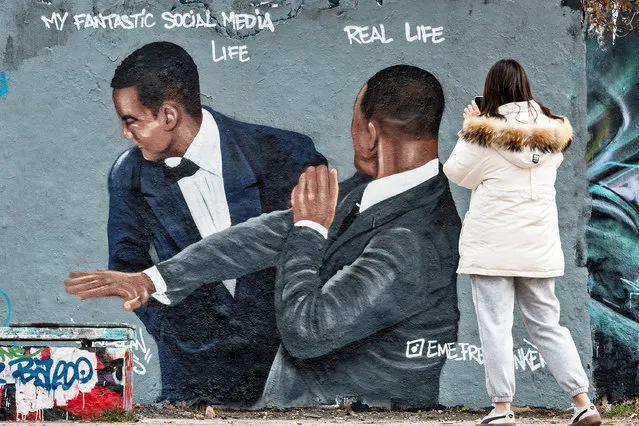
A woman takes a photo of a mural by Berlin-based street artist Eme Freethinker featuring the likeness of US actor Will Smith (R) slapping US comedian Chris Rock during the Oscars ceremony, in Berlin on March 30, 2022. (Photo by John MacDougall/AFP Photo)
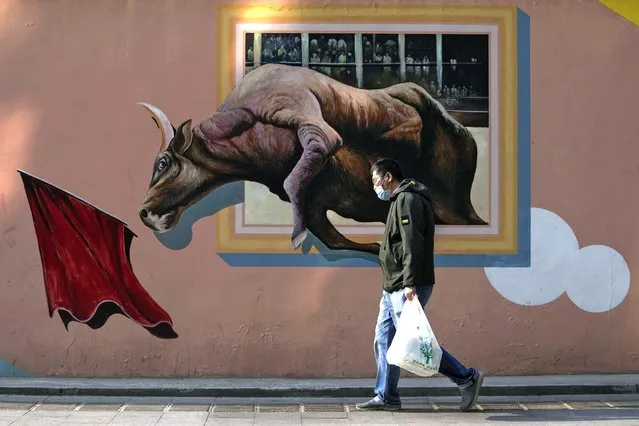
A man wearing a face mask to help protect from the coronavirus carries a bag of groceries as he walks by a mural depicting an iconic financial market bull statue near the central business district, Monday, April 18, 2022, in Beijing. (Photo by Andy Wong/AP Photo)
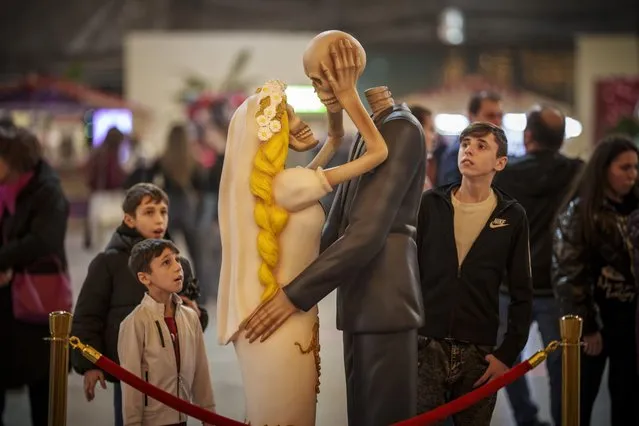
People look at a skeleton couple kissing installation dubbed “Till Death Do Us Part” during a Valentine's Day event in Bucharest, Romania, Tuesday, February 13, 2024. (Photo by Vadim Ghirda/AP Photo)
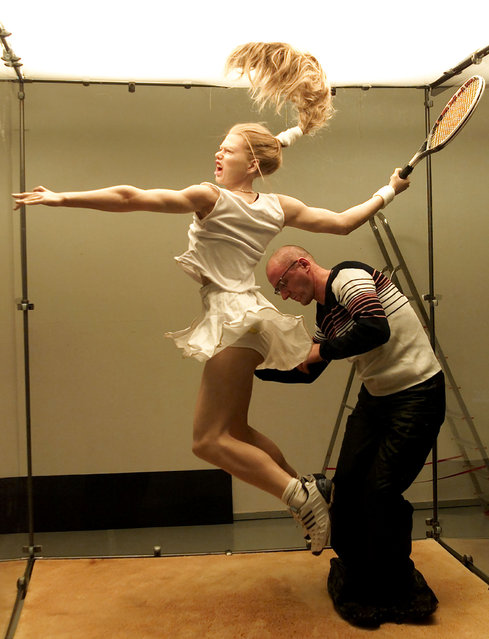
Russian artist Oleg Kulik installs the wax figure resembling to Russian tennis star Anna Kournikova at his new exhibition project in Moscow on October 19, 2002. Kulik plans soon to fill his museum with figures of strong and beautiful women like Bjork and Madonna in unexpected poses. (Photo by Alexander Natruskin/Reuters)
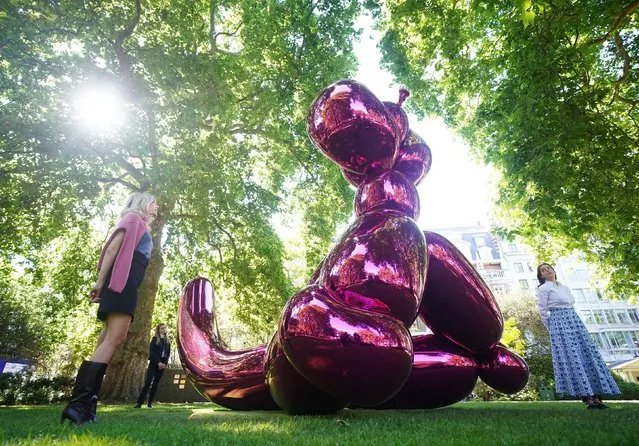
Artist Jeff Koons sculpture Balloon Monkey (Magenta), 2006-13, with an estimate of £6,000,000-10,000,000 on display in St James's Square, London, before being sold by Christie's to raise funds for humanitarian aid for Ukraine. Picture date: Tuesday June 14, 2022. (Photo by Yui Mok/PA Images via Getty Images)
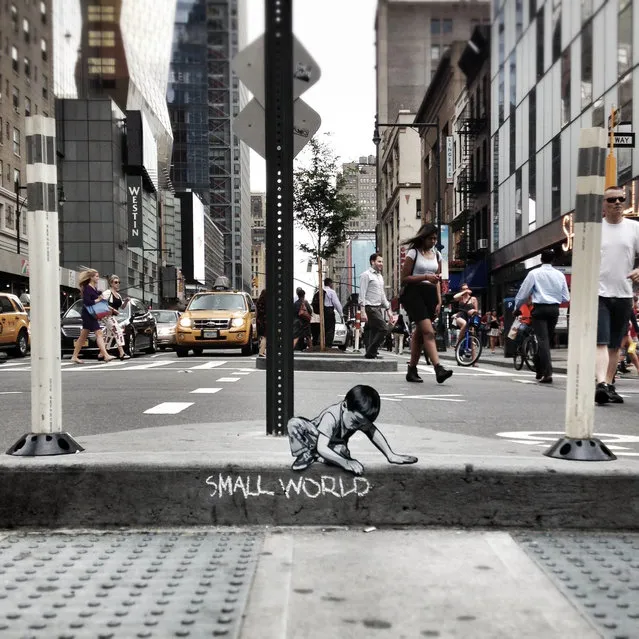
New Jersey based artist, Joe Iurato creates art using hand-cut paper and spray paint to make small wood cutout figures and placed in public spaces. According to Iurato, “a puddle can become a lake, a small crack in a cement wall can become a magnificent climb, a planter box can become a place for a child to play, and a shadow might be a tangible space for a few seconds a day”. Photo: “Small World”. (Photo by Joe Lurato)
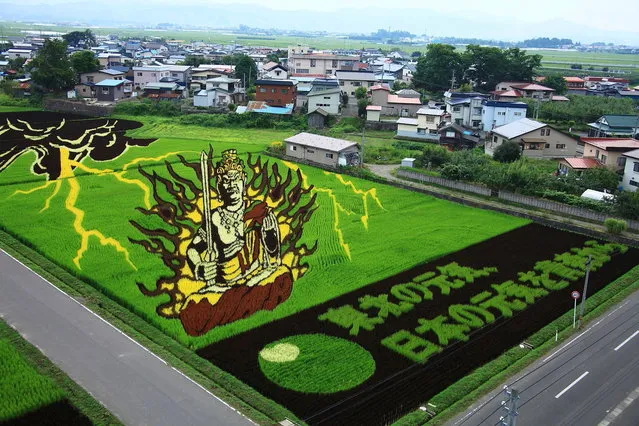
Tanbo Art is the strategic planting of four varieties of rice which have different colored leaves in order to create a giant image in the rice paddy. This type of aesthetic planting began in the Japanese village of Inakadate in 1993 in order to celebrate the village’s over 2000 year history of rice farming. The practice has spread to other rice cultivating communities in Japan and even other countries such as Thailand and South Korea.