Loading...
Done
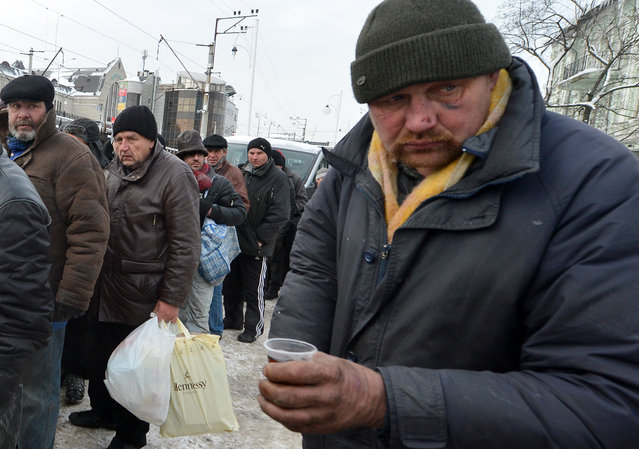
Homeless people  queue to get free hot food organized by social services during frost winter day in-Kiev on December 18, 2012. Nineteen people died of exposure in Ukraine in the last 24 hours amid temperatures of minus 20 degrees Celsius (minus 4 degrees Fahrenheit), bringing the toll this month to 37, the health ministry said Tuesday. (Photo by Sergei Supinsky/AFP Photo)

Homeless people queue to get free hot food organized by social services during frost winter day in-Kiev on December 18, 2012. Nineteen people died of exposure in Ukraine in the last 24 hours amid temperatures of minus 20 degrees Celsius (minus 4 degrees Fahrenheit), bringing the toll this month to 37, the health ministry said Tuesday. (Photo by Sergei Supinsky/AFP Photo)
Details
19 Dec 2012 10:28:00
A Tibetan Buddhist nun spins a prayer wheel in sub zero temperatures at a Buddhist laymen lodge where thousands of people gather for daily chanting session during the Utmost Bliss Dharma Assembly, the last of the four Dharma assemblies at Larung Wuming Buddhist Institute in remote Sertar county, Garze Tibetan Autonomous Prefecture, Sichuan province, China November 1, 2015. (Photo by Damir Sagolj/Reuters)

A Tibetan Buddhist nun spins a prayer wheel in sub zero temperatures at a Buddhist laymen lodge where thousands of people gather for daily chanting session during the Utmost Bliss Dharma Assembly, the last of the four Dharma assemblies at Larung Wuming Buddhist Institute in remote Sertar county, Garze Tibetan Autonomous Prefecture, Sichuan province, China November 1, 2015. (Photo by Damir Sagolj/Reuters)
Details
06 Nov 2015 08:06:00
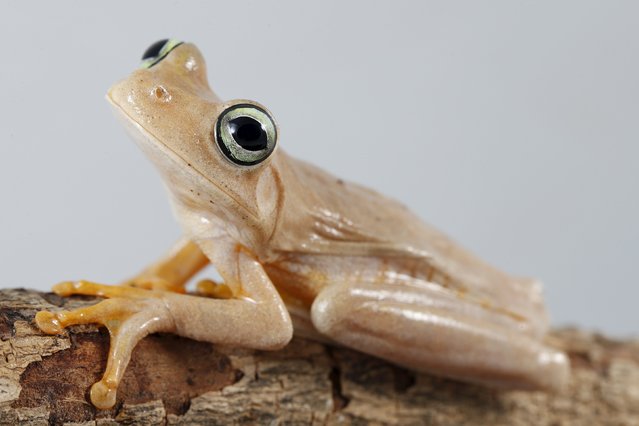
A Hypsiboas crepitans frog is pictured at a terrarium in Caracas November 30, 2015. Venezuelan frogs and toads are in critical danger due to climate change as rising temperatures complicate reproduction and spread a deadly fungus, say scientists, who liken the species to canaries in a coalmine warning of imminent danger. (Photo by Carlos Garcia Rawlins/Reuters)

A Hypsiboas crepitans frog is pictured at a terrarium in Caracas November 30, 2015. Venezuelan frogs and toads are in critical danger due to climate change as rising temperatures complicate reproduction and spread a deadly fungus, say scientists, who liken the species to canaries in a coalmine warning of imminent danger. The survival of a group of nearly 20 frog and toad species, which top Venezuela's list of endangered species, may rest on a small group of academics in a Caracas laboratory attempting to recreate the amphibians' natural reproductive conditions. (Photo by Carlos Garcia Rawlins/Reuters)
Details
17 Dec 2015 08:04:00
A fisherman boats in Chao Lake where thick cyanobacteria gather on the surface on August 5, 2015 in Chaohu, Anhui Province of China. As high temperature came in summar, part of water in Anhui Province's Chao Lake breeds large tracts of cyanobacteria which not only brought pollution to sense of smell, but also affected people's life. (Photo by ChinaFotoPress/ChinaFotoPress via Getty Images)

A fisherman boats in Chao Lake where thick cyanobacteria gather on the surface on August 5, 2015 in Chaohu, Anhui Province of China. As high temperature came in summar, part of water in Anhui Province's Chao Lake breeds large tracts of cyanobacteria which not only brought pollution to sense of smell, but also affected people's life. (Photo by ChinaFotoPress/ChinaFotoPress via Getty Images)
Details
06 Aug 2015 11:36:00
Visitors watch as Grigory Broverman, a member of the Cryophile winter swimmers club, pours a bucket of cold water over his 6-year-old daughter Liza during a flash mob, part of a celebration of Polar Bear Day at the Royev Ruchey Zoo in a suburb of the Siberian city of Krasnoyarsk, Russia, November 29, 2015. The air temperature was around minus 5 degrees Celsius. (Photo by Ilya Naymushin/Reuters)

Visitors watch as Grigory Broverman, a member of the Cryophile winter swimmers club, pours a bucket of cold water over his 6-year-old daughter Liza during a flash mob, part of a celebration of Polar Bear Day at the Royev Ruchey Zoo in a suburb of the Siberian city of Krasnoyarsk, Russia, November 29, 2015. The air temperature was around minus 5 degrees Celsius. (Photo by Ilya Naymushin/Reuters)
Details
08 Jan 2016 08:06:00
Workers hang hundreds of color-dyed sheets of cloth on a bamboo framework to dry in a dyeing factory in Narayanganj, Bangladesh on May 23, 2023. The drying process usually takes 4 hours, with each set of 200 pieces at a time to dry in temperatures over 42 degrees Celsius. Workers use hats for protection from the scorching heat because they have to constantly turn the colorful fabrics so that they dry perfectly in the sunlight. (Photo by Joy Saha/ZUMA Press Wire/Rex Features/Shutterstock)

Workers hang hundreds of color-dyed sheets of cloth on a bamboo framework to dry in a dyeing factory in Narayanganj, Bangladesh on May 23, 2023. The drying process usually takes 4 hours, with each set of 200 pieces at a time to dry in temperatures over 42 degrees Celsius. Workers use hats for protection from the scorching heat because they have to constantly turn the colorful fabrics so that they dry perfectly in the sunlight. (Photo by Joy Saha/ZUMA Press Wire/Rex Features/Shutterstock)
Details
14 Jun 2023 02:39:00
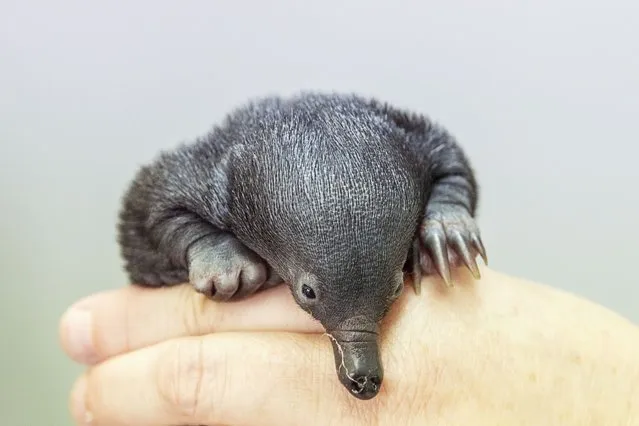
“Smudge” an orphaned echidna puggle is held by Veterinary nurse Sarah Male ahead of its feeding on November 07, 2022 in Sydney, Australia. Echidnas, sometimes known as spiny anteaters, are native to Australia. A baby echidna was found orphaned by the side of the road and is being cared for at Sydney's Taronga Zoo hospital. The care is intensive with several feedings per day, and the echidna is housed in temperature-controlled environment to aid its recovery and growth. (Photo by Jenny Evans/Getty Images)

“Smudge” an orphaned echidna puggle is held by Veterinary nurse Sarah Male ahead of its feeding on November 07, 2022 in Sydney, Australia. Echidnas, sometimes known as spiny anteaters, are native to Australia. A baby echidna was found orphaned by the side of the road and is being cared for at Sydney's Taronga Zoo hospital. The care is intensive with several feedings per day, and the echidna is housed in temperature-controlled environment to aid its recovery and growth. (Photo by Jenny Evans/Getty Images)
Details
04 Jan 2024 19:37:00
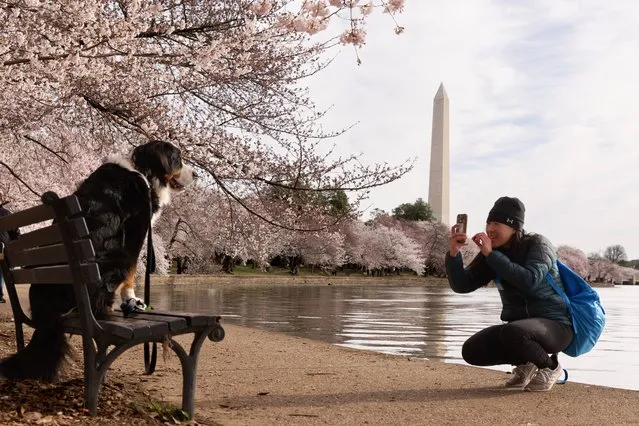
Adrienne Yip takes a picture of her Burmese mountain dog named “Walter”, beneath the cherry blossoms in peak bloom at the Tidal Basin with the Washington Monument seen behind, in Washington, DC, USA, 18 March 2024. Peak bloom, as defined when seventy percent of the cherry blossoms are open, is occuring this week. This year's peak bloom, beginning the 17th of March, is tied for the second earliest in history and is seen as a reflection of warming temperatures. (Photo by Michael Reynolds/EPA/EFE/Rex Features/Shutterstock)

Adrienne Yip takes a picture of her Burmese mountain dog named “Walter”, beneath the cherry blossoms in peak bloom at the Tidal Basin with the Washington Monument seen behind, in Washington, DC, USA, 18 March 2024. Peak bloom, as defined when seventy percent of the cherry blossoms are open, is occuring this week. This year's peak bloom, beginning the 17th of March, is tied for the second earliest in history and is seen as a reflection of warming temperatures. (Photo by Michael Reynolds/EPA/EFE/Rex Features/Shutterstock)
Details
31 Mar 2024 05:48:00