Loading...
Done
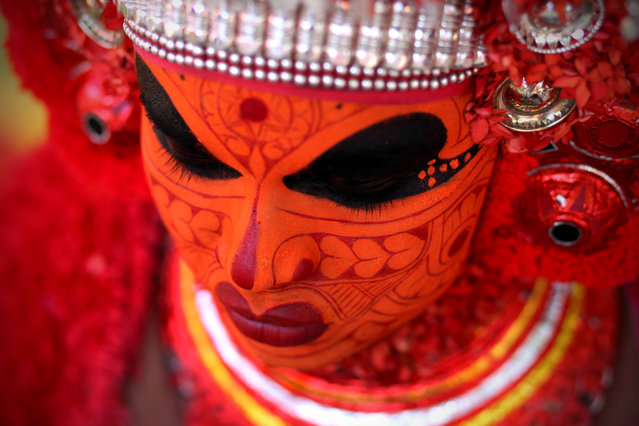
“Theyyam”. Preparation for the Theyyam performance in the surroundings of Kasaragod city. Theyyam is a popular ritual dance form of North Kerala, particularly in Kannur and Kasargod districts. The Theyyam represents a mythological, divine or heroic character. Make up of Theyyams is done by specialist. There are different types of face painting for which primarily and secondary colours are used. Photo location:  Kasaragod, India. (Photo and caption by Rafal Ziejewski/National Geographic Photo Contest)

“Theyyam”. Preparation for the Theyyam performance in the surroundings of Kasaragod city. Theyyam is a popular ritual dance form of North Kerala, particularly in Kannur and Kasargod districts. The Theyyam represents a mythological, divine or heroic character. Make up of Theyyams is done by specialist. There are different types of face painting for which primarily and secondary colours are used. Therefore it is essential that the makeup man should have perfect knowledge of primary and secondary colour combinations. Sometimes, it takes several hours to paint each face. Photo location: Kasaragod, India. (Photo and caption by Rafal Ziejewski/National Geographic Photo Contest)
Details
02 Jul 2014 10:42:00
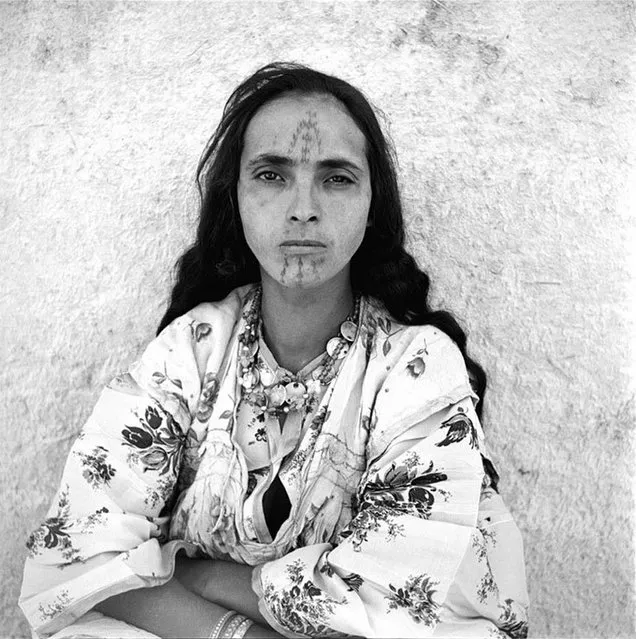
A 1960 photograph of an Algerian woman in a French regroupment village. (Photo by Marc Garanger)

For France, the trauma of the Algerian War (1954-1962) was not unlike the experience of the Vietnam War for the United States. But, unlike the conflict in Vietnam, few photographic documents exist from that period in Algeria: it is as if the French responded with collective amnesia. Marc Garanger’s Algerian Women is one of the few photographic essays dedicated to that painful period... Photo: A 1960 photograph of an Algerian woman in a French regroupment village. (Photo by Marc Garanger)
Details
29 Apr 2013 10:15:00
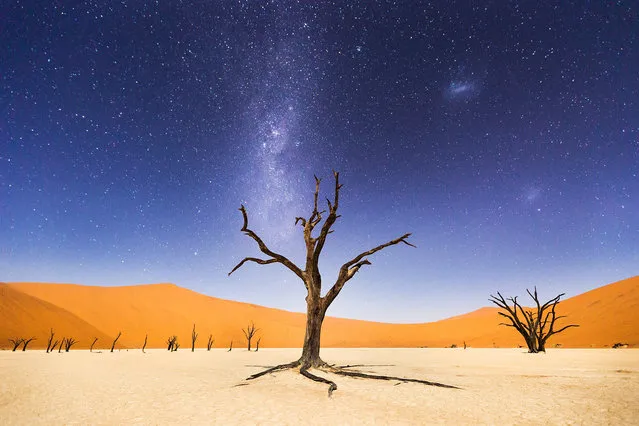
Merit: A Night at Deadvlei. The night before returning to Windhoek, we spent several hours at Deadveli. The moon was bright enough to illuminate the sand dunes in the distance, but the skies were still dark enough to clearly see the milky way and magellanic clouds. Deadveli means “dead marsh. (Photo and caption by Beth McCarley/National Geographic Traveler Photo Contest)

Merit: A Night at Deadvlei. The night before returning to Windhoek, we spent several hours at Deadveli. The moon was bright enough to illuminate the sand dunes in the distance, but the skies were still dark enough to clearly see the milky way and magellanic clouds. Deadveli means “dead marsh. The camelthorn trees are believed to be about 900 years old, but have not decomposed because the environment is so dry. (Photo and caption by Beth McCarley/National Geographic Traveler Photo Contest)
Details
04 Aug 2015 11:50:00
1st Place in Wildlife: A male orangutan peers from behind a tree while crossing a river in Borneo, Indonesia. (Photo by Jayaprakash Joghee Bojan/National Geographic Nature Photographer of the Year contest 2017)

1st Place in Wildlife: A male orangutan peers from behind a tree while crossing a river in Borneo, Indonesia. (Photo by Jayaprakash Joghee Bojan/National Geographic Nature Photographer of the Year contest 2017)
Details
15 Dec 2017 06:34:00
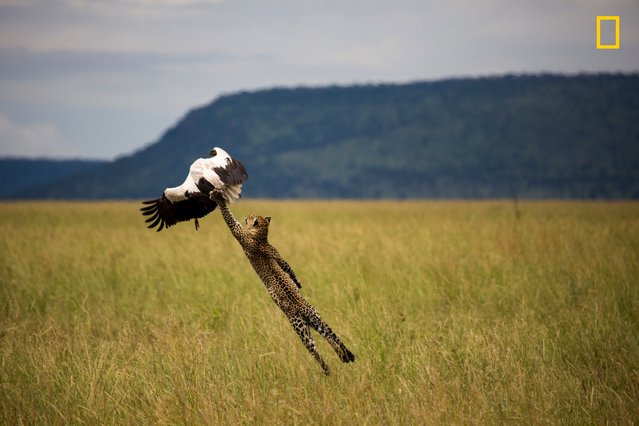
“Leopard Hunting a Stork”. “One-shot capture. I watched the leopard stalking the stork, I only had time to focus at 400mm, no time to change to high speed, I watched the stork, and as soon as it flapped its wings, I shot one shot”. (Photo by Paul Rifkin/National Geographic Travel Photographer of the Year Contest)

“Leopard Hunting a Stork”. “One-shot capture. I watched the leopard stalking the stork, I only had time to focus at 400mm, no time to change to high speed, I watched the stork, and as soon as it flapped its wings, I shot one shot”. (Photo by Paul Rifkin/National Geographic Travel Photographer of the Year Contest)
Details
04 Jun 2018 00:03:00
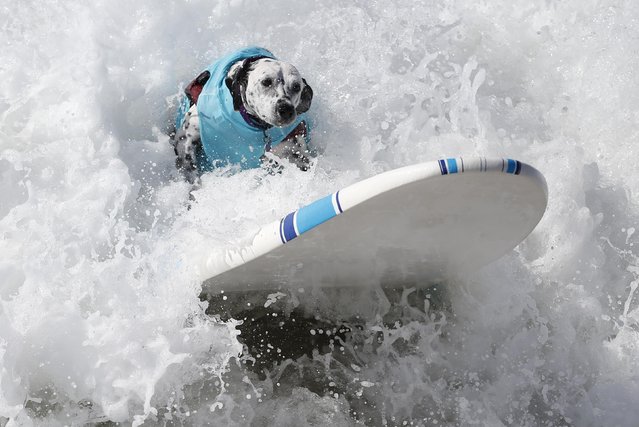
A dog surfs at the 6th Annual Surf City surf dog contest in Huntington Beach, California September 28, 2014. (Photo by Lucy Nicholson/Reuters)

A dog surfs at the 6th Annual Surf City surf dog contest in Huntington Beach, California September 28, 2014. (Photo by Lucy Nicholson/Reuters)
Details
29 Sep 2014 10:58:00
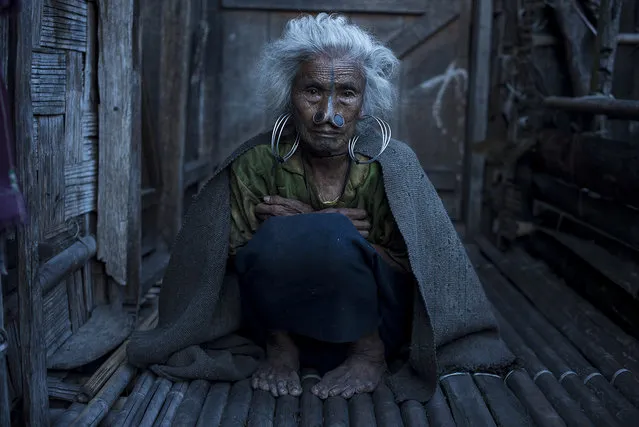
“YagYang”. The Apatani are tribal people living in north east of India in the region of Arunachal Pradesh. Tattooing and stuffing of large nose plugs is the particularity of these women. YagYang 75 years old, her husband passed away few months ago and she feels very alone, during my visit I was very fond of this woman and I wanted to spend some more time with her, so I asked her which was her favorite dish. Photo location: India. (Photo and caption by Passarini Mattia/National Geographic Photo Contest)

“YagYang”. The Apatani are tribal people living in north east of India in the region of Arunachal Pradesh. Tattooing and stuffing of large nose plugs is the particularity of these women. YagYang 75 years old, her husband passed away few months ago and she feels very alone, during my visit I was very fond of this woman and I wanted to spend some more time with her, so I asked her which was her favorite dish. The next day i returned with the fresh fish, as she mentioned, and when she saw me she was very happy and welcomed me with a big smile. Photo location: India. (Photo and caption by Passarini Mattia/National Geographic Photo Contest)
Details
05 Nov 2014 11:55:00
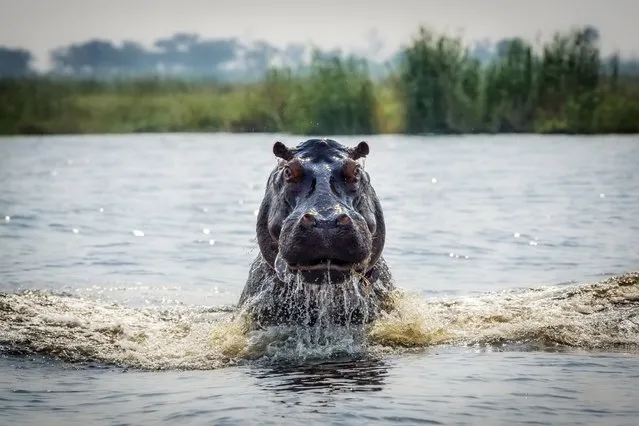
“Hippo Chase”. As we approached the camp the Selinda Reserve of northern Botswana our boat passed by a hippo resting in the water. I turned around to look back at the boat's wake and saw the hippo charging after us! The hippo must've been tired from an all-nighter because he was angry. (Photo and caption by Curtis Simmons/National Geographic Photo Contest)

“Hippo Chase”. As we approached the camp the Selinda Reserve of northern Botswana our boat passed by a hippo resting in the water. I turned around to look back at the boat's wake and saw the hippo charging after us! The hippo must've been tired from an all-nighter because he was angry. He rose way up out of the water three times trying to chase our boat! He was coming at us with such force that he created a wake of his own. Photo location: Selinda Reserve of northern Botswana. (Photo and caption by Curtis Simmons/National Geographic Photo Contest)
Details
06 Nov 2014 08:59:00