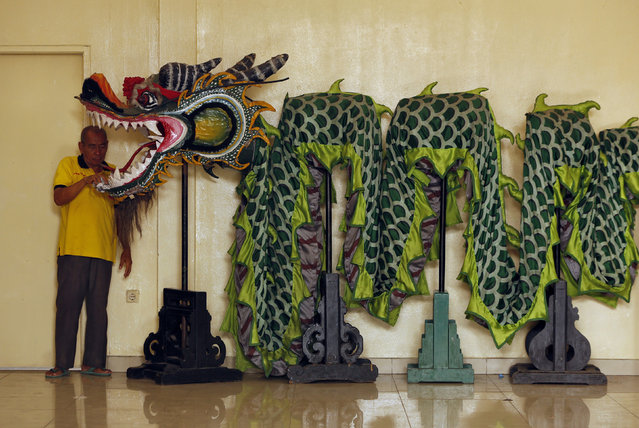
A worker cleans a dragon ahead of the upcoming Chinese Lunar New Year celebrations at the Boen Tek Bio temple in Tangerang, Banten province, Indonesia February 1, 2016. (Photo by Reuters/Beawiharta)
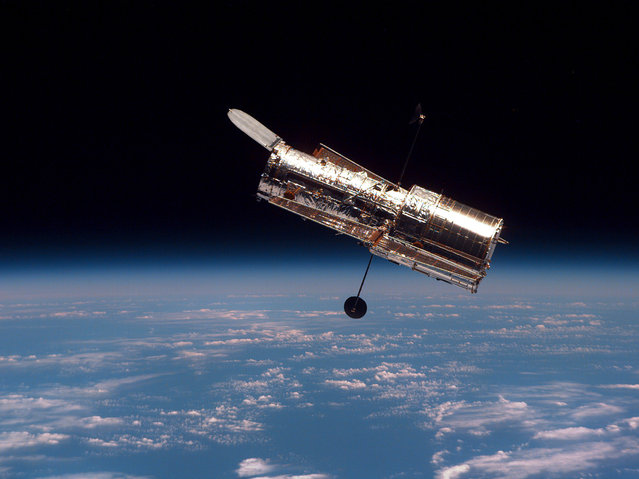
The Hubble Space Telescope is shown following its release from the space shuttle Discovery Wednesday, February 19, 1997. The Hubble Space Telescope, one of NASA'S crowning glories, marks its 25th anniversary on Friday, April 24, 2015. With more than 1 million observations, including those of the farthest and oldest galaxies ever beholden by humanity, no man-made satellite has touched as many minds or hearts as Hubble. (Photo by AP Photo/NASA)
4-year-old Benji, making waves at Arpoador Beach in Rio De Janeiro, Brazil on December 12, 2024. The Jack Russell Terrier who began catching waves one year ago, has become a fixture along Rio's iconic Ipanema Beach. His skills not only impress fellow surfers but also delights beachgoers, who often pause to admire the bond between man and dog riding the surf. (Photo by Bob Karp/ZUMA Press Wire)
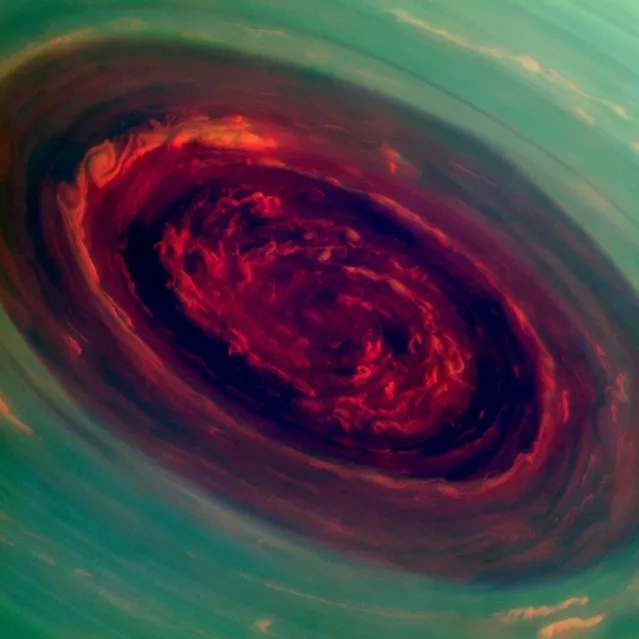
NASA's Cassini spacecraft has provided scientists the first close-up, visible-light views of a behemoth hurricane swirling around Saturn's north pole. In high-resolution pictures and video, scientists see the hurricane's eye is about 1,250 miles (2,000 kilometers) wide, 20 times larger than the average hurricane eye on Earth. Thin, bright clouds at the outer edge of the hurricane are traveling 330 mph(150 meters per second). The hurricane swirls inside a large, mysterious, six-sided weather pattern known as the hexagon. Photo: The spinning vortex of Saturn's north polar storm resembles a deep red rose of giant proportions surrounded by green foliage in this false-color image from NASA's Cassini spacecraft. (Photo by NASA/JPL-Caltech/SSI)
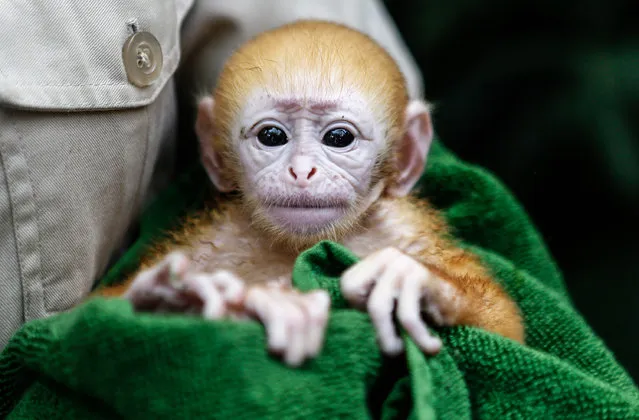
A zookeeper handles a week-old newborn baby Langur at Bali Zoo on June 19, 2014 in Gianyar, Bali, Indonesia. Javan Langurs are found in Java, Bali and Lombok in Indonesia and are listed as a threatened species due to hunting, agricultural expansion and habitat loss. (Photo by Putu Sayoga/Getty Images)
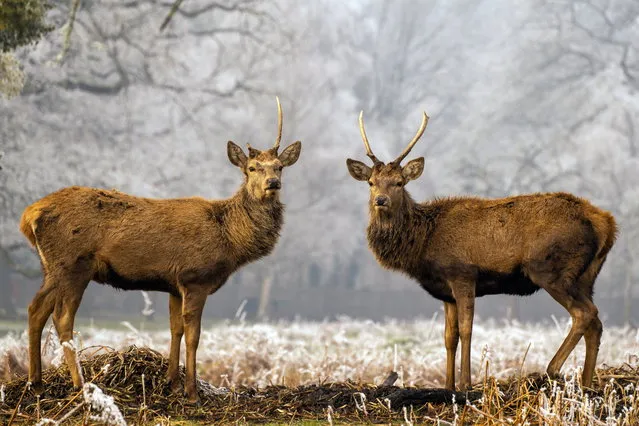
Two young deer seem to look bashfully at the camera after a playfight in Bushy Park, London early February 2023. (Photo by Lesley Marshall/South West News Service)
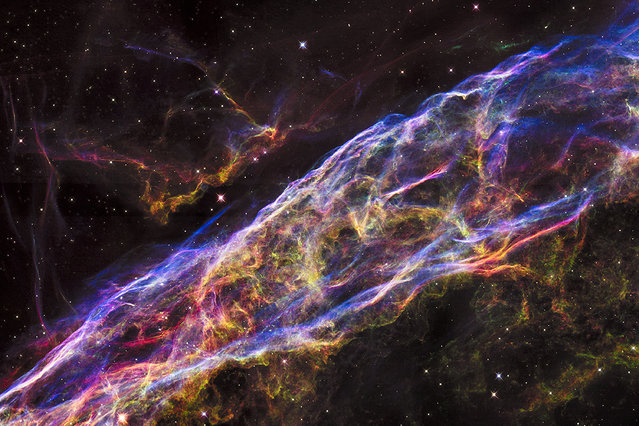
A small section of the expanding remains of the Veil Nebula, a massive star that exploded about 8,000 years ago. The entire nebula is 110 light-years across, covering six full moons on the sky as seen from Earth, and resides about 2,100 light-years away in the constellation Cygnus, the Swan. Image taken by NASA's Hubble Space Telescope. Released September 24, 2015. (Photo by Reuters/NASA/ESA/Hubble Heritage Team)
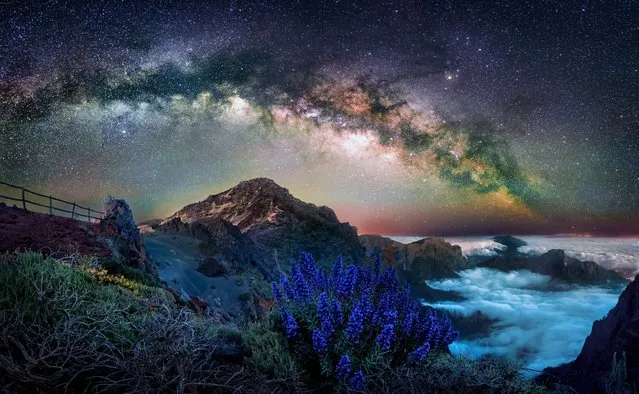
Tony North; First place, Breathing Spaces; Overall Winner; Blue Tajinaste, La Palma, Canary Islands, Spain. “Echium thyrsiflorum is endemic to the mountains of La Palma island – from high up, there was a magnificent view of both the caldera below, and the stars above. The Unesco La Palma biosphere reserve encompasses the entire island, with the Caldera de Taburiente containing mountains with a highest peak of 2,426 metres – the Roque de los Muchachos”. (Photo by Tony North/IGPOTY)