Loading...
Done
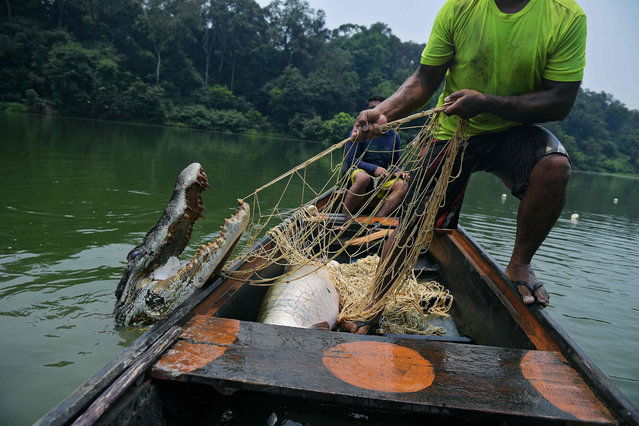
Fishermen pull up a live 2.5 metre crocodile in their net in the Western Amazon region, Brazil on September 20, 2017. The fishermen were fishing for a large river fish called Arapaima but sometimes crocodiles become stuck in the nets as well. (Photo by Carl de Souza/AFP Photo)

Fishermen pull up a live 2.5 metre crocodile in their net in the Western Amazon region, Brazil on September 20, 2017. The fishermen were fishing for a large river fish called Arapaima but sometimes crocodiles become stuck in the nets as well. (Photo by Carl de Souza/AFP Photo)
Details
24 Sep 2017 06:47:00
An actor plays an injured passer-by during Exercise Strong Tower, the scene of a mock terror attack at a disused underground station in central London, Britain June 30, 2015. (Photo by Peter Nicholls/Reuters)

An actor plays an injured passer-by during Exercise Strong Tower, the scene of a mock terror attack at a disused underground station in central London, Britain June 30, 2015. London police held their biggest-ever terrorism drill on Tuesday, pitting the emergency services against a group of marauding attackers, nearly 10 years since four young British Islamists killed 52 people in suicide bombings on London's transport network in July 2005. (Photo by Peter Nicholls/Reuters)
Details
01 Jul 2015 13:21:00
An exotic dancer performs in a street during an “Urban intervention” publicity event for an adult club in Santiago, Chile, January 26, 2016. (Photo by Ivan Alvarado/Reuters)

An exotic dancer performs in a street during an “Urban intervention” publicity event for an adult club in Santiago, Chile, January 26, 2016. (Photo by Ivan Alvarado/Reuters)
Details
27 Jan 2016 14:00:00
A young woman cools herself in a fountain in Budapest, Hungary July 6, 2015. (Photo by Laszlo Balogh/Reuters)

A young woman cools herself in a fountain in Budapest, Hungary July 6, 2015. Over the weekend, a heat wave has reached Hungary with temperatures topping 38 degrees Celsius (100.4 degrees Fahrenheit). (Photo by Laszlo Balogh/Reuters)
Details
07 Jul 2015 12:30:00


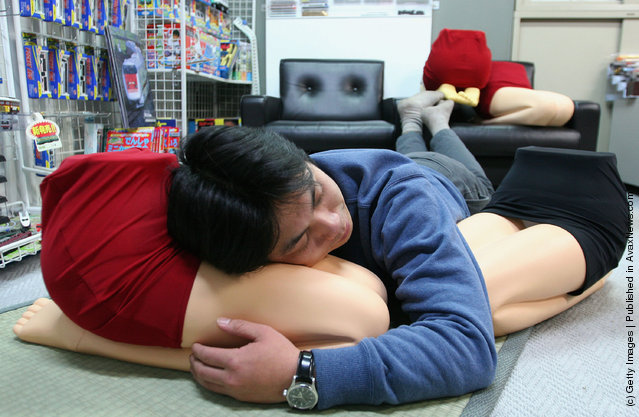
Developer of “Hizamakura”, or lap pillow, Makoto Igarashi, introduces the product at Trane Co., Ltd.'s HQ on December 14, 2004 in Tokyo, Japan. (Photo by Koichi Kamoshida/Getty Images)
Details
19 May 2011 10:53:00
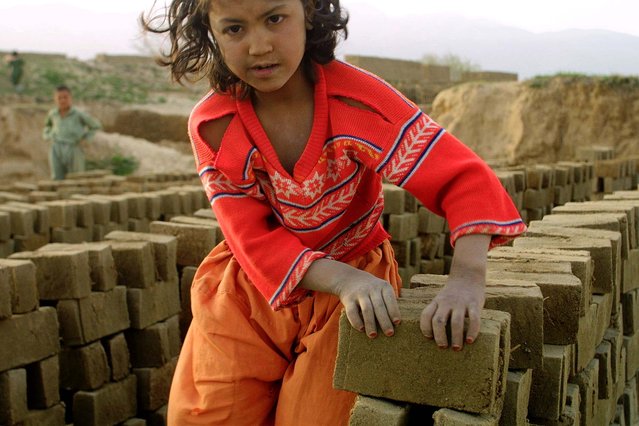
An Afghan girl makes a pile of unbaked bricks near the road passing through the Shamali Plains, about 10 kilometers (6 miles), west of Bagram, Afghanistan, Wednesay April 9, 2003. Children assist parents in their job to supplement family income. (Photo by Gurinder Osan/AP Photo)

An Afghan girl makes a pile of unbaked bricks near the road passing through the Shamali Plains, about 10 kilometers (6 miles), west of Bagram, Afghanistan, Wednesay April 9, 2003. Children assist parents in their job to supplement family income. (Photo by Gurinder Osan/AP Photo)
Details
10 Sep 2016 09:14:00
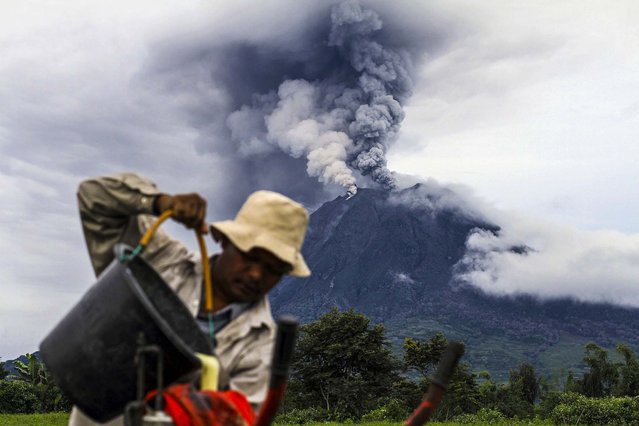
A villager pours pesticide from a bucket as Mount Sinabung spews ash at Kebayaken village in Karo district, Indonesia's North Sumatra province, on December 4, 2013. The country has ordered the evacuation of 15,000 residents near the active volcano. (Photo by Roni Bintang/Reuters)

A villager pours pesticide from a bucket as Mount Sinabung spews ash at Kebayaken village in Karo district, Indonesia's North Sumatra province, on December 4, 2013. The country has ordered the evacuation of 15,000 residents near the active volcano. (Photo by Roni Bintang/Reuters)
Details
07 Dec 2013 11:48:00
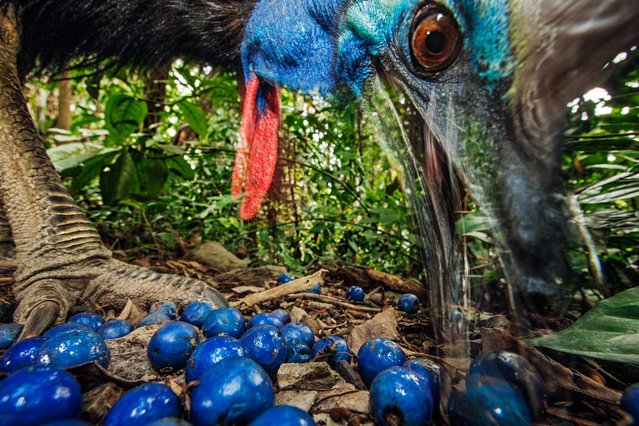
“Cassowaries are large, flightless birds related to emus and (more distantly) to ostriches, rheas, and kiwis”, writes Olivia Judson in the September issue of National Geographic magazine. (Photo by Christian Ziegler/National Geographic)

“Cassowaries are large, flightless birds related to emus and (more distantly) to ostriches, rheas, and kiwis”, writes Olivia Judson in the September issue of National Geographic magazine. How large? People-size: Adult males stand well over five foot five and top 110 pounds. Females are even taller, and can weigh more than 160 pounds. Dangerous when roused, they’re shy and peaceable when left alone. But even birds this big and tough are prey to habitat loss. The dense New Guinea and Australia rain forests where they live have dwindled. Today cassowaries might number 1,500 to 2,000. And because they help shape those same forests – by moving seeds from one place to another – “if they vanish”, Judson writes, “the structure of the forest would gradually change” too. (Photo by Christian Ziegler/National Geographic)

Details
06 Jan 2014 12:21:00