Loading...
Done
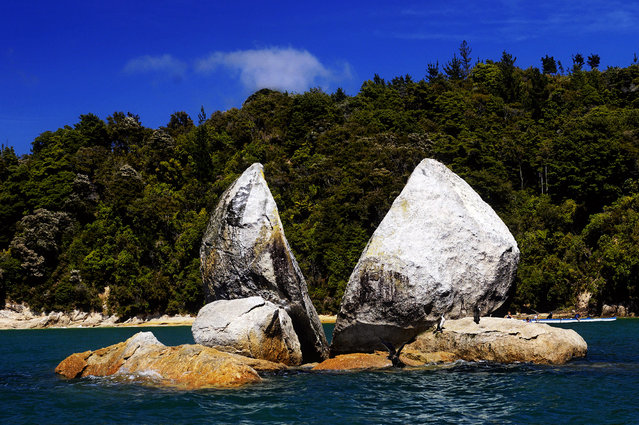
Split Apple Rock

Split Apple Rock is a geological rock formation in The Tasman Bay off the northern coast of the South Island of New Zealand. Made of granite, it is in the shape of an apple which has been cut in half. It is a popular tourist attraction in the waters of the Tasman Sea approximately 50 metres off the coast between Kaiteriteri and Marahau. The rock sits in shallow water at low tide and is accessible by wading. It is also a point of interest for the many tourist boats and pleasure craft which operate along the shores of the Abel Tasman National Park. The cleft to produce two sides of the 'apple' was a natural occurrence. It is unknown when this happened and therefore the cleaving of the rock has attracted mythological explanations.
Details
19 Oct 2013 10:58:00
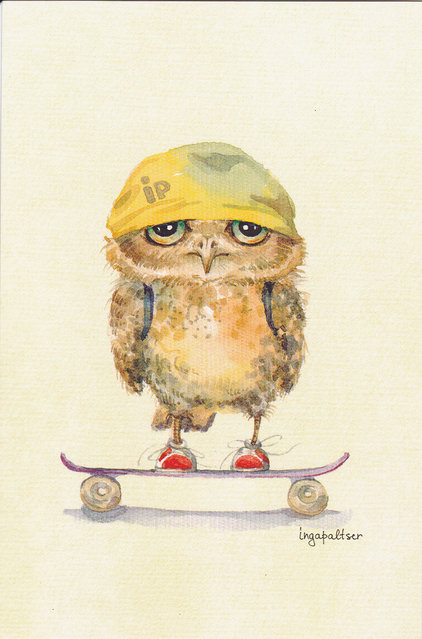
Owlets By Inga Paltser

Inga Paltser is a young painter from Severodvinsk known for her watercolor illustrations and paintings of owls. Inga prefers working with paper, but sometimes also creates on textile, wood, and canvas. She started painting in her childhood at the local school of arts. However, after high school Inga decided to become a biologist and now she works as a researcher. Even though art hasn’t become her profession, Inga finds time to create wonderful paintings presented on this website. Her first owls were painted spontaneously – Inga decided to utilize small pieces of watercolor and pastel paper and created two cute owls called “Friends”. Inga’s owls instantly received recognition across the web and social networks and now are greatly loved by thousands of people around the world.
Details
18 Nov 2013 10:08:00
Cats of PetSmart Charities

PetSmart Charities'® Emergency Relief Waggin'® Vehicle Assists Hundreds of Cats in Madison County, Fla
Details
12 May 2012 05:54:00
Coco Rocha By Craig McDean

A Canadian fashion model Coco Rocha By Craig McDean. Vogue US (May 2008). Photographer: Craig McDean; Fashion Editor: Grace Coddington; Editorial: Daring Do; Model: Coco Rocha; Hair: Julien d’YS; Makeup: Diane Kendall. (Photo by Craig McDean/Vogue)
Details
03 Jun 2012 11:46:00


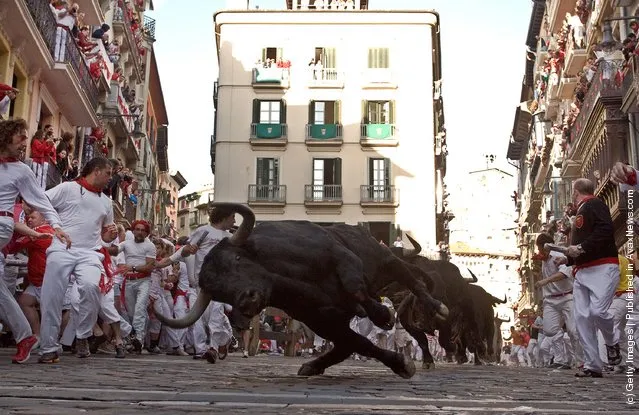
A fighting bull loses its balance during the third day of the San Fermin running-of-the-bulls on July 8, 2011 in Pamplona, Spain. Pamplona's famous Fiesta de San Fermin, which involves the running of the bulls through the historic heart of Pamplona for eight days starting July 7th, was made famous by the 1926 novel of U.S. writer Ernest Hemmingway called “The Sun Also Rises”. (Photo by Denis Doyle/Getty Images)
Details
08 Jul 2011 10:45:00
A Palestinian protester uses a sling to hurl stones towards Israeli troops during clashes near the Jewish settlement of Bet El, near the occupied West Bank city of Ramallah October 5, 2015. Violence intensified in Jerusalem and the West Bank on Sunday after Israelis were targeted in two stabbing attacks and a Palestinian was killed in a clash with Israeli troops, officials said. (Photo by Mohamad Torokman/Reuters)

A Palestinian protester uses a sling to hurl stones towards Israeli troops during clashes near the Jewish settlement of Bet El, near the occupied West Bank city of Ramallah October 5, 2015. Violence intensified in Jerusalem and the West Bank on Sunday after Israelis were targeted in two stabbing attacks and a Palestinian was killed in a clash with Israeli troops, officials said. (Photo by Mohamad Torokman/Reuters)
Details
08 Oct 2015 08:01:00
Edible Art By Sandra Van Den Broek

Sandra van den Broek from Netherlands creates the cutest character bento for her children’s. She’ll start by sketching the meal and prepares it with scissors, knives and toothpicks. Although you wouldn’t say, it usually takes Sandra only one hour to make a meal. She likes to make something practical, something for everyone to be able to follow. And if you look closely, you can see that it wouldn’t be too hard to make these bentos yourself.
Details
04 Sep 2014 10:29:00
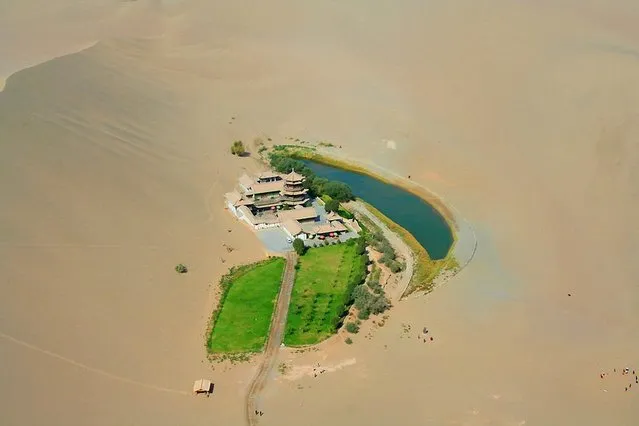
Crescent Lake In China

Yueyaquan is a crescent-shaped lake in an oasis, 6 km south of the city of Dunhuang in Gansu Province, China. It was named Yueyaquan in the Qing Dynasty. According to measurements made in 1960, the average depth of the lake was 4 to 5 meters, with a maximum depth of 7.5 metres In the following 40 years, the depth of the lake continually declined. In the early 1990s, its area had shrunk to only 5,500 m2 with an average depth of 0.9 meter (maximum 1.3 meter). In 2006, the local government with help of the central government started to fill the lake and restore its depth; its depth and size have been growing yearly since then. The lake and the surrounding deserts are very popular with tourists, who are offered camel and 4x4 rides.
Details
25 Jun 2013 10:29:00