Loading...
Done
A follower of the Afro-Brazilian religion Umbanda pays tribute for Iemanja, goddess of the sea, in Copacabana Beach in Rio de Janeiro, Brazil December 29, 2017. (Photo by Ricardo Moraes/Reuters)

A follower of the Afro-Brazilian religion Umbanda pays tribute for Iemanja, goddess of the sea, in Copacabana Beach in Rio de Janeiro, Brazil December 29, 2017. Hundreds of practitioners of Brazil's Afro-Brazilian Candomble and Umbanda faiths have gathered at Rio de Janeiro's Copacabana beach to honor Yemanja. Worshippers were mostly dressed in white as they launched their offerings to Iemanja: small boats with flowers and bowls with candles and fruits. (Photo by Ricardo Moraes/Reuters)
Details
30 Dec 2017 06:22:00
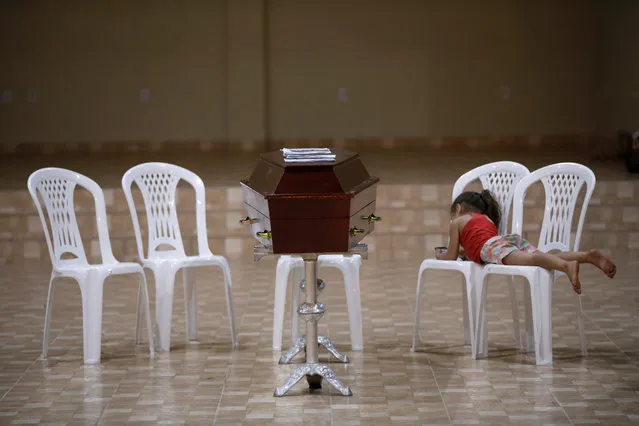
A relative of murdered prisoner, lies on a chair next to his coffin  during a wake after a prison riot in the city of Altamira, Para state, Brazil on July 30, 2019. (Photo by Bruno Kelly/Reuters)

A relative of murdered prisoner, lies on a chair next to his coffin during a wake after a prison riot in the city of Altamira, Para state, Brazil on July 30, 2019. At least 57 prisoners were killed by other inmates during clashes between organized crime groups in the Altamira prison in northern Brazil Monday with 16 of the victims being decapitated, according to prison officials. (Photo by Bruno Kelly/Reuters)
Details
02 Aug 2019 00:05:00
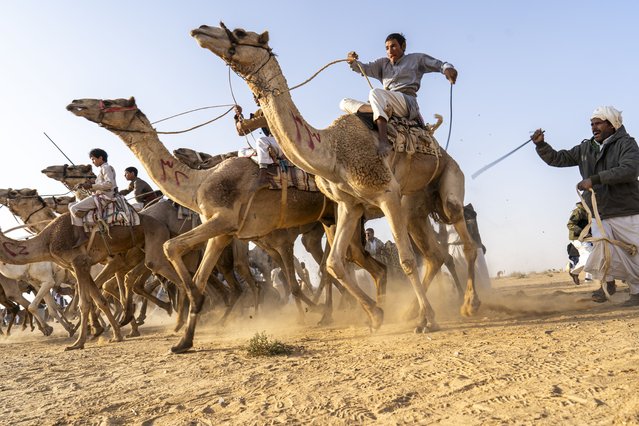
The start of the Al-Sirr camel race on November 19, 2025 in El Hassana, Egypt. The Al-Sirr camel race is one of the most culturally significant and widely celebrated sporting events among the Bedouin communities of Sinai. Every year, Bedouin tribes gather here to hold this traditional race, an event that preserves its authentic heritage. Unlike modern camel races elsewhere, the Bedouin here do not use robotic jockeys or advanced racing technologies. Instead, the camels are ridden by young boys aged approximately 5 to 16, maintaining a long-standing cultural practice. (Photo by Ali Moustafa/Getty Images)

The start of the Al-Sirr camel race on November 19, 2025 in El Hassana, Egypt. The Al-Sirr camel race is one of the most culturally significant and widely celebrated sporting events among the Bedouin communities of Sinai. Every year, Bedouin tribes gather here to hold this traditional race, an event that preserves its authentic heritage. Unlike modern camel races elsewhere, the Bedouin here do not use robotic jockeys or advanced racing technologies. Instead, the camels are ridden by young boys aged approximately 5 to 16, maintaining a long-standing cultural practice. (Photo by Ali Moustafa/Getty Images)
Details
03 Jan 2026 12:49:00
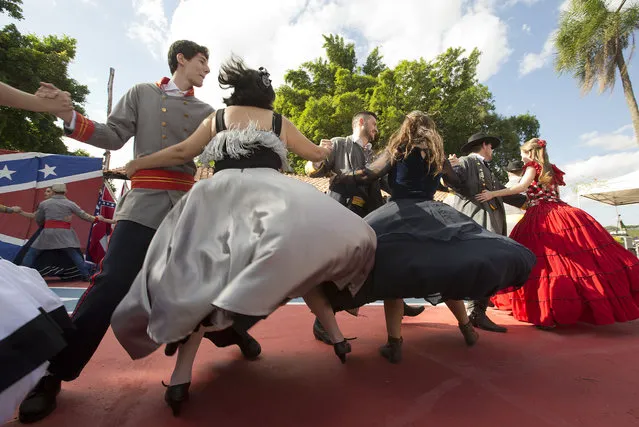
Descendants of American Southerners Wearing Confederate-era dresses and uniforms dance during a party to celebrate the 150th anniversary of the end of the American Civil War in Santa Barbara d'Oeste, Brazil, Sunday, April 26, 2015. For many of the residents of Santa Barbara d'Oeste and neighboring Americana, in Brazil's southeastern Sao Paulo state. (Photo by Andre Penner/AP Photo)

Descendants of American Southerners Wearing Confederate-era dresses and uniforms dance during a party to celebrate the 150th anniversary of the end of the American Civil War in Santa Barbara d'Oeste, Brazil, Sunday, April 26, 2015. For many of the residents of Santa Barbara d'Oeste and neighboring Americana, in Brazil's southeastern Sao Paulo state, having Confederate ancestry is a point of pride and is celebrated in high style at the annual “Festa dos Confederados”, or “Confederates Party” in Portuguese. (Photo by Andre Penner/AP Photo)
Details
28 Apr 2015 13:30:00
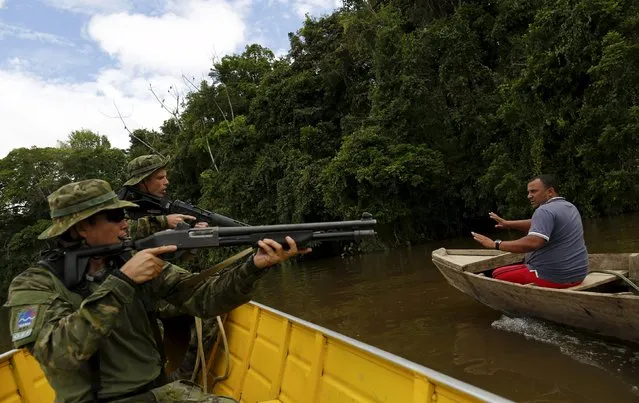
A gold prospector is detained by agents of Brazil’s environmental agency on the Uraricoera River during an operation against illegal gold mining on indigenous land, in the heart of the Amazon rainforest, in Roraima state, Brazil April 15, 2016. (Photo by Bruno Kelly/Reuters)

A gold prospector is detained by agents of Brazil’s environmental agency on the Uraricoera River during an operation against illegal gold mining on indigenous land, in the heart of the Amazon rainforest, in Roraima state, Brazil April 15, 2016. At over 9.5 million hectares, the Yanomami territory is twice the size of Switzerland and home to around 27,000 indians. The land has legally belonged to the Yanomami since 1992, but illegal miners continue to plague the area, sawing down trees and poisoning rivers with mercury in their lust for gold. (Photo by Bruno Kelly/Reuters)
Details
27 Apr 2016 10:01:00
Ary Borges feeds his tiger named Dan at his home in Maringa, Brazil, Thursday, September 26, 2013.  Borges is in a legal battle with federal wildlife officials to keep his endangered animals from undergoing vasectomies and being taken away from him. He defends his right to breed the animals and says he gives them a better home than they might find elsewhere in Brazil. (Photo by Renata Brito/AP Photo)

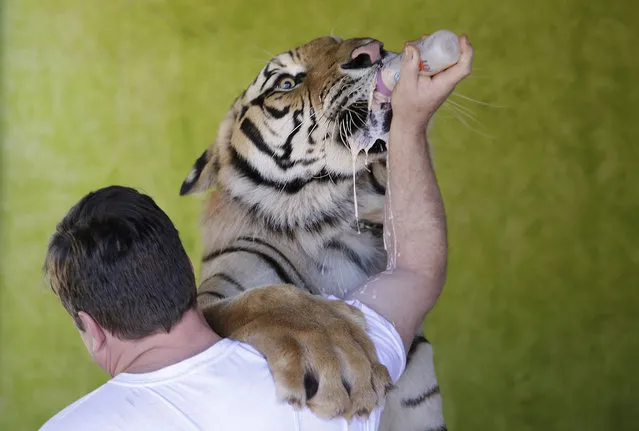
Ary Borges feeds his tiger named Dan at his home in Maringa, Brazil, Thursday, September 26, 2013. Borges is in a legal battle with federal wildlife officials to keep his endangered animals from undergoing vasectomies and being taken away from him. He defends his right to breed the animals and says he gives them a better home than they might find elsewhere in Brazil. (Photo by Renata Brito/AP Photo)
Details
29 Sep 2013 12:49:00
Taylor Swift fans wait for the doors of Nilton Santos Olympic stadium to open for her Eras Tour concert amid a heat wave in Rio de Janeiro, Brazil, Saturday, November 18, 2023. A 23-year-old Taylor Swift fan died at the singer's Eras Tour concert in Rio de Janeiro Friday night, according to a statement from the show's organizers in Brazil. (Photo by Silvia Izquierdo/AP Photo)

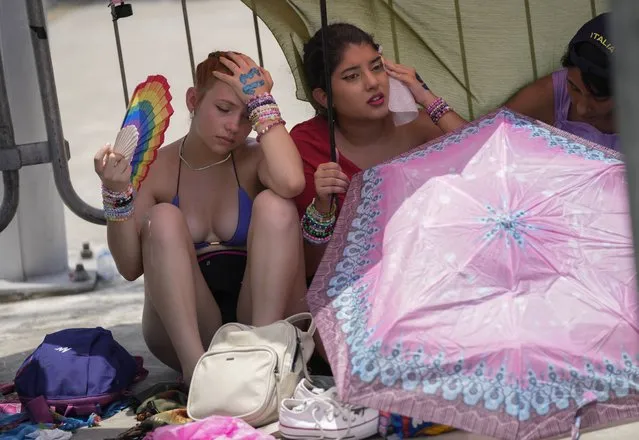
Taylor Swift fans wait for the doors of Nilton Santos Olympic stadium to open for her Eras Tour concert amid a heat wave in Rio de Janeiro, Brazil, Saturday, November 18, 2023. A 23-year-old Taylor Swift fan died at the singer's Eras Tour concert in Rio de Janeiro Friday night, according to a statement from the show's organizers in Brazil. (Photo by Silvia Izquierdo/AP Photo)
Details
26 Nov 2023 05:10:00
A girl of the Amazonian Tatuyo tribe poses while waiting to sell crafts to tourists in her village in the Rio Negro (Black River) near Manaus city, a World Cup host city, June 23, 2014. Because of their proximity to host city Manaus and their warm welcome, the Tatuyo have enjoyed three weeks of brisk business thanks to the World Cup. Usually, they host between 10 and 30 tourists a day. During the World Cup, this number has rocketed to 250 a day, They have become richer and other communities now come to them to sell them juices and fishes. (Photo by Andres Stapff/Reuters)

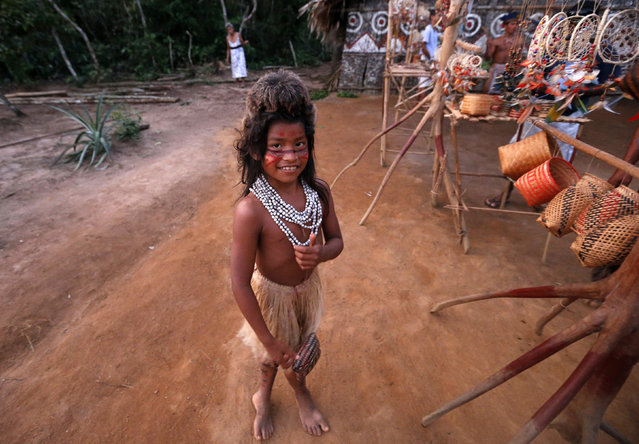
A girl of the Amazonian Tatuyo tribe poses while waiting to sell crafts to tourists in her village in the Rio Negro (Black River) near Manaus city, a World Cup host city, June 23, 2014. Because of their proximity to host city Manaus and their warm welcome, the Tatuyo have enjoyed three weeks of brisk business thanks to the World Cup. Usually, they host between 10 and 30 tourists a day. During the World Cup, this number has rocketed to 250 a day, They have become richer and other communities now come to them to sell them juices and fishes. (Photo by Andres Stapff/Reuters)
Details
27 Jun 2014 10:30:00