Loading...
Done


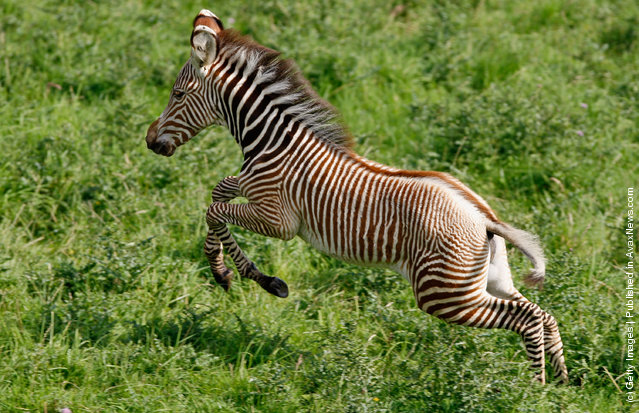
Florence the baby zebra foal, runs in its enclosure at Edinburgh zoo September 4, 2008 in Edinburgh, Scotland. This arrival at the zoo is particularly important as the Grevy's zebra is listed as endangered, with only an estimated 1,500 to 2,000 remaining in the wild. (Photo by Jeff J Mitchell/Getty Images)
Details
02 Jun 2011 11:34:00
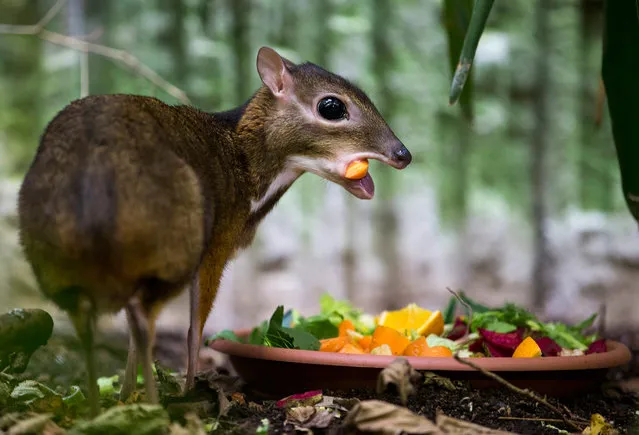
A chevrotain or mouse deer feeds in its enclosure at Zurich Zoo, Zurich, Switzerland, October 17, 2012. (Photo by Patrick B. Kraemer/AP)

A chevrotain or mouse deer feeds in its enclosure at Zurich Zoo, Zurich, Switzerland, October 17, 2012. (Photo by Patrick B. Kraemer/AP)
Details
27 Oct 2012 12:21:00
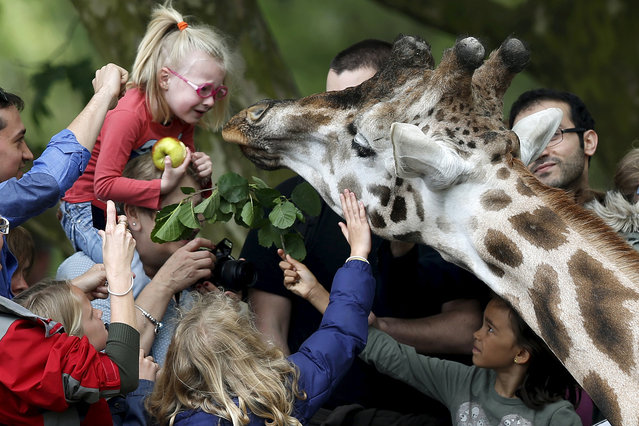
Children feed a giraffe at Pairi Daiza wildlife park, a zoo and botanical garden in Brugelette, Belgium, May 25, 2015. (Photo by Francois Lenoir/Reuters)

Children feed a giraffe at Pairi Daiza wildlife park, a zoo and botanical garden in Brugelette, Belgium, May 25, 2015. (Photo by Francois Lenoir/Reuters)
Details
26 May 2015 11:19:00
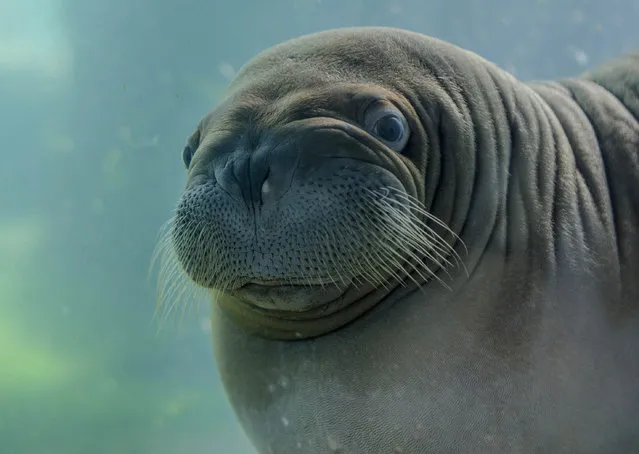
A walruses at Hagenbeck Zoo in Hamburg, Germany on  July, 7, 2015. (Photo by Werner Struss/Startraks action)

A walruses at Hagenbeck Zoo in Hamburg, Germany on July, 7, 2015. (Photo by Werner Struss/Startraks action)
Details
12 Jul 2015 13:06:00
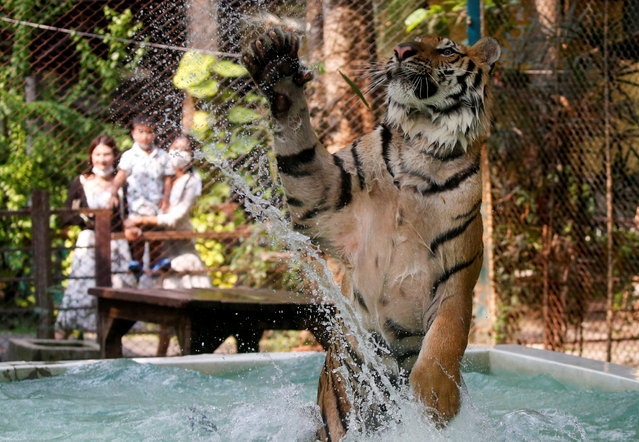
A tiger plays in water at a tiger zoo in Chaing Mai, Thailand on March 31, 2021. (Photo by Soe Zeya Tun/Reuters)

A tiger plays in water at a tiger zoo in Chaing Mai, Thailand on March 31, 2021. (Photo by Soe Zeya Tun/Reuters)
Details
29 Apr 2021 08:44:00
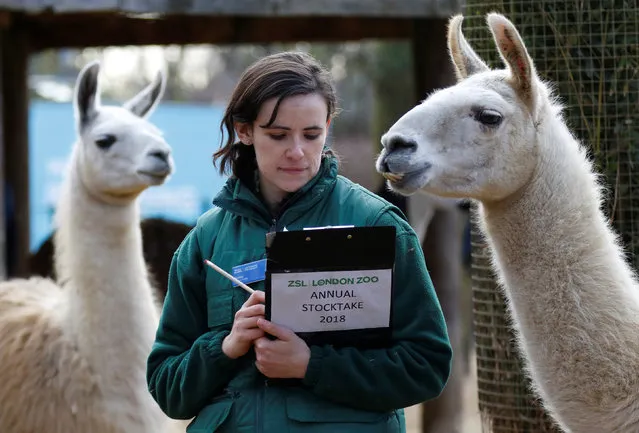
A keeper stands next to llamas during the Annual Stocktake at ZSL London Zoo in London, Britain February 7, 2018. (Photo by Tom Jacobs/Reuters)

A keeper stands next to llamas during the Annual Stocktake at ZSL London Zoo in London, Britain February 7, 2018. (Photo by Tom Jacobs/Reuters)
Details
09 Feb 2018 06:59:00
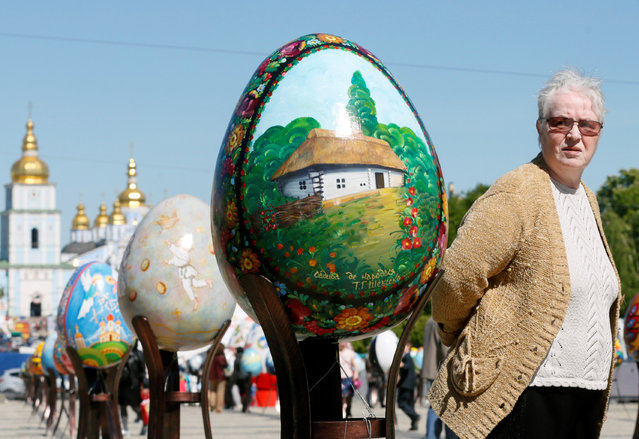
A woman looks at traditional Ukrainian Easter eggs “Pysanka”, installed as part of the upcoming celebrations of Easter, in central Kiev, Ukraine, April 29, 2016. A pysanka is a Ukrainian Easter egg, decorated with traditional Ukrainian folk designs using a wax-resist (batik) method. The word pysanka comes from the verb pysaty, “to write”, as the designs are not painted on, but written with beeswax. Many other eastern European ethnic groups decorate eggs using wax resist for Easter. These include the Belarusians, Bulgarians, Croats, Czechs, Hungarians, Lithuanians, Poles, Romanians, Serbs, Slovaks, Slovenes and Sorbs. (Photo by Valentyn Ogirenko/Reuters)

A woman looks at traditional Ukrainian Easter eggs “Pysanka”, installed as part of the upcoming celebrations of Easter, in central Kiev, Ukraine, April 29, 2016. A pysanka is a Ukrainian Easter egg, decorated with traditional Ukrainian folk designs using a wax-resist (batik) method. The word pysanka comes from the verb pysaty, “to write”, as the designs are not painted on, but written with beeswax. Many other eastern European ethnic groups decorate eggs using wax resist for Easter. These include the Belarusians, Bulgarians, Croats, Czechs, Hungarians, Lithuanians, Poles, Romanians, Serbs, Slovaks, Slovenes and Sorbs. (Photo by Valentyn Ogirenko/Reuters)
Details
30 Apr 2016 09:00:00


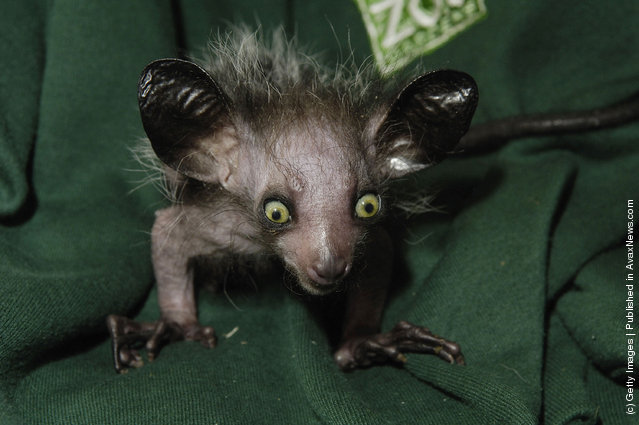
“The aye-aye (Daubentonia madagascariensis) is a lemur, a strepsirrhine primate native to Madagascar that combines rodent-like teeth and a special thin middle finger to fill the same ecological niche as a woodpecker. It is the world's largest nocturnal primate, and is characterized by its unusual method of finding food; it taps on trees to find grubs, then gnaws holes in the wood and inserts its narrow middle finger to pull the grubs out. The only other animal species known to find food in this way is the striped possum. From an ecological point of view the aye-aye fills the niche of a woodpecker as it is capable of penetrating wood to extract the invertebrates within”. – Wikipedia

Photo: In this handout image from Bristol Zoo is seen the first captive bred aye-aye in the UK named “Kintana” (meaning star in Malagasy) April 15, 2005 at Bristol Zoo Gardens, England. The zoo announced today only the second baby aye-aye to be hand-reared in the world (the first was in Jersey Zoo) and has now made his first public appearance since his birth on 11 February 2005. (Photo by Rob Cousins/Bristol Zoo via Getty Images)
Details
13 Apr 2011 13:33:00