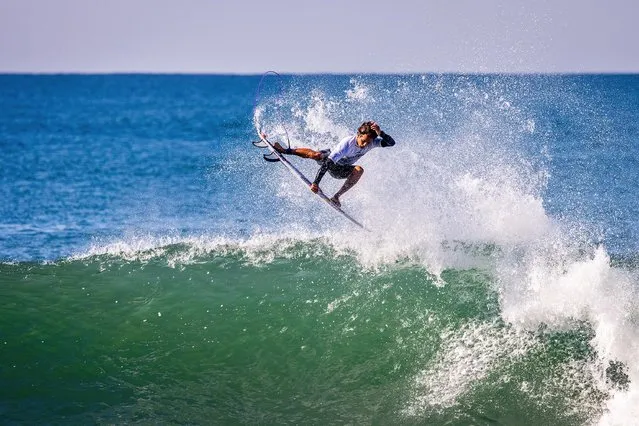
Eli Hanneman of Hawaii surfs in Heat 2 of the Round of 64 at the Ballito Pro on July 3, 2023 at Ballito, Kwazulu-Natal, South Africa. (Photo by Pierre Tostee/World Surf League via Getty Images)
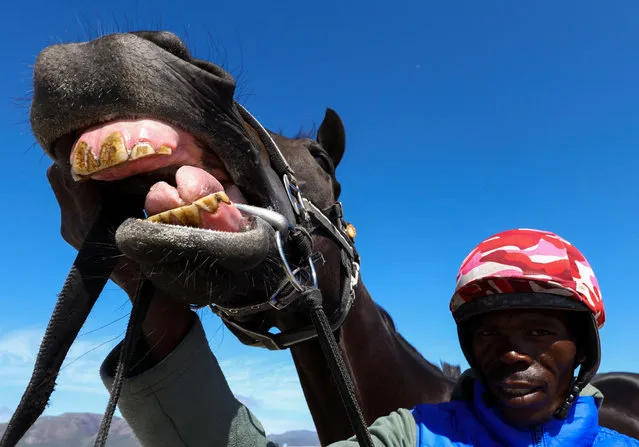
A horse handler poses with a horse during a beach parade at Muizenberg beach, in Cape Town, South Africa on January 5, 2024. (Photo by Esa Alexander/Reuters)
Models present creations by Shana Morland during the African Fashion International (AFI) Cape Town Fashion Week, in Cape Town, South Africa, 13 April 2019. (Photo by Nic Bothma/EPA/EFE)
Moruti Mthalane of South Africa is punched by Masayuki Kuroda of Japan during their IBF flyweight title boxing bout in Tokyo on May 13, 2019. (Photo by Charly Triballeau/AFP Photo)
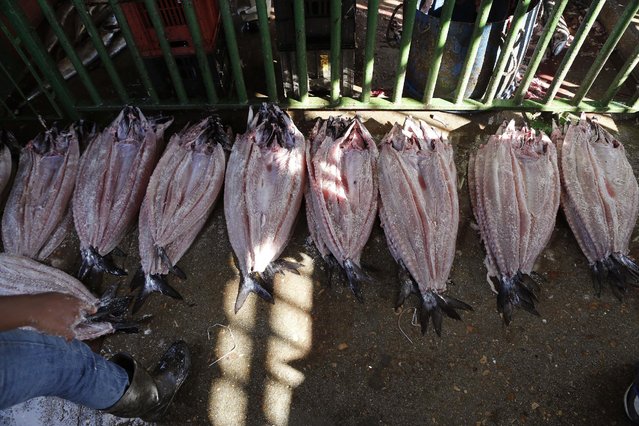
In this photo taken on Saturday, May 16, 2015, Snoek fish with salt on them after they were cleaned in Lambert's Bay, South Africa. The boats line up along the jetty, bobbing in the cold south Atlantic waters, bringing in the day's catch in the early afternoon. The long silver snoek fish is one of South Africa's traditional foods, and a main source of income for the town of Lambert's Bay. (Photo by Schalk van Zuydam/AP Photo)
An Iowa State Patrol trooper works the scene of an overturned semi truck along the westbound shoulder of Interstate 80 near Anita, Iowa, on Wednesday, December 15, 2021, after a band of intense weather crossed through the area. A powerful storm system is blowing through the Great Plains and Midwest, combining with unusually warm temperatures to close highways and prompt numerous tornado warnings. (Photo by Bryon Houlgrave/The Des Moines Register via AP Photo)
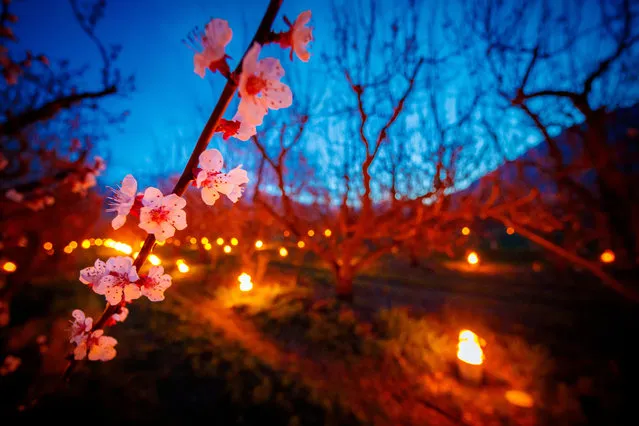
Anti-frost candles burn in apricot plantations to protect flowering buds and blossoms from frost in the midst of the Swiss Alps, in Saxon, Canton of Valais, Switzerland, 05 April 2019. With an unusually low temperature forecast for the season, fruit growers try to protect their buds from frost damage with two different means, icy water or large candles. (Photo by Valentin Flauraud/EPA/EFE)
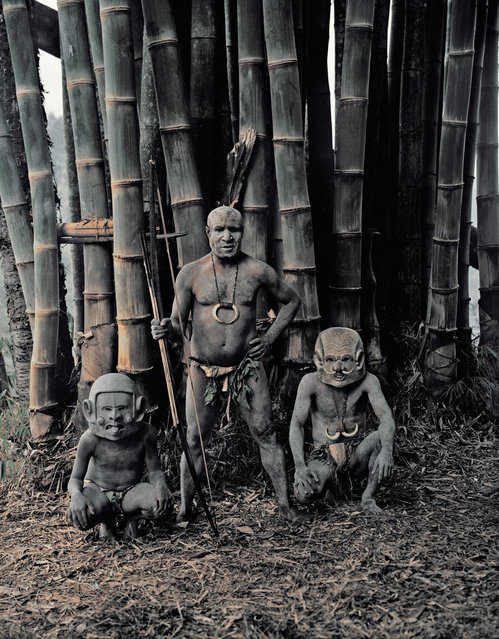
“Asaro from the Eastern Highlands”. The mudmen could not cover their faces with mud because the people of Papua New Guinea thought that the mud from the Asaro river was poisonous. So instead of covering their faces with this alleged poison, they made masks from pebbles that they heated and water from the waterfall, with unusual designs such as long or very short ears either going down to the chin or sticking up at the top, long joined eyebrows attached to the top of the ears, horns and sideways mouths. (Photo and caption by Jimmy Nelson)