Loading...
Done
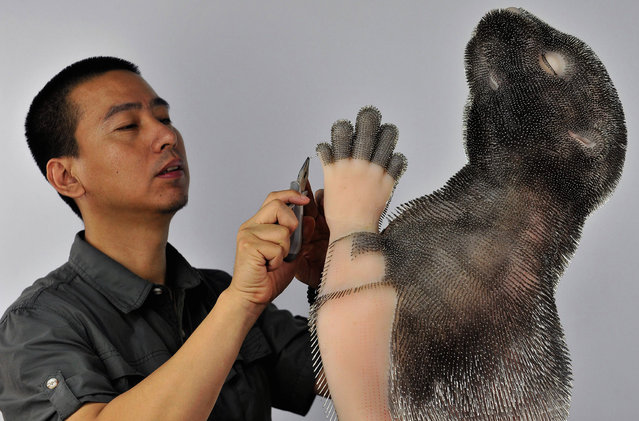
Professor Xie Yong works on an art installation of a beaver, which is made out of plastic and around 300,000 needles, in Shenyang, Liaoning province, July 23, 2013. The needles, according to Xie, represent the pain felt by animals when their fur is taken off to produce clothing. (Photo by Reuters/Stringer)

Professor Xie Yong works on an art installation of a beaver, which is made out of plastic and around 300,000 needles, in Shenyang, Liaoning province, July 23, 2013. The needles, according to Xie, represent the pain felt by animals when their fur is taken off to produce clothing. (Photo by Reuters/Stringer)
Details
27 Jul 2013 09:15:00
Cuban girls dressed as nurses and a lizard wait for their turn to dance during a visit by the Gay Men's Chorus of Washington in Havana July 13, 2015. The choir made its first appearance on July 12, 2015 in Cuba as part of a tour that will include a dozen concerts in the context of the restoration of relations between the island and the United States. (Photo by Enrique de la Osa/Reuters)

Cuban girls dressed as nurses and a lizard wait for their turn to dance during a visit by the Gay Men's Chorus of Washington in Havana July 13, 2015. The choir made its first appearance on July 12, 2015 in Cuba as part of a tour that will include a dozen concerts in the context of the restoration of relations between the island and the United States. (Photo by Enrique de la Osa/Reuters)
Details
22 Jul 2015 12:19:00
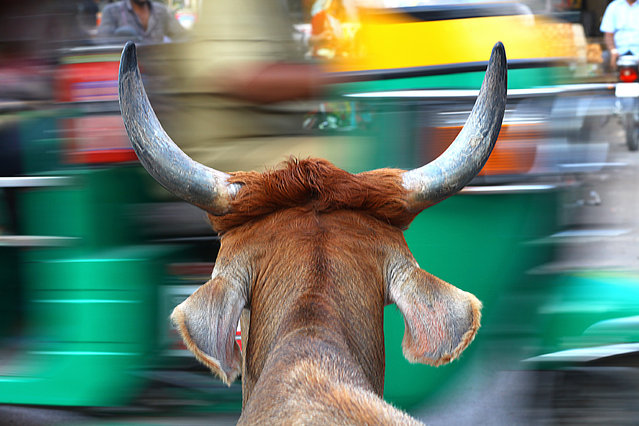
“Slow”. A calm cow in the messy streets of Jodhpur. Photo location: India. (Photo and caption by Matthias Troeger/National Geographic Photo Contest)

“Slow”. A calm cow in the messy streets of Jodhpur. Photo location: India. (Photo and caption by Matthias Troeger/National Geographic Photo Contest)
Details
20 May 2014 12:18:00
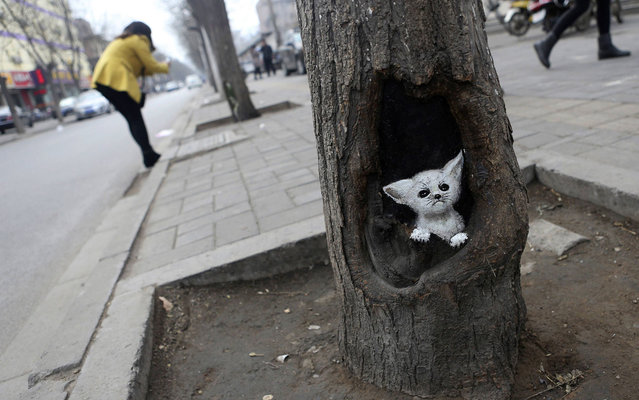
An image of a Fennec fox painted on a tree hole by Wang Yue is seen in Shijiazhuang, on March 13, 2013. Wang Yue, a senior at Dalian Industry University, uses her paintbrush to turn ugly tree holes into lovely views in Shijiazhuang, capital city of Hebei Province, China. Wang and her companions call the tree-hole paintings “meitu”, which means “beautiful journey”. The paintings on the trees have brightened the city during the dull, grey winter. (Photo by Pillar Lee/Reuters)

An image of a Fennec fox painted on a tree hole by Wang Yue is seen in Shijiazhuang, on March 13, 2013. Wang Yue, a senior at Dalian Industry University, uses her paintbrush to turn ugly tree holes into lovely views in Shijiazhuang, capital city of Hebei Province, China. Wang and her companions call the tree-hole paintings “meitu”, which means “beautiful journey”. The paintings on the trees have brightened the city during the dull, grey winter. (Photo by Pillar Lee/Reuters)

P.S. All pictures are presented in high resolution. To see Hi-Res images – just TWICE click on any picture. In other words, click small picture – opens the BIG picture. Click BIG picture – opens VERY BIG picture (if available; this principle works anywhere on the site AvaxNews).

Details
16 Mar 2013 11:27:00
A Filipino worker arranges roasted pigs which they sell in suburban Quezon city, Philippines on Tuesday, December 23, 2014. Roasted pig is popular during Filipino celebrations and traditionally served during a Christmas eve dinner called “Noche Buena” in this predominantly Roman Catholic nation. (Photo by Aaron Favila/AP Photo)

A Filipino worker arranges roasted pigs which they sell in suburban Quezon city, Philippines on Tuesday, December 23, 2014. Roasted pig is popular during Filipino celebrations and traditionally served during a Christmas eve dinner called “Noche Buena” in this predominantly Roman Catholic nation. (Photo by Aaron Favila/AP Photo)
Details
27 Dec 2014 11:49:00
American Yoga teacher Dashama poses on a Yoga-board during a preview of the 46th International Boat Fair in Duesseldorf January 16, 2015. The BOOT 2015 watersports fair, with more than 1,600 international exhibitors will run in Duesseldorf from January 17 to January 25. (Photo by Ina Fassbender/Reuters)

American Yoga teacher Dashama poses on a Yoga-board during a preview of the 46th International Boat Fair in Duesseldorf January 16, 2015. The BOOT 2015 watersports fair, with more than 1,600 international exhibitors will run in Duesseldorf from January 17 to January 25. (Photo by Ina Fassbender/Reuters)
Details
17 Jan 2015 12:37:00
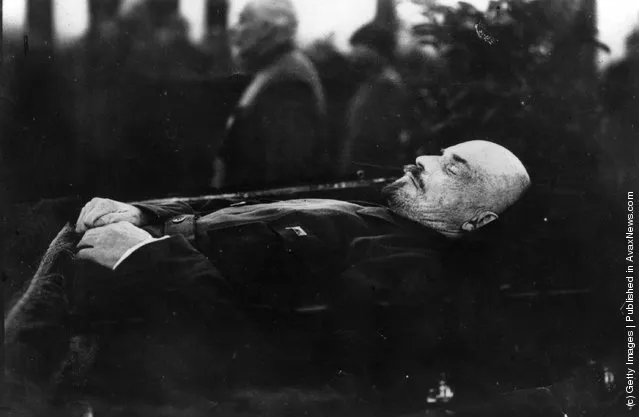
1924:  Vladimir Ilyich Lenin lying in state in the Kremlin

Photo: Vladimir Ilyich Lenin (1870 – 1924) lying in state in the Kremlin. (Photo by Hulton Archive/Getty Images). 1924

Important! For the same article in Russian language click here.

Something quite intriguing is happening within Russian-speaking internet during the last few – should you type a fully academic inquiry (at least, according to Russian academic requirements) in national search engines for "Lenin's mausoleum" – the first thing you get (even in top 10 searches) is website pages talking about black magic and occult. Website authors view this construction differently, but unconditionally agree on one thing: the mausoleum of the "leader of the world proletariat” – the essence of a magical artifact, a sort of “energy vampire”. It was built with a certain purpose: to drain the energy out of miserable Soviet citizens on one hand; and to poison the anthroposphere of one-sixth part of the earth with its vibes (the exact territory that was occupied by the former Soviet Union), depriving the Russian people of will to resist on the other hand. Complete nonsense? No doubt. Nevertheless, an intriguing one. Well, probably because some oddities do exist in mausoleum's history. These oddities are the thing we are going to discuss this time. First, let me refresh you memory on the subject.
Details
16 Oct 2011 11:27:00
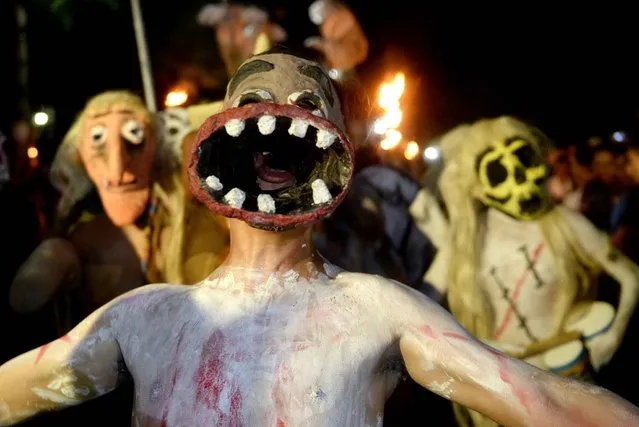
Young revelers take part in a parade called "La Calabiuza" on November 1, 2015, on the eve of the Day of the Dead in Tonacatepeque, 20 kms (13 miles) north of San Salvador. During the celebration, the residents of Tonacatepeque, originally an indigenous community, recall the characters from the mythology of Cuscatlan – pre-Columbian west and central regions of El Salvador – and their dead relatives. (Photo by Marvin Recinos/AFP Photo)

Young revelers take part in a parade called "La Calabiuza" on November 1, 2015, on the eve of the Day of the Dead in Tonacatepeque, 20 kms (13 miles) north of San Salvador. During the celebration, the residents of Tonacatepeque, originally an indigenous community, recall the characters from the mythology of Cuscatlan – pre-Columbian west and central regions of El Salvador – and their dead relatives. (Photo by Marvin Recinos/AFP Photo)
Details
04 Nov 2015 11:50:00