Loading...
Done
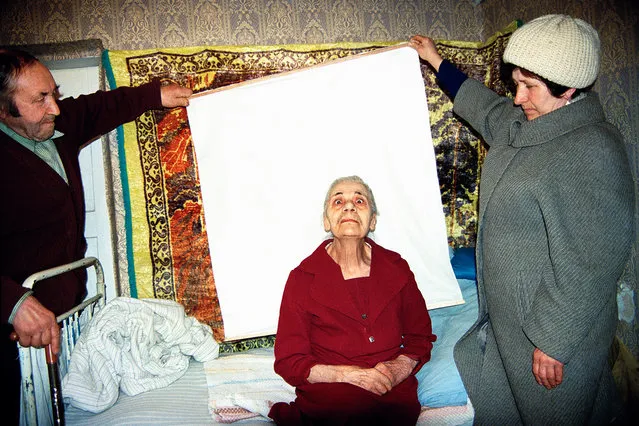
He was provided with black and white film, and would photograph as many as 60 people a day, against a portable white backdrop. But he also carried a wide-angle camera with expensive C-41 colour film, and took his own photo portraits. (Photo by Alexander Chekmenev/The Guardian)

In 1994, after the fall of the Soviet Union, all Ukrainians had to get a new passport – and photographer Alexander Chekmenev was on hand to take their photos. The snatched extra shots he took are remarkable in their honesty and tenderness. (Photo by Alexander Chekmenev/The Guardian)
Details
30 Dec 2016 10:22:00
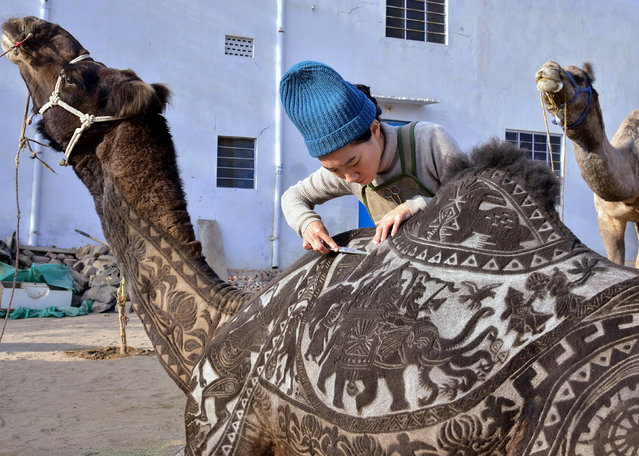
Japanese hairdresser Megumi Takeichi cuts patterns into the hair of a camel ahead of the Bikaner Camel Festival in Bikaner in the western Indian state of Rajasthan on January 10, 2019. (Photo by Dinesh Gupta/AFP Photo)

Japanese hairdresser Megumi Takeichi cuts patterns into the hair of a camel ahead of the Bikaner Camel Festival in Bikaner in the western Indian state of Rajasthan on January 10, 2019. (Photo by Dinesh Gupta/AFP Photo)
Details
13 Jan 2019 00:03:00
Cornish students (R) Nina Brooke, 21 and (L) Bonnie Mably, 20, laugh as they pose for a photograph as they try a Cornish pasty that has been baked as part of the World Cornish Pasty Championships at The Eden Project

“A Cornish pasty, sometimes known as a pastie or British pasty in the United States, is a filled pastry case, associated in particular with Cornwall in Great Britain. It is made by placing the uncooked filling on a flat pastry circle, and folding it to wrap the filling, crimping the edge at the side or top to form a seal. The result is a raised semicircular package”. – Wikipedia

Photo: Cornish students (R) Nina Brooke, 21 and (L) Bonnie Mably, 20, laugh as they pose for a photograph as they try a Cornish pasty that has been baked as part of the World Cornish Pasty Championships at The Eden Project on March 3, 2012 in St Austell, England. (Photo by Matt Cardy/Getty Images)
Details
04 Mar 2012 11:49:00
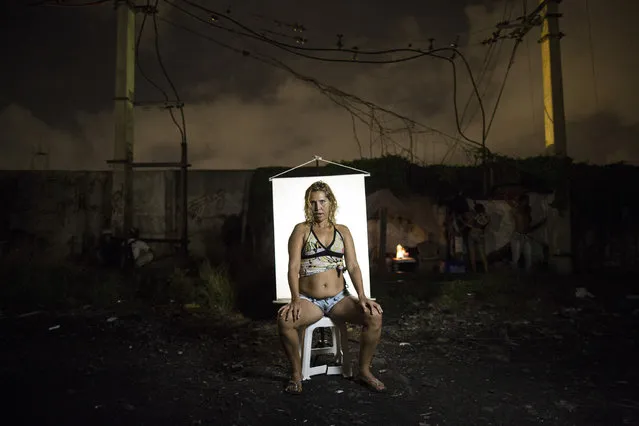
In this March 18, 2015 photo, Andrea, better known as Loira, which is the Portuguese word for 'blonde," poses for a portrait in an open-air crack cocaine market, known as a “cracolandia” or crackland where users can buy crack, and smoke it in plain sight, day or night, in Rio de Janeiro, Brazil. Andrea says she is married and has a home, but she keeps returning to crackland to feed her addiction. (Photo by Felipe Dana/AP Photo)

In this March 18, 2015 photo, Andrea, better known as Loira, which is the Portuguese word for “blonde”, poses for a portrait in an open-air crack cocaine market, known as a “cracolandia” or crackland where users can buy crack, and smoke it in plain sight, day or night, in Rio de Janeiro, Brazil. Andrea says she is married and has a home, but she keeps returning to crackland to feed her addiction. (Photo by Felipe Dana/AP Photo)
Details
09 Apr 2015 13:05:00
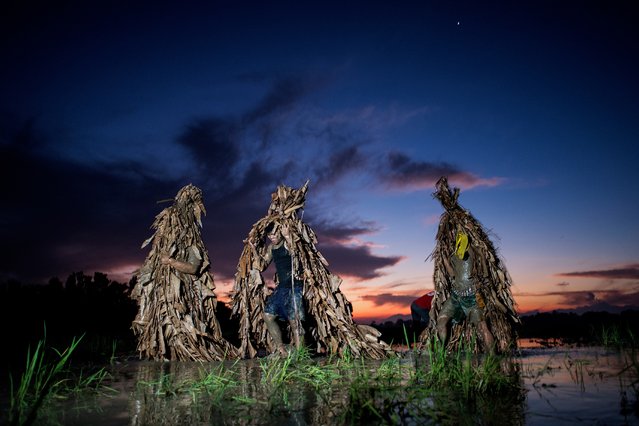
Devotees wear costumes made of banana leaves as they head to church to attend mass as part of a religious festival, in honor of St. John the Baptist, also known locally as the “mud people” festival, in Aliaga town, Nueva Ecija province, north of Manila, on June 24, 2017. Farmers coated in mud paraded in Philippine villages on June 24 to mark one of the Catholic nation's most colourful religious festivals. (Photo by Noel Celis/AFP Photo)

Devotees wear costumes made of banana leaves as they head to church to attend mass as part of a religious festival, in honor of St. John the Baptist, also known locally as the “mud people” festival, in Aliaga town, Nueva Ecija province, north of Manila, on June 24, 2017. Farmers coated in mud paraded in Philippine villages on June 24 to mark one of the Catholic nation's most colourful religious festivals. (Photo by Noel Celis/AFP Photo)
Details
27 Jun 2017 08:30:00
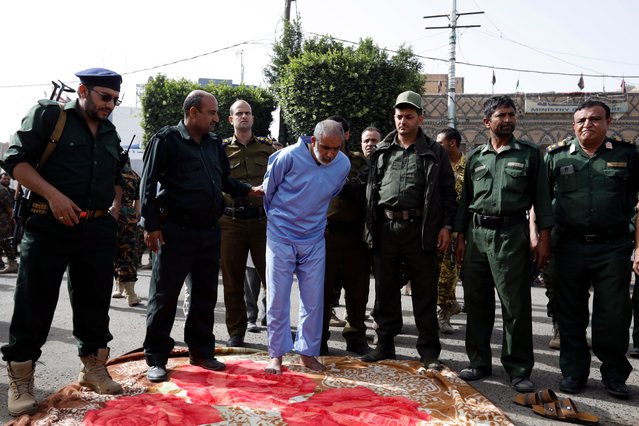
Ali al-Naami, convicted of murdering his three daughters, is placed on a carpet to be executed at a public square in Sana'a, Yemen, 16 June 2021. Defendant Ali al-Naami, 40, convicted of killing his daughters Rahaf, 7, Raghad, 12, and Malak, 14, in June 2019, was executed by an executioner in front of hundreds of spectators in a public square in Sana'a. He had admitted to strangling them and drowning them in a water tank after the mother left the house due to domestic disputes with him. (Photo by Yahya Arhab/EPA/EFE)

Ali al-Naami, convicted of murdering his three daughters, is placed on a carpet to be executed at a public square in Sana'a, Yemen, 16 June 2021. Defendant Ali al-Naami, 40, convicted of killing his daughters Rahaf, 7, Raghad, 12, and Malak, 14, in June 2019, was executed by an executioner in front of hundreds of spectators in a public square in Sana'a. He had admitted to strangling them and drowning them in a water tank after the mother left the house due to domestic disputes with him. (Photo by Yahya Arhab/EPA/EFE)
Details
20 Jun 2021 08:10:00
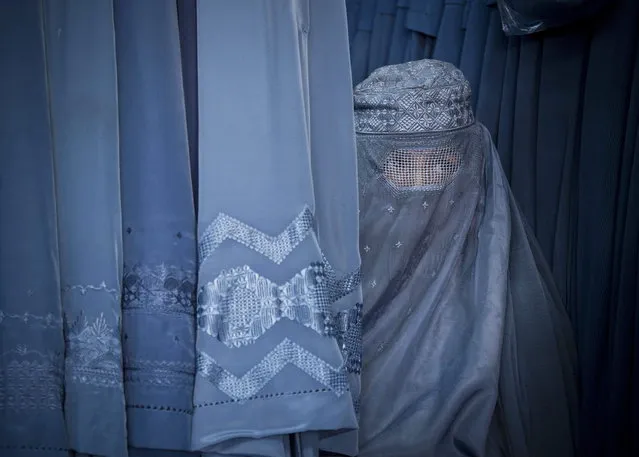
In this Thursday, April 11, 2013 photo, an Afghan woman peers through the  the eye slit of her burqa as she waits to try on a new burqa in shop in the old town of Kabul, Afghanistan. (Photo by Anja Niedringhaus/AP Photo)

In this Thursday, April 11, 2013 photo, an Afghan woman peers through the the eye slit of her burqa as she waits to try on a new burqa in shop in the old town of Kabul, Afghanistan. (Photo by Anja Niedringhaus/AP Photo)
Details
17 Apr 2013 11:45:00
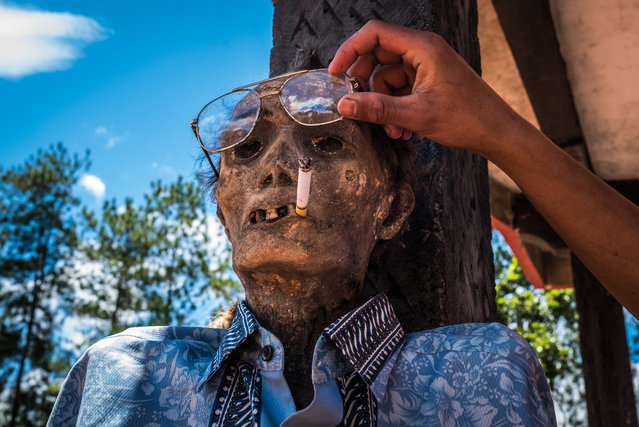
Todeng died in 2009. A young relative of his, Sam, lights him a cigarette and changes his glasses. (Photo by Claudio Sieber Photography/The Guardian)

For the Torajan people of Indonesia, death is part of a spiritual journey: families keep the mummified remains of their deceased relatives in their homes for years – and traditionally invite them to join for lunch on a daily basis – before they are eventually buried. Here: Todeng died in 2009. A young relative of his, Sam, lights him a cigarette and changes his glasses. (Photo by Claudio Sieber Photography/The Guardian)
Details
14 Oct 2017 09:34:00