Loading...
Done
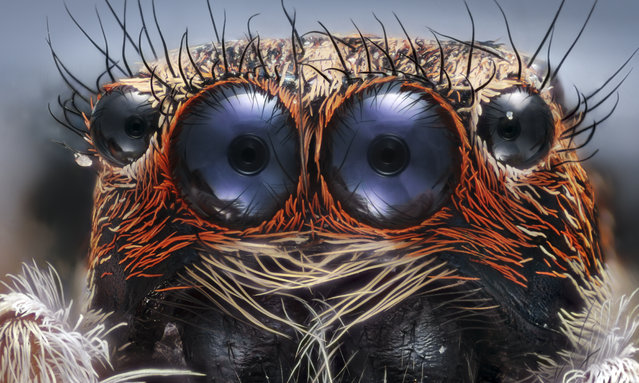
Honorable Mention by Emre Can Alagöz, Istanbul, Turkey: The eyes of a jumping spider, magnified 6x. (Photo by Emre Can Alagöz/2017 Nikon Small World Photomicrography Competition)

A competition, now in its 43rd year, dedicated to showcasing the beautiful and bizarre as seen under a light microscope attracted over 2,000 entries from 88 countries. Here: Honorable Mention by Emre Can Alagöz, Istanbul, Turkey: The eyes of a jumping spider, magnified 6x. (Photo by Emre Can Alagöz/2017 Nikon Small World Photomicrography Competition)
Details
09 Oct 2017 07:52:00
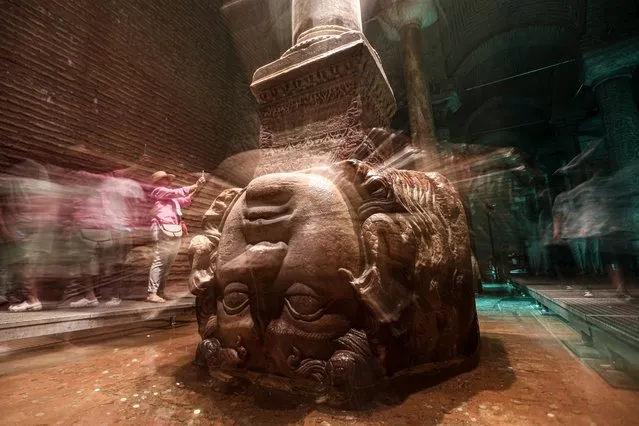
People walk behind the Medusa head in the Basilica Cistern in Istanbul, Turkey, 24 July 2022. (Photo by Sedat Suna/EPA/EFE)

People walk behind the Medusa head in the Basilica Cistern in Istanbul, Turkey, 24 July 2022. The site has been restored by the Istanbul Metropolitan Municipality and is now open for visitors again. The Byzantine structure was commissioned by Emperor Justinian and built in 532. The underground Basilica, also called Underground Cistern, is the largest well preserved cistern in Istanbul, which rests on a total of 336 columns. According to historical texts, more than 7,000 slaves were involved in the construction of the cistern. (Photo by Sedat Suna/EPA/EFE)

Details
07 Aug 2022 05:22:00
Live fish. Vietnam has the highest number of motorbikes in all of south-east Asia – Hanoi alone has 5m of them, and only half a million cars. Now the city is planning to ban them by 2030 to cut pollution. (Photo by Jon Enoch/The Guardian)

From footballs to live fish, delivery mopeds piled high with unwieldy, unlikely goods are one of the Vietnamese capital’s most distinctive sights. As the city plans to ban motorbikes altogether, photographer Jon Enoch captured the drivers at work. (Photo by Jon Enoch/The Guardian)

Details
11 May 2019 00:05:00
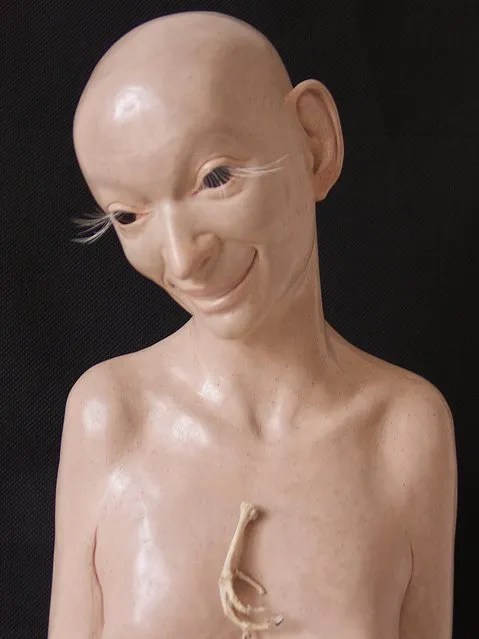
Chasseuse d'Oiseaux, 2011

Chasseuse d'Oiseaux, 2011

Artist Richard Stipl was born in Czechoslovakia in 1968 and now lives and works both in Canada and the Czech Republic.
Working initially as a painter, Richard Stipl has recently turned to making sculpture. Considered an exceptional talent in technical terms, Richard stands apart from his contemporaries through his uncanny ability to breathe a vital and invigorating “life force” into his art works, regardless of media.
Stipl is included in many important public and private collections worldwide.


Details
08 Jun 2012 11:38:00
Philip Levine

London born Philip started using his head as a canvas for creativity back in 2006 when he began to go bald. He did not want to conform to shaving his head like everyone else so started using it as an art form to express. Philip's head designs have now become iconic around the world. As a tastemaker, he has gained recognition with sites including Trend Hunter and NotCot with such terms as 'Baldazzling'. His designs are inspiring men and women alike who might be bald.
Details
11 Apr 2015 09:55:00
“The Hero”. (Christophe Kiciak)

“I started photography in June 2009. At the time, I was searching for a way to express both the rigorous scientist and the creative artist in me. There are few hobbies that let these two approaches work together, so I really was enthusiastic about it: I am now spending all my free time studying various techniques, contemplating others' fantastic work, and of course, making pictures”. – Christophe Kiciak. Photo: “The Hero”. (Photo by Christophe Kiciak)
Details
11 Jan 2013 15:40:00
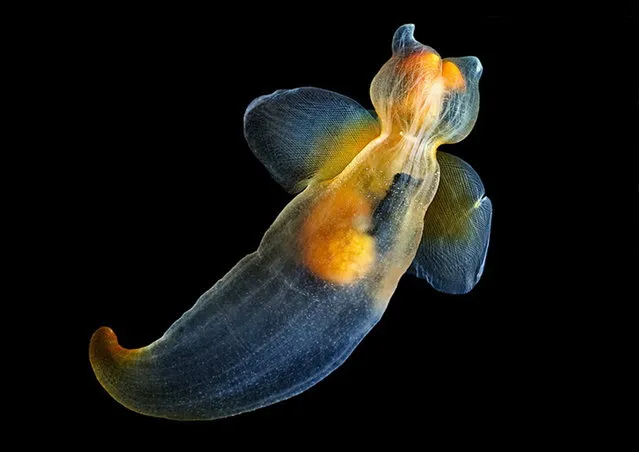
Underwater Photography By Alexander Semenov

In 2007, I graduated from Lomonosov’s Moscow State University in the department of Zoology. I specialized in the study of invertebrate animals, with an emphasis on squid brains. Soon after, I began working at the White Sea Biological Station (WSBS) as a senior laborer. WSBS has a dive station, which is great for all sorts of underwater scientific needs, and after 4 years working there, I became chief of our diving team. I now organize all WSBS underwater projects and dive by myself with a great pleasure and always with a camera.
Details
05 Feb 2013 15:28:00
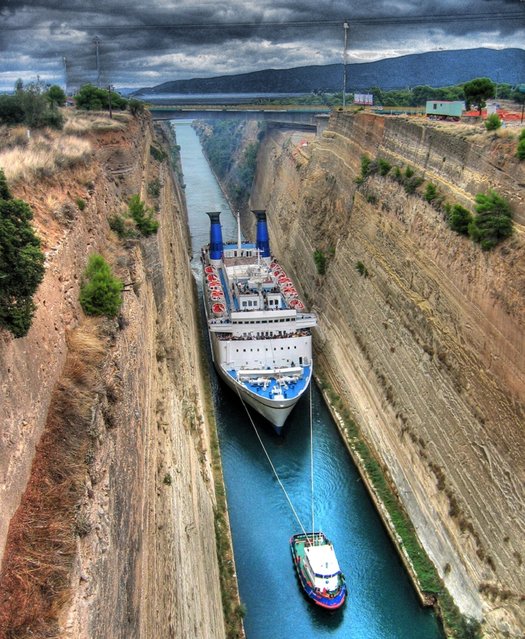
Corinth Canal

The Corinth Canal is a canal that connects the Gulf of Corinth with the Saronic Gulf in the Aegean Sea. It cuts through the narrow Isthmus of Corinth and separates the Peloponnesian peninsula from the Greek mainland, thus effectively making the former an island. The builders dug the canal through the Isthmus at sea level; no locks are employed. It is 6.4 kilometres (4.0 mi) in length and only 21.3 metres (70 ft) wide at its base, making it unpassable for most modern ships. It now has little economic importance.

Details
12 Mar 2013 12:21:00