Fallon Taylor of Collinsville, Texas, slips and falls with her horse in the barrel racing event during the Calgary Stampede rodeo in Calgary, Alberta, Canada July 8, 2016. (Photo by Todd Korol/Reuters)
A Syria Democratic Forces (SDF) fighter comforts a civilian who was evacuated with others by the SDF from an Islamic State-controlled neighbourhood of Manbij, in Aleppo Governorate, Syria, August 12, 2016. The SDF has said Islamic State was using civilians as human shields. (Photo by Rodi Said/Reuters)
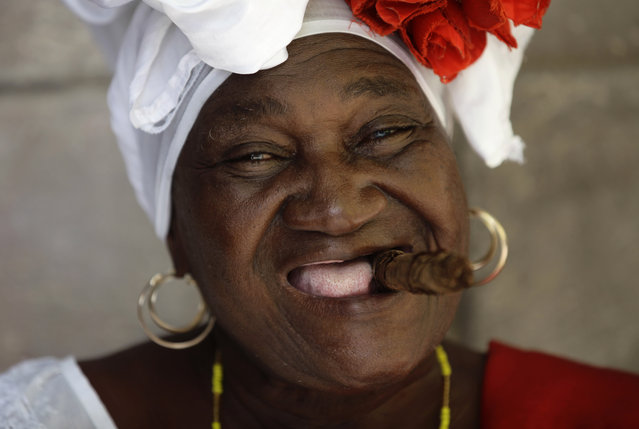
Street entertainer and fortune teller “Juana La Cubana” smiles holding a cigar in her mouth as she waits for tourists in Havana, Cuba, Sunday, May 24, 2015. Juana is 72 years old and has worked in the Cathedral square in Old Havana for 28 years. (Photo by Desmond Boylan/AP Photo)
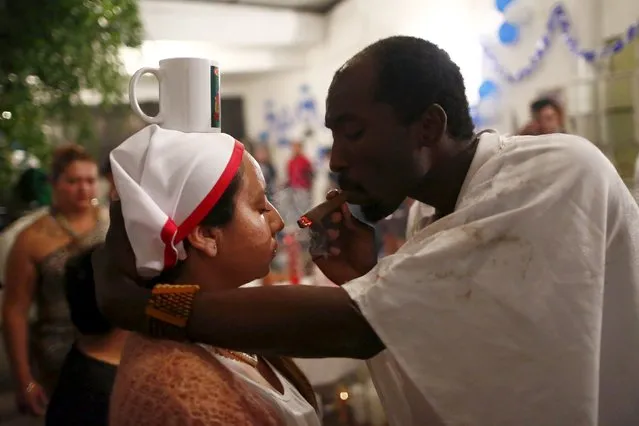
A voodoo priest smokes in the face of a woman as she holds a cup on her head during a voodoo ceremony in honor of Kouzen Zaka, also known as St. Isidro, in Mexico City, May 2, 2015. According to Haitain voodoo, Kouzen Zaka is the patron of work, whose patronage will help with employment and safeguard crops from robbers. (Photo by Edgard Garrido/Reuters)
A man wears a costume during a parade to celebrate the Chinese Lunar New Year, which welcomes the Year of the Monkey, in Madrid, Spain, February 13, 2016. (Photo by Andrea Comas/Reuters)
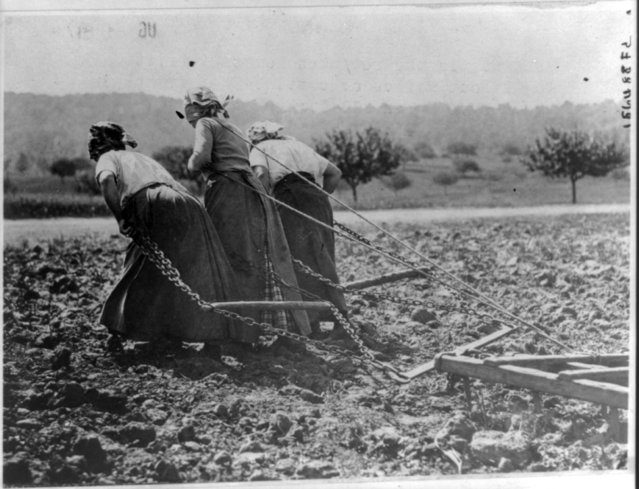
Peasants in the re-taken Somme District work in the fields, circa 1916- 1917, in this Library of Congress handout photo. For women 100 years ago, opportunities to work beyond the home and take part in political life were very limited. As the 20th century progressed, hard-won progress included gradually improved voting rights, while the upheaval of war pushed doors ajar as women worked as part of the war effort. U.S. Library of Congress archive photos show women's workplaces ranging from a flour mill in England to a coal mine in Belgium or Lincoln Motor Co.'s welding department in Detroit. International Women's Day is celebrated on March 8. (Photo by Reuters/Bain Collection/Library of Congress)
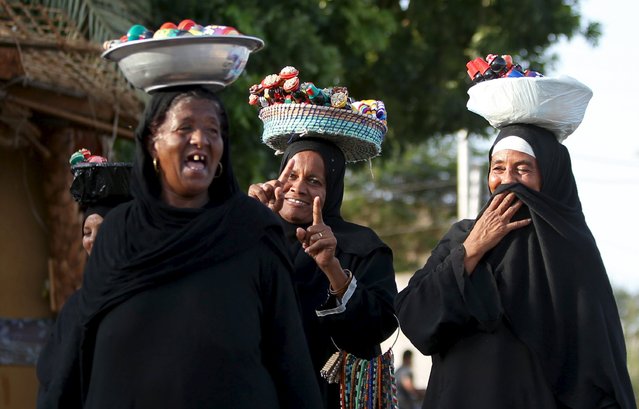
Nubian women sell traditional handicrafts at the Nubian Gharb Suheil village, near Aswan south of Egypt, October 1, 2015. For half a century, Egypt's Nubians have patiently lobbied the government in Cairo for a return to their homelands on the banks of the upper Nile, desperate to reclaim territory their ancestors first cultivated 3,000 years ago. (Photo by Mohamed Abd El Ghany/Reuters)