Loading...
Done
A Pakistani farmer guides his bulls as he competes in a traditional bull race in Khunda village in the northwestern district of Attock, some 80 kilometers from Islamabad on January 3, 2015. Tens of thousands of people gather whenever there is a bull race held in Pakistan which are usually the highlight of festivals organized in rural areas of the Asian country, and attract lots of spectators due to their thrilling nature. (Photo by Aamir Qureshi/AFP Photo)

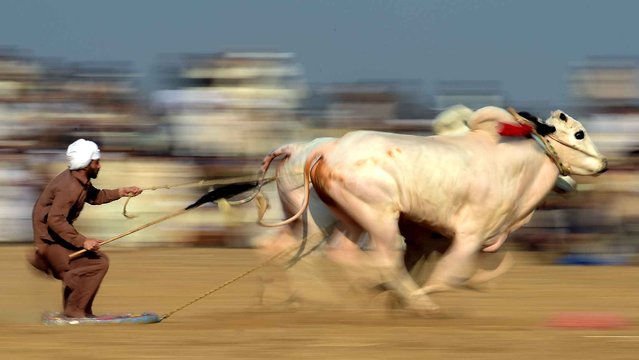
A Pakistani farmer guides his bulls as he competes in a traditional bull race in Khunda village in the northwestern district of Attock, some 80 kilometers from Islamabad on January 3, 2015. Tens of thousands of people gather whenever there is a bull race held in Pakistan which are usually the highlight of festivals organized in rural areas of the Asian country, and attract lots of spectators due to their thrilling nature. The traditional competition attracts landlords and farmers from all around the province where the race is held, and they all bring their fastest and strongest bulls in hopes of gaining a reputation. (Photo by Aamir Qureshi/AFP Photo)
Details
10 Jan 2015 12:58:00
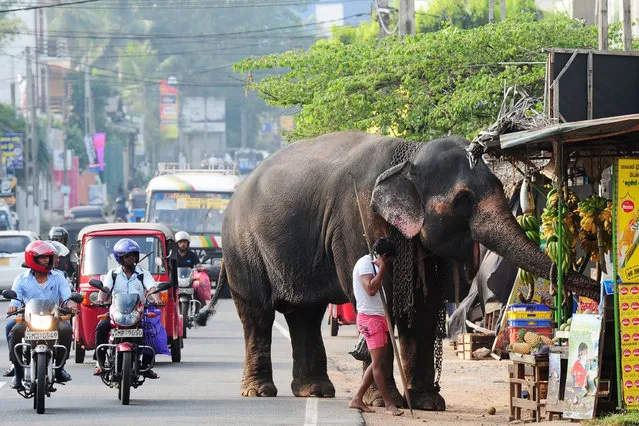
A Sri Lankan elephant, accompanied by his mahout, browse through a roadside fruit stall in Colombo on January 19, 2015. The Sri Lankan elephant is listed as endangered by the International Union for Conservation of Nature (IUCN) as the population has declined by at least 50 percent over the last three generations, with the species threatened by habitat loss, degradation and fragmentation. (Photo by Lakruwan Wanniarachchi/AFP Photo)

A Sri Lankan elephant, accompanied by his mahout, browse through a roadside fruit stall in Colombo on January 19, 2015. The Sri Lankan elephant is listed as endangered by the International Union for Conservation of Nature (IUCN) as the population has declined by at least 50 percent over the last three generations, with the species threatened by habitat loss, degradation and fragmentation. (Photo by Lakruwan Wanniarachchi/AFP Photo)
Details
23 Jan 2015 13:21:00
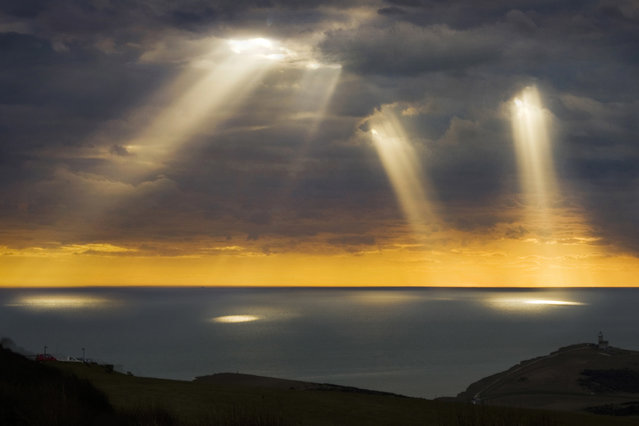
This breathtaking natural light show illuminating waters off the British coast looks like something out of hit film “Close Encounters of the Third Kind”. Photographer Adrian Campfield was out having dinner at a restaurant at Beachy Head, East Sussex, when the rays suddenly appeared. The 59-year-old and his wife Louise rushed outside onto the 535ft high cliffs to watch the spectacle. (Photo by Adrian Campfield/Solent/Visual Press Agency)

This breathtaking natural light show illuminating waters off the British coast looks like something out of hit film “Close Encounters of the Third Kind”. Photographer Adrian Campfield was out having dinner at a restaurant at Beachy Head, East Sussex, when the rays suddenly appeared. The 59-year-old and his wife Louise rushed outside onto the 535ft high cliffs to watch the spectacle. Mr Campfield, a former graphic designer, from Bexley, Kent, said the light was “changing all the time” for more than 15 minutes. (Photo by Adrian Campfield/Solent/Visual Press Agency)
Details
30 Sep 2014 09:16:00
Keith Haubrich of Seattle, Wash., reacts to the crowd while competing in the Dali Moustache division during the fourth annual Just For Men National Beard and Moustache Championships Saturday, September 7, 2013 in New Orleans. Haubrich went on to win the gold medal for the Dali division.Contestants competed in 18 different categories including Dali, full beard natural and sideburns.(Photo by Susan Poag/AP Photo)

Keith Haubrich of Seattle, Wash., reacts to the crowd while competing in the Dali Moustache division during the fourth annual Just For Men National Beard and Moustache Championships Saturday, September 7, 2013 in New Orleans. Haubrich went on to win the gold medal for the Dali division.Contestants competed in 18 different categories including Dali, full beard natural and sideburns.(Photo by Susan Poag/AP Photo)
Details
10 Sep 2013 09:08:00
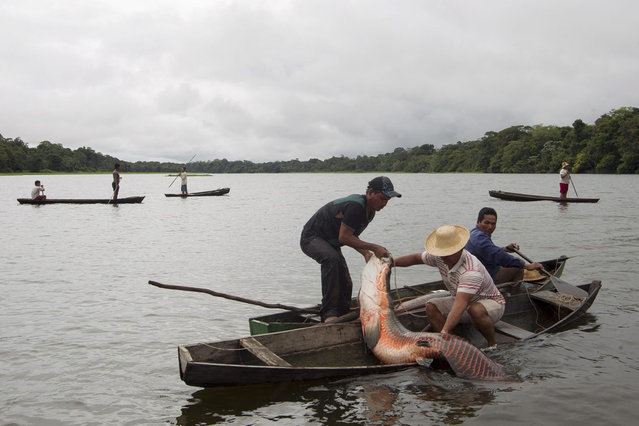
Villagers from the Porto Novo community load into their canoes arapaima or pirarucu, the largest freshwater fish species in South America and one of the largest in the world, while fishing in Poco Fundo lake along a branch of the Solimoes river, one of the main tributaries of the Amazon, in the Mamiraua nature reserve near Fonte Boa about 600 km (373 miles) west of Manaus, November 26, 2013. (Photo by Bruno Kelly/Reuters)

Villagers from the Porto Novo community load into their canoes arapaima or pirarucu, the largest freshwater fish species in South America and one of the largest in the world, while fishing in Poco Fundo lake along a branch of the Solimoes river, one of the main tributaries of the Amazon, in the Mamiraua nature reserve near Fonte Boa about 600 km (373 miles) west of Manaus, November 26, 2013. Catching the arapaima, a fish that is sought after for its meat and is considered by biologists to be a living fossil, is only allowed once a year by Brazil's environmental protection agency. The minimum size allowed for a fisherman to keep an arapaima is 1.5 meters (4.9 feet). (Photo by Bruno Kelly/Reuters)
Details
17 Dec 2013 08:03:00
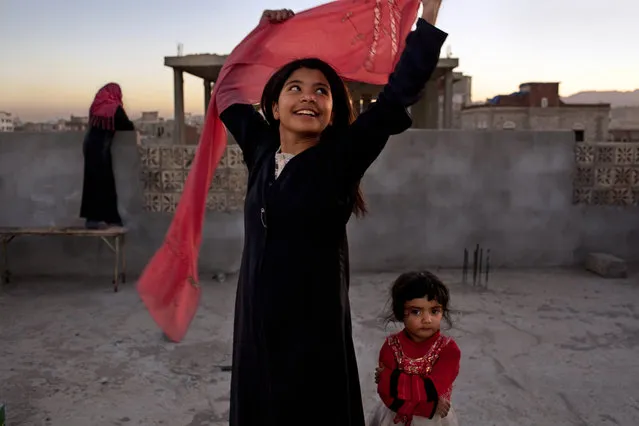
Some of the most powerful narratives of the past decade have been produced by a forward-thinking generation of women photojournalists as different as the places and the subjects they have covered. National Geographic's “Women of Vision” exhibit features the work of 11 photographers and is on display at the Fernbank Museum of Natural History in Atlanta until January 3, 2016. (Photo by Stephanie Sinclair/National Geographic)

Some of the most powerful narratives of the past decade have been produced by a forward-thinking generation of women photojournalists as different as the places and the subjects they have covered. National Geographic's “Women of Vision” exhibit features the work of 11 photographers and is on display at the Fernbank Museum of Natural History in Atlanta until January 3, 2016. Here: Nujood Ali stunned the world in 2008 by obtaining a divorce at age 10 in Yemen, striking a blow against forced marriage. (Photo by Stephanie Sinclair/National Geographic)
Details
11 Dec 2015 08:05:00
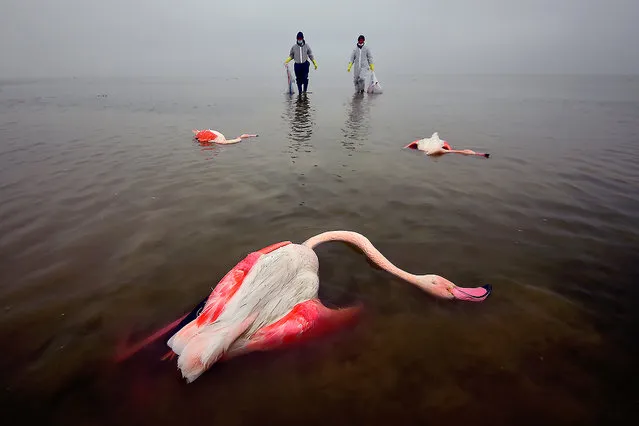
Grand title winner: Environmental photographer of the year. The Bitter Death Of Birds by Mehdi Mohebi Pour. This photo shows the efforts of the environmental forces to collect the bodies and prevent the spread of this disease. The Miankaleh wetland is being destroyed by changes in the climate and it is my duty as a photographer to highlight these problems and create a record for history. I want to prevent the complete destruction of the wetland and the potential environmental disaster by showing the issues and threats to these beautiful natural places. (Photo by Mehdi Mohebi Pour/Environmental Photographer of the Year)

Grand title winner: Environmental photographer of the year. The Bitter Death Of Birds by Mehdi Mohebi Pour. This photo shows the efforts of the environmental forces to collect the bodies and prevent the spread of this disease. The Miankaleh wetland is being destroyed by changes in the climate and it is my duty as a photographer to highlight these problems and create a record for history. I want to prevent the complete destruction of the wetland and the potential environmental disaster by showing the issues and threats to these beautiful natural places. (Photo by Mehdi Mohebi Pour/Environmental Photographer of the Year)
Details
05 Dec 2022 04:27:00
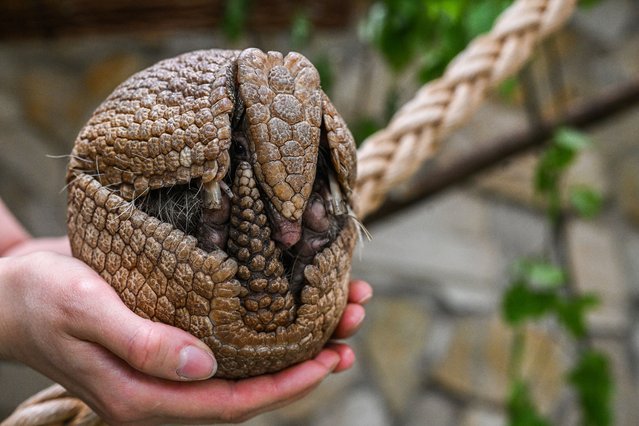
Zookeeper Agata holds a rare newborn Brazilian three-banded armadillo inside its enclosure at the Wroclaw Zoo in Wroclaw, Poland on May 11, 2023. The Tolypeutes matatus, or the southern armor also known as bolita or tatu-bola, is a fairly popular animal in South America but is increasingly rare. The new zoo child was born on March 23. The species is listed as vulnerable by the International Union for the Conservation of Nature (IUCN) and threatened by habitat loss and hunting. (Photo by Omar Marques/Anadolu Agency via Getty Images)

Zookeeper Agata holds a rare newborn Brazilian three-banded armadillo inside its enclosure at the Wroclaw Zoo in Wroclaw, Poland on May 11, 2023. The Tolypeutes matatus, or the southern armor also known as bolita or tatu-bola, is a fairly popular animal in South America but is increasingly rare. The new zoo child was born on March 23. The species is listed as vulnerable by the International Union for the Conservation of Nature (IUCN) and threatened by habitat loss and hunting. (Photo by Omar Marques/Anadolu Agency via Getty Images)
Details
28 May 2023 04:09:00