Loading...
Done
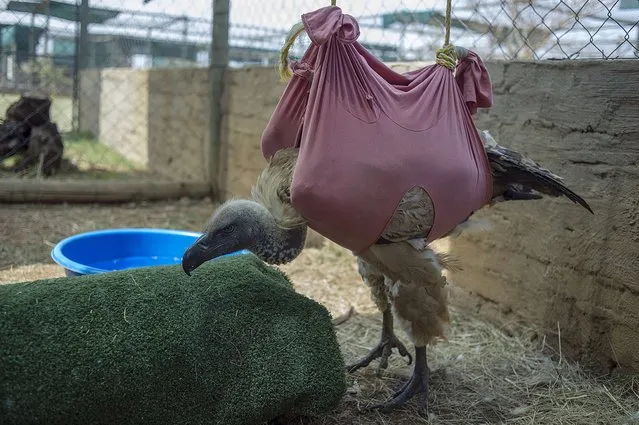
An injured vulture is treated at the VulPro Vulture Rehabilitation Centre in Hartebeepoortdam in the Magalisburg region on September 15, 2015. Confined to southern Africa, just under 4,000 breeding pairs of Cape Vultures remain in the wild, mostly in South Africa, Lesotho and Botswana. Unless conservation efforts are successful, Africa's largest vulture species may be facing eventual extinction. (Photo by Mujahid Safodien/AFP Photo)

An injured vulture is treated at the VulPro Vulture Rehabilitation Centre in Hartebeepoortdam in the Magalisburg region on September 15, 2015. Confined to southern Africa, just under 4,000 breeding pairs of Cape Vultures remain in the wild, mostly in South Africa, Lesotho and Botswana. Unless conservation efforts are successful, Africa's largest vulture species may be facing eventual extinction. (Photo by Mujahid Safodien/AFP Photo)
Details
19 Sep 2015 12:27:00
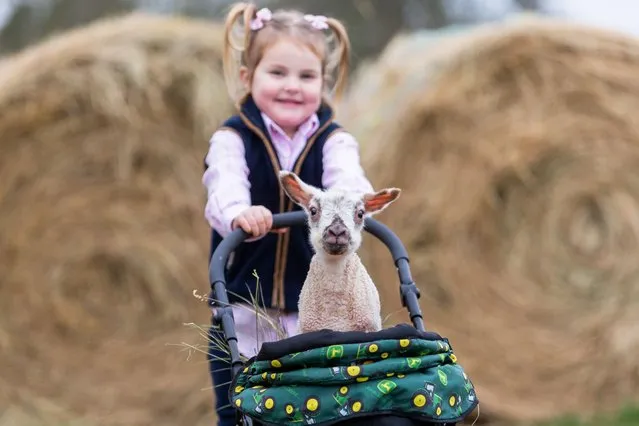
3-year-old Myla Mills plays with a two day old lamb in a toy pram in her family's farmyard in Arley, Worcestershire, United Kingdom on January 28, 2023. Early lambs are produced when the ram is free to tup the ewes over winter. (Photo by Peter Lopeman/Alamy Live News)

3-year-old Myla Mills plays with a two day old lamb in a toy pram in her family's farmyard in Arley, Worcestershire, United Kingdom on January 28, 2023. Early lambs are produced when the ram is free to tup the ewes over winter. (Photo by Peter Lopeman/Alamy Live News)
Details
05 Feb 2023 06:08:00
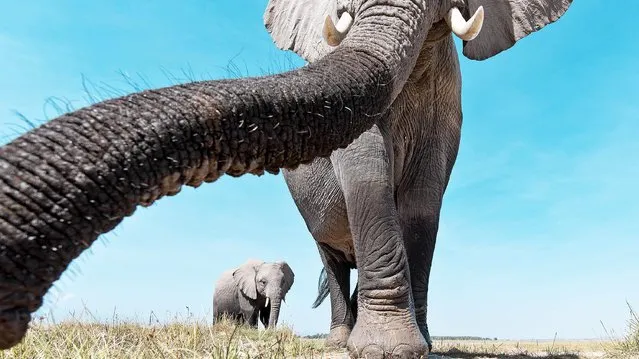
An elephant in Amboseli National Park in Kenya, June 2021. Gurcharan Roopra, 42, a Nairobi-born engineer-turned-wildlife photographer, has dedicated the past four years of his career to photographing these animals. He spends hours in his workshop camouflaging and encasing his equipment with protective gear before laying his camera in the path of lions, elephants, rhino, zebra and buffalo. (Photo by Gurcharan Roopra/Mercury Press)

An elephant in Amboseli National Park in Kenya, June 2021. Gurcharan Roopra, 42, a Nairobi-born engineer-turned-wildlife photographer, has dedicated the past four years of his career to photographing these animals. He spends hours in his workshop camouflaging and encasing his equipment with protective gear before laying his camera in the path of lions, elephants, rhino, zebra and buffalo. (Photo by Gurcharan Roopra/Mercury Press)
Details
24 Feb 2024 08:48:00
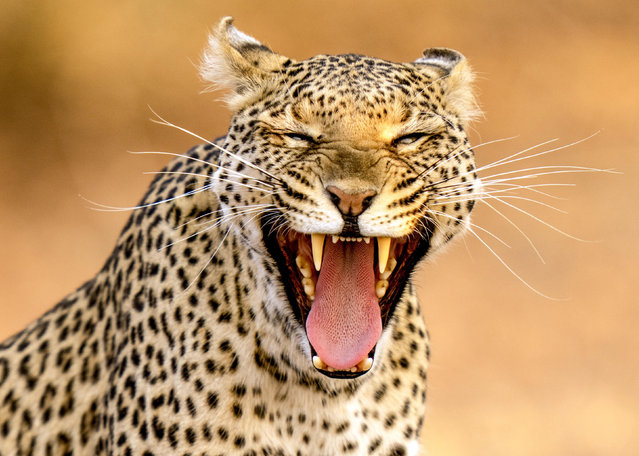
A yawning leopard appears to be laughing instead at Chobe National Park in Botswana in January 2023. (Photo by Nick Dale/Solent News & Photo Agency)

A yawning leopard appears to be laughing instead at Chobe National Park in Botswana in January 2023. (Photo by Nick Dale/Solent News & Photo Agency)
Details
06 Sep 2024 04:09:00
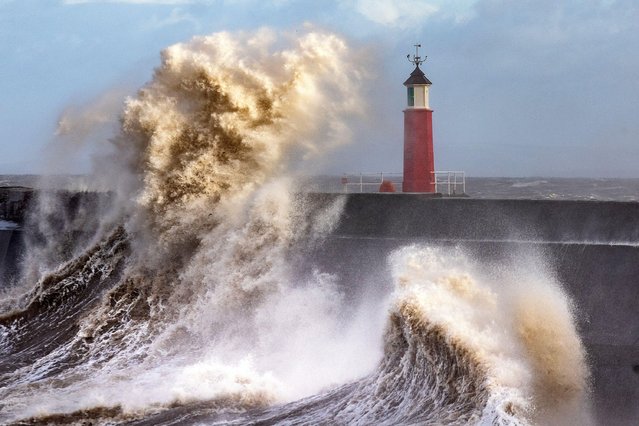
Large waves batter the North Somerset coast at Watchet on December 22, 2024, as Storm Enol hits the UK. The storm has prompted a yellow warning from the Met office forecasting 70mph winds. (Photo by Mark Passmore/Alamy Live News)

Large waves batter the North Somerset coast at Watchet on December 22, 2024, as Storm Enol hits the UK. The storm has prompted a yellow warning from the Met office forecasting 70mph winds. (Photo by Mark Passmore/Alamy Live News)
Details
04 Apr 2025 03:20:00
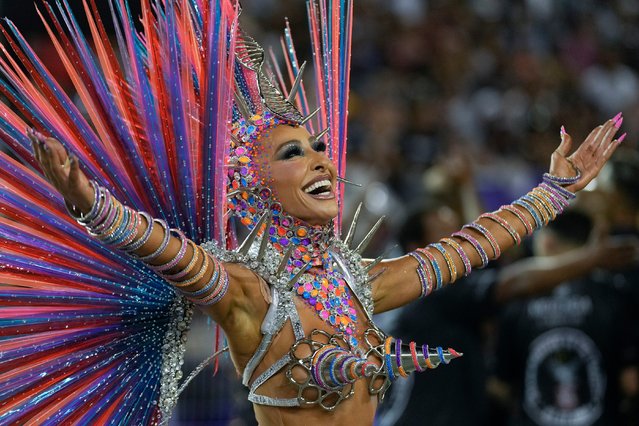
Brazilian model and TV presenter Sabrina Sato from the Gavioes da Fiel samba school performs during a Carnival parade in Sao Paulo, Brazil, Sunday, February 11, 2024. (Photo by Andre Penner/AP Photo)

Brazilian model and TV presenter Sabrina Sato from the Gavioes da Fiel samba school performs during a Carnival parade in Sao Paulo, Brazil, Sunday, February 11, 2024. (Photo by Andre Penner/AP Photo)
Details
09 Jun 2025 02:22:00
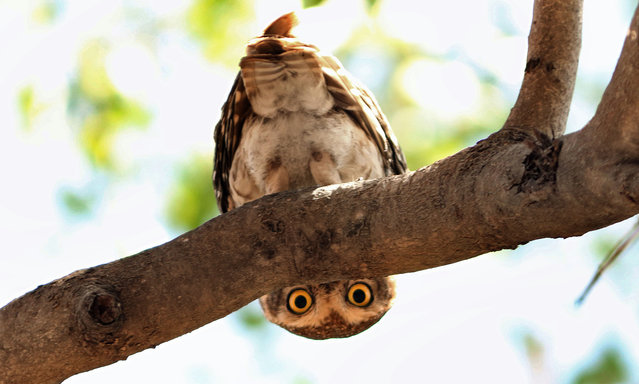
A spotted owlet appears to be playing peek-a-boo near Rancharda Lake in Ahmedabad, India on February 9, 2016. The species is common across the Indian subcontinent. (Photo by Caters News Agency)

A spotted owlet appears to be playing peek-a-boo near Rancharda Lake in Ahmedabad, India on February 9, 2016. The species is common across the Indian subcontinent. (Photo by Caters News Agency)
Details
14 Feb 2016 11:18:00
In this handout image provided by Ogilvy, a burger made from cultured beef, which has been developed by Professor Mark Post of Maastricht University in the Netherlands (pictured) is shown to the media during a press conference on August 5, 2013 in London, England. Cultured Beef could help solve the coming food crisis and combat climate change with commercial production of Cultured Beef beginning within ten to twenty years. (Photo by David Parry via Getty Images)

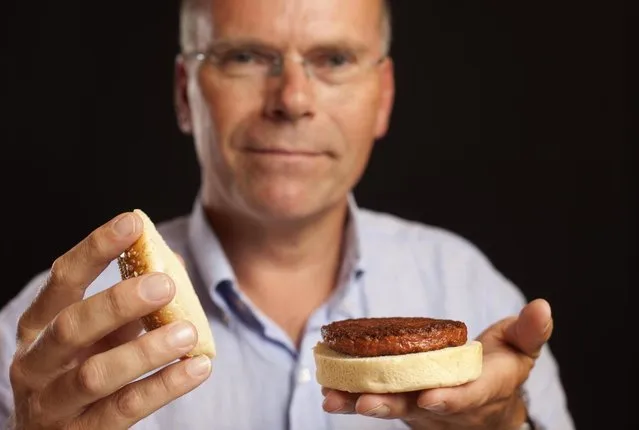
In this handout image provided by Ogilvy, a burger made from cultured beef, which has been developed by Professor Mark Post of Maastricht University in the Netherlands (pictured) is shown to the media during a press conference on August 5, 2013 in London, England. The in-vitro burger, cultured from cattle stem cells, the first example of what its creator says could provide an answer to global food shortages and help combat climate change, was fried in a pan and tasted by two volunteers. The burger is the result of years of research by Dutch scientist Mark Post, a vascular biologist at the University of Maastricht, who is working to show how meat grown in petri dishes might one day be a true alternative to meat from livestock.The meat in the burger has been made by knitting together around 20,000 strands of protein that has been cultured from cattle stem cells in Post's lab. (Photo by David Parry)
Details
06 Aug 2013 08:48:00