Loading...
Done
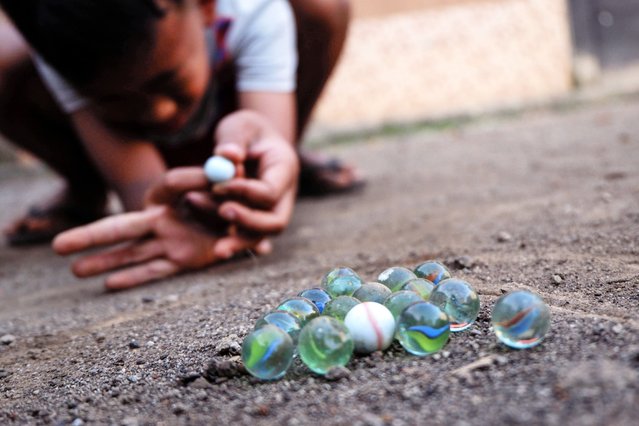
Children play marbles on the dirt in Garut, West Java, Indonesia on October 17, 2025. This traditional game, which was popular in the 1980s, is now rarely played by children due to the increasing popularity of modern games with advanced technology. According to a survey by the Indonesian Child Protection Commission (KPAI), more than 71.3% of school-age children own gadgets and play them for a considerable amount of time each day, and as many as 79% of child respondents are allowed to play gadgets for purposes other than learning. (Photo by Algi Febri Sugita/ZUMA Press Wire/Rex Features/Shutterstock)

Children play marbles on the dirt in Garut, West Java, Indonesia on October 17, 2025. This traditional game, which was popular in the 1980s, is now rarely played by children due to the increasing popularity of modern games with advanced technology. According to a survey by the Indonesian Child Protection Commission (KPAI), more than 71.3% of school-age children own gadgets and play them for a considerable amount of time each day, and as many as 79% of child respondents are allowed to play gadgets for purposes other than learning. (Photo by Algi Febri Sugita/ZUMA Press Wire/Rex Features/Shutterstock)
Details
26 Nov 2025 03:06:00
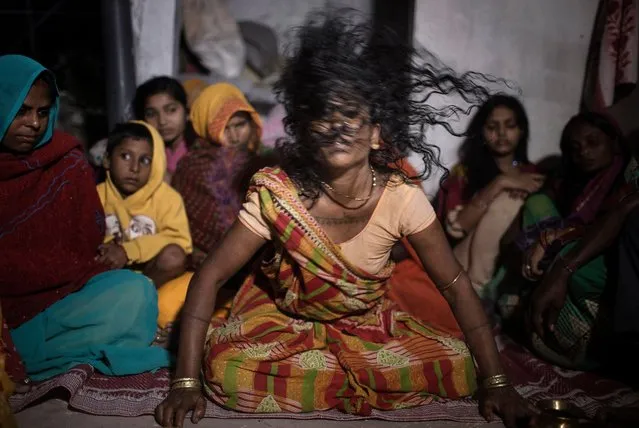
Marani Devi Chaudhary (C), aged 40, performs a ritual in front of shaman Paltan Yadav (unseen) at her home in Rajaur village in Dhanusha district, Nepal, 02 November 2017. The shaman identified Marani Devi to be possessed by their lineage god who was dissatisfied by their worship is thought by the family to have caused them misfortune and is even feared lead to their death. Therefore Marani Devi spent 1,500 USD to perform a healing ritual at the Ghost Festival held at the banks of Kamala River in Dhanusha district two days later. Every family or community has their own sacred god, called 'Kuldevta' in Nepali which means family deity or lineage god. Only family members or people within communities of the same caste can worship to the deity. They have their own rules and regulations of worship which varies from one family and community to another. Being unable to follow the rules and regulations or carry out worship is believed to cause misfortune. (Photo by Narendra Shrestha/EPA/EFE)

Marani Devi Chaudhary (C), aged 40, performs a ritual in front of shaman Paltan Yadav (unseen) at her home in Rajaur village in Dhanusha district, Nepal, 02 November 2017. The shaman identified Marani Devi to be possessed by their lineage god who was dissatisfied by their worship is thought by the family to have caused them misfortune and is even feared lead to their death. (Photo by Narendra Shrestha/EPA/EFE)
Details
17 Nov 2017 06:53:00
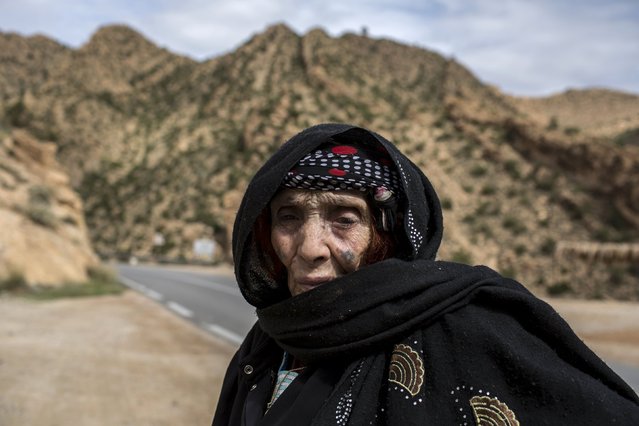
Mazouza Bouglada, 86, a berber woman from the Chaouia region, who has facial tattoos, poses for a photograph in Taghit in the Aures Mountain, Algeria October 8, 2015. Bouglada was tattooed aged 7 by a nomadic man from the Sahara region. She was advised by her mother to get tattooed. The more she got tattooed the more she showed off. Even if she still remembers the pain, she felt beautiful once it was done, Bouglada said. (Photo by Zohra Bensemra/Reuters)

Mazouza Bouglada, 86, a berber woman from the Chaouia region, who has facial tattoos, poses for a photograph in Taghit in the Aures Mountain, Algeria October 8, 2015. Bouglada was tattooed aged 7 by a nomadic man from the Sahara region. She was advised by her mother to get tattooed. The more she got tattooed the more she showed off. Even if she still remembers the pain, she felt beautiful once it was done, Bouglada said. She was very proud of her stars on her cheeks. Her eldest sister had been tattooed before her and she wanted to imitate her. Bouglada said she has now given away all her silver jewellery to atone for the sin that believers told her she had committed by being tattooed. (Photo by Zohra Bensemra/Reuters)
Details
01 Nov 2015 08:02:00
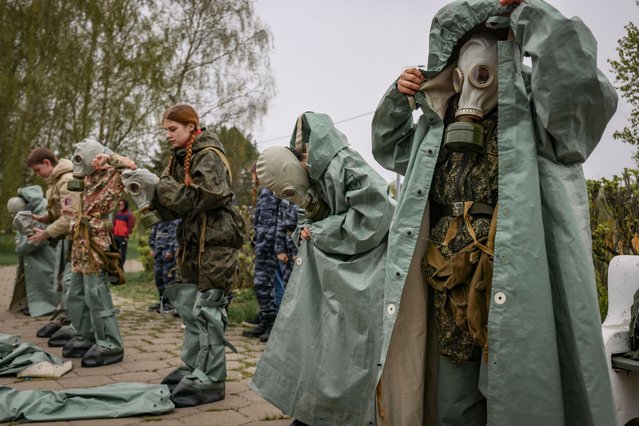
“Yunarmiya” (Young Army) All-Russia National Military Patriotic Social Movement Association members compete during the 7th military-patriotic game “Yunarmiya, forward!” dedicated to Victory Day at the Museum-reserve “Gorki Leninskie” in Gorki Leninskie, Russia, 29 April 2025. A total of 160 teams of Yunarmiya and military-patriotic detachments attended the games, each team consisting of seven people aged between 12 and 17 years old. The games are a continuation of the Soviet military-sports competitions for children and teenagers, “Zarnitsa” (since 1967) and “Orlyonok (Eaglet)” (since 1972). (Photo by Sergei Ilnitsky/EPA/EFE)

“Yunarmiya” (Young Army) All-Russia National Military Patriotic Social Movement Association members compete during the 7th military-patriotic game “Yunarmiya, forward!” dedicated to Victory Day at the Museum-reserve “Gorki Leninskie” in Gorki Leninskie, Russia, 29 April 2025. A total of 160 teams of Yunarmiya and military-patriotic detachments attended the games, each team consisting of seven people aged between 12 and 17 years old. The games are a continuation of the Soviet military-sports competitions for children and teenagers, “Zarnitsa” (since 1967) and “Orlyonok (Eaglet)” (since 1972). (Photo by Sergei Ilnitsky/EPA/EFE)
Details
04 Jun 2025 02:14:00
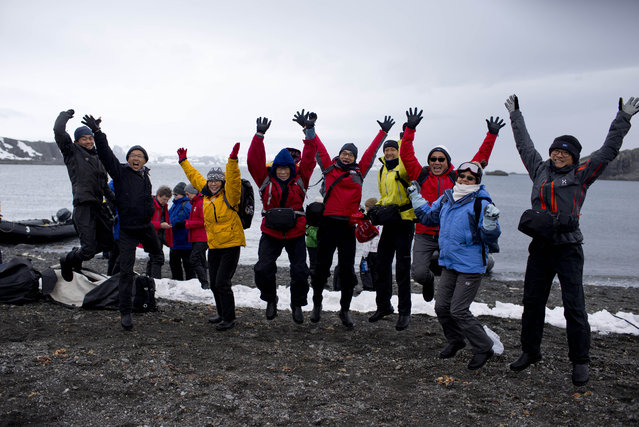
In this February 2, 2015 photo, tourists jump as they pose for a picture, after disembarking from the Ocean Nova cruise ship, on King George Island, Antarctica. This tourist season, which runs November through March, more than 37,000 visitors are expected to walk on the coldest continent on Earth, about 10 percent more than the year before. (Photo by Natacha Pisarenko/AP Photo)

In this February 2, 2015 photo, tourists jump as they pose for a picture, after disembarking from the Ocean Nova cruise ship, on King George Island, Antarctica. This tourist season, which runs November through March, more than 37,000 visitors are expected to walk on the coldest continent on Earth, about 10 percent more than the year before. (Photo by Natacha Pisarenko/AP Photo)
Details
22 Mar 2015 11:31:00
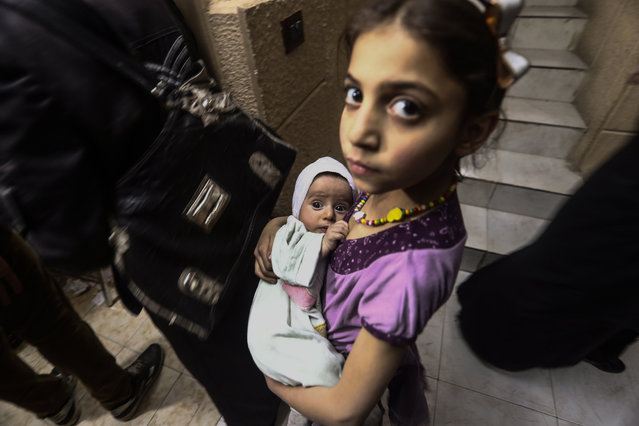
A little girl holding her newborn sister waits for their turn in a queue during a vaccination campaign under the supervision of the Syrian Arab Red Crescent (SARC) humanitarian nonprofit organization, in the besieged Syrian town of Douma, Syria, 23 May 2017. According to a statement from SARC, in the city of Douma some 12,809 children under the age of five were immunized in a vaccination campaign to prevent measles and poliomyelitis. The campaign was the first of its kind with the participation of 100 volunteers. SARC has been delivering vaccines to 17 health centers approved for vaccination campaigns in towns and villages in the Eastern Ghouta area. (Photo by Mohammed Badra/EPA)

A little girl holding her newborn sister waits for their turn in a queue during a vaccination campaign under the supervision of the Syrian Arab Red Crescent (SARC) humanitarian nonprofit organization, in the besieged Syrian town of Douma, Syria, 23 May 2017. According to a statement from SARC, in the city of Douma some 12,809 children under the age of five were immunized in a vaccination campaign to prevent measles and poliomyelitis. The campaign was the first of its kind with the participation of 100 volunteers. SARC has been delivering vaccines to 17 health centers approved for vaccination campaigns in towns and villages in the Eastern Ghouta area. (Photo by Mohammed Badra/EPA)
Details
13 Jun 2017 07:55:00
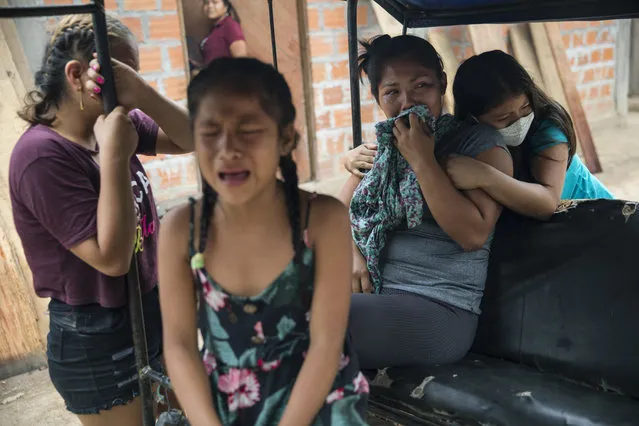
Family members mourn the passing of Manuela Chavez, who died from symptoms related to the new coronavirus at the age of 88, as a government team prepares to remove her body from inside her home, in the Shipibo Indigenous community of Pucallpa, in Peru's Ucayali region, Monday, August 31, 2020. While the lucky are cured with ancestral ailments, the less fortunate often die at home. A government team travels from one spartan, thatch-roofed home to the next, removing the dead from their homes where they took their last breaths. (Photo by Rodrigo Abd/AP Photo)

Family members mourn the passing of Manuela Chavez, who died from symptoms related to the new coronavirus at the age of 88, as a government team prepares to remove her body from inside her home, in the Shipibo Indigenous community of Pucallpa, in Peru's Ucayali region, Monday, August 31, 2020. While the lucky are cured with ancestral ailments, the less fortunate often die at home. A government team travels from one spartan, thatch-roofed home to the next, removing the dead from their homes where they took their last breaths. (Photo by Rodrigo Abd/AP Photo)
Details
18 Sep 2020 00:03:00
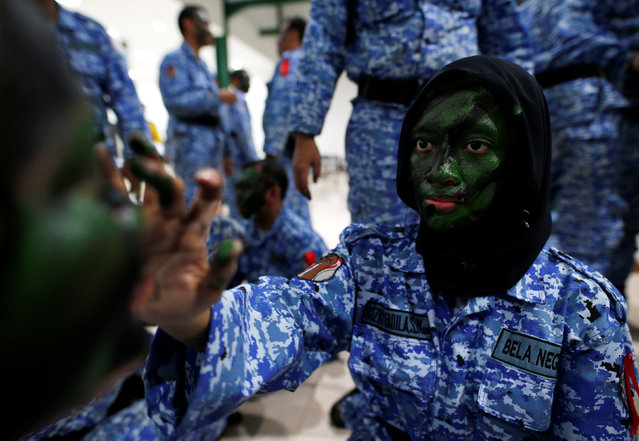
A female participant of the Bela Negara – “defend the nation” – programme applies camouflage face paint on another participant's face at a training centre in Rumpin, Bogor, West Java, Indonesia June 2, 2016. (Photo by Darren Whiteside/Reuters)

A female participant of the Bela Negara – “defend the nation” – programme applies camouflage face paint on another participant's face at a training centre in Rumpin, Bogor, West Java, Indonesia June 2, 2016. (Photo by Darren Whiteside/Reuters)
Details
08 Jun 2016 10:26:00