Loading...
Done
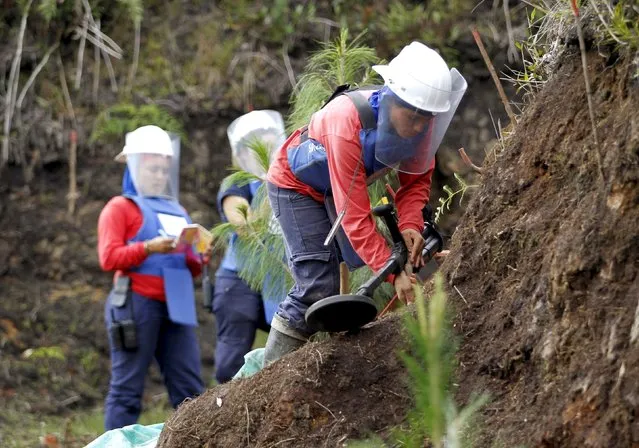
Natalia Arango works with her mine detector in a zone of landmines planted by rebels groups near Sonson in Antioquia province, November 19, 2015. (Photo by Fredy Builes/Reuters)

Natalia Arango works with her mine detector in a zone of landmines planted by rebels groups near Sonson in Antioquia province, November 19, 2015. Women's work takes on a nontraditional meaning for fifteen Colombian women who work to rid the Antioquia Mountains of deadly landmines as the country edges closer to a peace agreement with Marxist rebels to end over a decade of conflict which has claimed 220,000 lives. (Photo by Fredy Builes/Reuters)
Details
27 Nov 2015 04:44:00
Photographers: Joel Robison Part2

“Hi! I'm Joel, I live in a valley in British Columbia's Rocky Mountains, as close to the forest as I could possibly be! I love to run, bike, jump, eat and create and I hope that you enjoy my work as much as I enjoy creating it!” – Joel Robison. (Photo by: Joel Robison; Source: Flickr)


See Also:Photographers: Joel Robison Part1
Details
01 Nov 2013 10:40:00
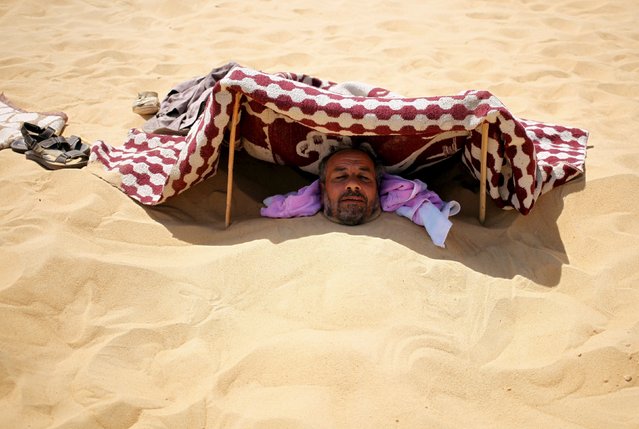
A patient buried in the hot sand looks out from under a shade that protects his face from the sun in Siwa, Egypt, August 12, 2015. (Photo by Asmaa Waguih/Reuters)

A patient buried in the hot sand looks out from under a shade that protects his face from the sun in Siwa, Egypt, August 12, 2015. In the searing heat of summer in western Egypt, at the hottest time of the day, sufferers of rheumatism, joint pain, infertility or impotence lie buried neck-deep in the sand of Siwa near Dakrour Mountain. Locals say taking a sand bath is a natural therapy with powers to cure many medical conditions. (Photo by Asmaa Waguih/Reuters)
Details
28 Aug 2015 12:07:00
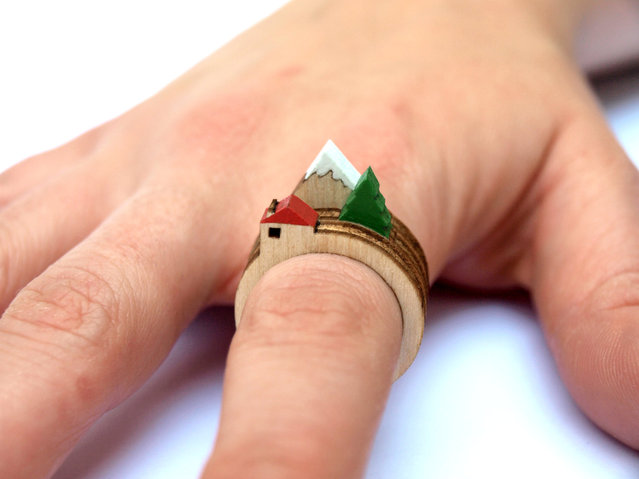
Awesome Ring By Clive Roddy

If you ever wanted to wear houses on your finger, now’s your chance (though it’s hard to imagine that any sane person would have such a desire)! Clive Roddy offers you an opportunity to fulfill your dream of having a ring that features houses, waves, mountains, or trees. In order to create these rings, first the metal is cut using a laser, and then the whole thing is hand painted using colored enamel. Though these rings are very pretty, it is hard to imagine someone wearing such a ring on everyday basis. These types of rings should probably be reserved for special occasions or festivals, rather than for everyday use. (Photo by Clive Roddy)
Details
09 Dec 2014 09:36:00
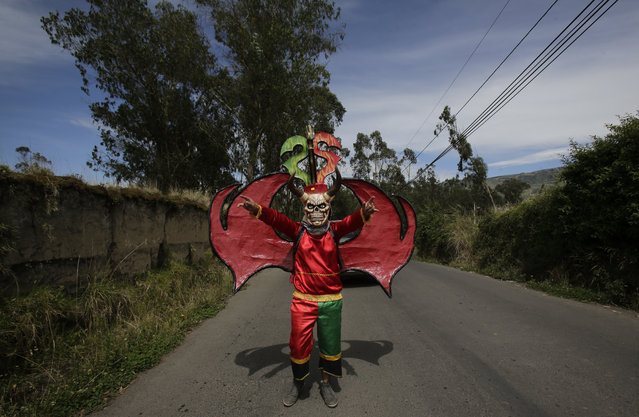
Dressed for the traditional New Year's festival known as “La Diablada”, in Pillaro, Ecuador, Friday, January 5, 2018. (Photo by Dolores Ochoa/AP Photo)

Dressed for the traditional New Year's festival known as “La Diablada”, in Pillaro, Ecuador, Friday, January 5, 2018. Thousands of singing and dancing devils take over the mountain town for six days of revelry in the streets. Local legend holds that anyone who adopts a costume for the celebration and wears it at the event six years in a row will have good luck. (Photo by Dolores Ochoa/AP Photo)
Details
12 Jan 2018 06:47:00
Photographers: Joel Robison Part3

“Hi! I'm Joel, I live in a valley in British Columbia's Rocky Mountains, as close to the forest as I could possibly be! I love to run, bike, jump, eat and create and I hope that you enjoy my work as much as I enjoy creating it!” – Joel Robison. (Photo by: Joel Robison; Source: Flickr)


See Also:Photographers: Joel Robison Part1
Details
02 Nov 2013 09:03:00
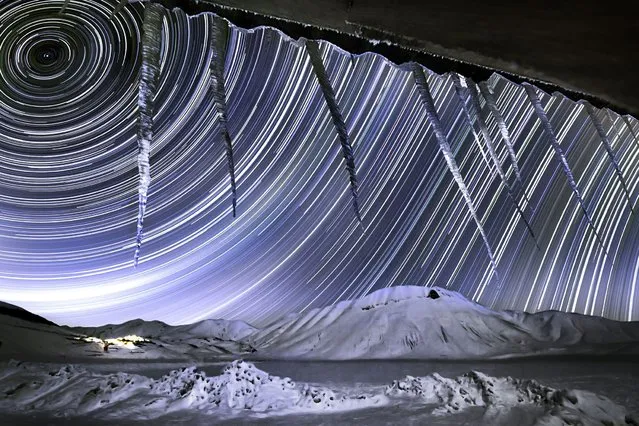
Rainbow of stars

Photographer Maurizio Pignotti, 46, spends all night in freezing temperatures painstakingly shooting the breathtaking crystal-clear stars. He uses a technique where he merges together anywhere between 80 and 450 shots to create what he describes as a “rainbow of stars”. Space-lover Maurizio, captures the star trails on the borders of the Adriatic Sea – including the Sibillini Mountains National Park, the Conero National Park, and the Gargano National Park. (Photo by Maurizio Pignotti/Caters News)
Details
31 Dec 2013 11:51:00
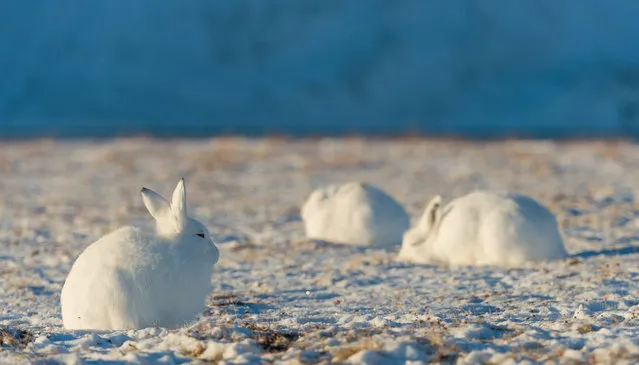
Arctic Hare

The arctic hare, or polar rabbit, is a species of hare which is adapted largely to polar and mountainous habitats. The arctic hare survives with a thick coat of fur and usually digs holes in the ground or under snow to keep warm and sleep. Arctic hares look like rabbits but have shorter ears, are taller when standing, and, unlike rabbits, can thrive in cold climates. They can travel together with many other hares, sometimes huddling with dozens or more, but are usually found alone, taking, in some cases, more than one partner. The arctic hare can run up to 60 kilometres per hour (40 mph). Its predators include the arctic wolf, arctic fox, and ermine.
Details
17 Mar 2014 13:56:00