Loading...
Done
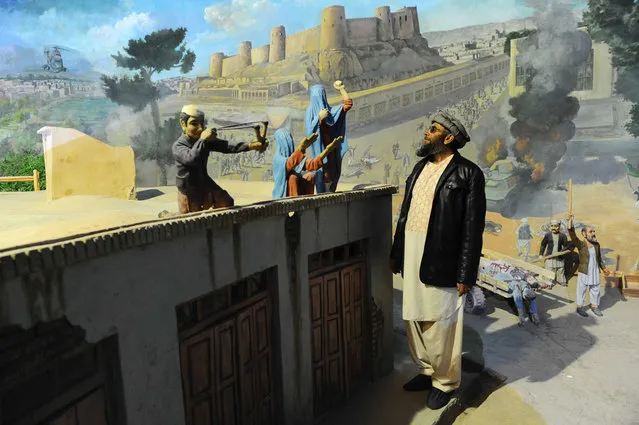
Museum assistant and former Soviet soldier, Sheikh Abdullah looks at a display in the Manzar-e Jahad, or Jihad Museum, which depicts the Soviet invasion of 1979 and the Afghan resistance, in Herat, on February 15, 2014. (Photo by Aref Karimi/AFP Photo via The Atlantic)

Museum assistant and former Soviet soldier, Sheikh Abdullah looks at a display in the Manzar-e Jahad, or Jihad Museum, which depicts the Soviet invasion of 1979 and the Afghan resistance, in Herat, on February 15, 2014. Sheikh Abdullah, who was a Soviet intelligence officer by the name of Khakimov Bakhrodin, was captured after being injured in battle with the Mujahideen. Abdullah stayed with his captors, converted to Islam and was renamed Abdullah. He never returned to his former homeland and now works at the Jihad Museum. (Photo by Aref Karimi/AFP Photo via The Atlantic)
Details
10 Mar 2014 09:08:00
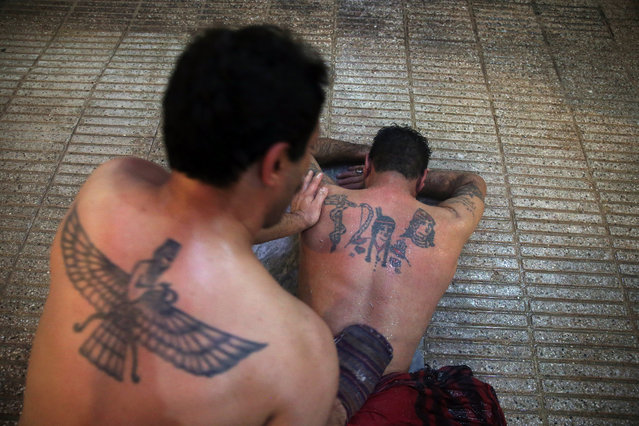
In this Friday, January 9, 2015 photo, bathhouse worker Omid Riahi, 39, scrubs a man to remove dead skin, at the Ghebleh public bathhouse, in Tehran, Iran. The steamy air and curved tiled walls of Iran's famed public bathhouses, some rinsing and massaging patrons for hundreds of years, slowly may wash away as interest in them wanes. (Photo by Ebrahim Noroozi/AP Photo)

In this Friday, January 9, 2015 photo, bathhouse worker Omid Riahi, 39, scrubs a man to remove dead skin, at the Ghebleh public bathhouse, in Tehran, Iran. The steamy air and curved tiled walls of Iran's famed public bathhouses, some rinsing and massaging patrons for hundreds of years, slowly may wash away as interest in them wanes. The bathhouses, known as “hammams” in Persian, find themselves in rough financial times as modern conveniences now allow showers and baths in most homes across the Islamic Republic. (Photo by Ebrahim Noroozi/AP Photo)
Details
03 Apr 2015 12:40:00
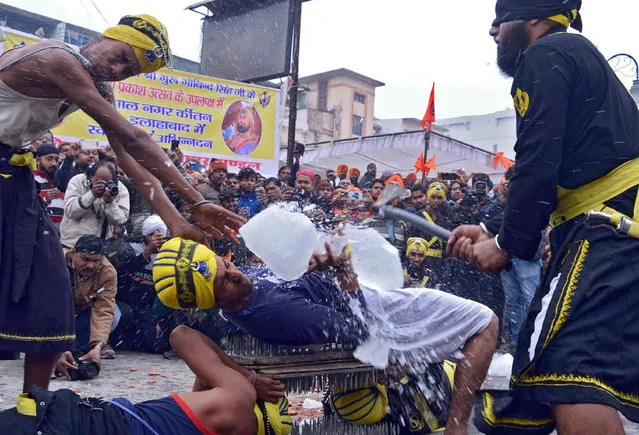
Sikh devotee take part in Nagar Keertan procession on the occasion of Guru Gobind Singh birth anniversary in Allahabad, India on December 29, 2016. (Photo by Prabhat Kumar Verma/Pacific Press via ZUMA Wire/Rex Features/Shutterstock)

Sikh devotee take part in Nagar Keertan procession on the occasion of Guru Gobind Singh birth anniversary in Allahabad, India on December 29, 2016. Guru Gobind Singh, born Gobind Rai (1666 – 1708), was the 10th Sikh Guru, a spiritual master, warrior, poet and philosopher. When his father, Guru Tegh Bahadur, was beheaded for refusing to convert to Islam, Guru Gobind Singh was formally installed as the leader of the Sikhs at age nine, becoming the last of the living Sikh Gurus. (Photo by Prabhat Kumar Verma/Pacific Press via ZUMA Wire/Rex Features/Shutterstock)
Details
31 Dec 2016 10:27:00
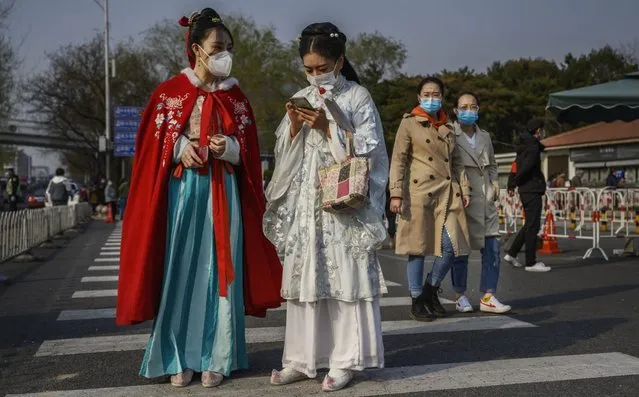
Chinese women wear protective masks as they are dressed in traditional clothing from the Qing Dynasty era outside a park on March 29, 2020 in Beijing, China. A limited section of the iconic tourist site was re-opened to the public this week allowing a smaller number of visitors to reserve tickets online in advance and to enter after passing health screening. With the pandemic hitting hard across the world, China recorded its first day with no new domestic cases of the coronavirus last week, since the government imposed sweeping measures to keep the disease from spreading. For two months, millions of people across China have been restricted in how they move from their homes, while other cities have been locked down in ways that appeared severe at the time but are now being replicated in other countries trying to contain the virus. Officials believe the worst appears to be over in China, though there are concerns of another wave of infections as the government attempts to reboot the worlds second largest economy. In Beijing, it is mandatory to wear masks outdoors, retail stores operate on reduced hours, restaurants employ social distancing among patrons, and tourist attractions at risk of drawing large crowds remain closed. Monitoring and enforcement of virus-related measures and the quarantine of anyone arriving to Beijing is carried out by neighborhood committees and a network of Communist Party volunteers who wear red arm bands. A primary concern for Chinese authorities remains the arrival of flights from Europe and elsewhere, given the exposure of passengers in regions now regarded as hotbeds for transmission. Since January, China has recorded more than 81,000 cases of COVID-19 and at least 3200 deaths, mostly in and around the city of Wuhan, in central Hubei province, where the outbreak first started. (Photo by Kevin Frayer/Getty Images)

Chinese women wear protective masks as they are dressed in traditional clothing from the Qing Dynasty era outside a park on March 29, 2020 in Beijing, China. A limited section of the iconic tourist site was re-opened to the public this week allowing a smaller number of visitors to reserve tickets online in advance and to enter after passing health screening. (Photo by Kevin Frayer/Getty Images)
Details
01 Apr 2020 00:05:00
Euro sculpture

The Euro sculpture is partially reflected in a puddle on a cobblestone pavement in front of the headquarters of the European Central Bank in Frankfurt on Jan. 21. (Kai Pfaffenbach/Reuters)
Details
15 May 2012 05:20:00
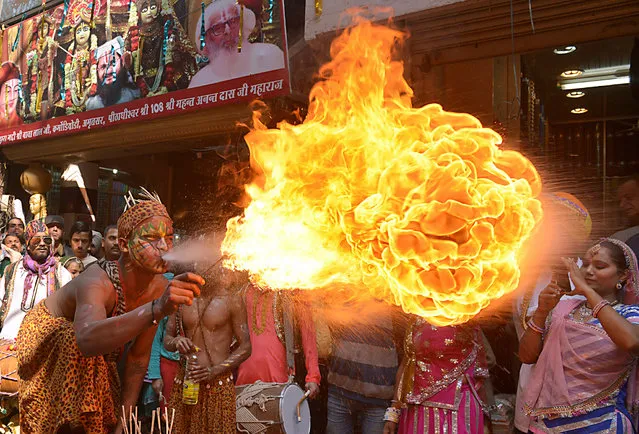
Indian dancers perform a fire breathing act during a procession to mark the 661st anniversary of the birth of Hindu guru Bawa Lal Dayal Maharaj in Amritsar on February 9, 2016. Bawa Lal Dayal Maharaj, a popular leader of his time, is especially revered by devotees of a temple in the town of Dhyanpur, some 45 kms north of Amritsar. (Photo by Narinder Nanu/AFP Photo)

Indian dancers perform a fire breathing act during a procession to mark the 661st anniversary of the birth of Hindu guru Bawa Lal Dayal Maharaj in Amritsar on February 9, 2016. Bawa Lal Dayal Maharaj, a popular leader of his time, is especially revered by devotees of a temple in the town of Dhyanpur, some 45 kms north of Amritsar. (Photo by Narinder Nanu/AFP Photo)
Details
13 Feb 2016 09:02:00
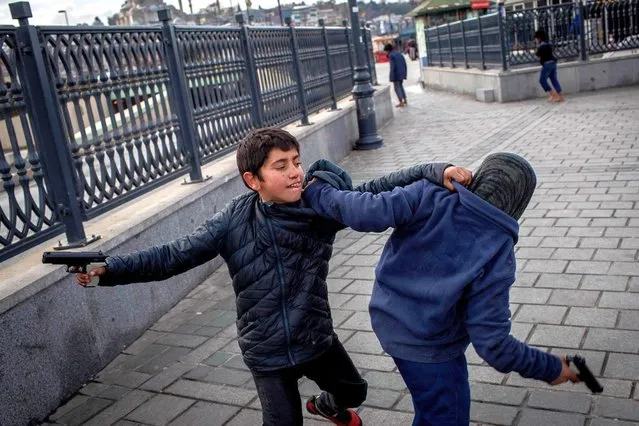
Syrian refugee boys play with toy guns at Eminonu district in Istanbul, Turkey, 08 January 2019. (Photo by Sedat Suna/EPA/EFE)

Syrian refugee boys play with toy guns at Eminonu district in Istanbul, Turkey, 08 January 2019. (Photo by Sedat Suna/EPA/EFE)
Details
22 Feb 2019 00:03:00
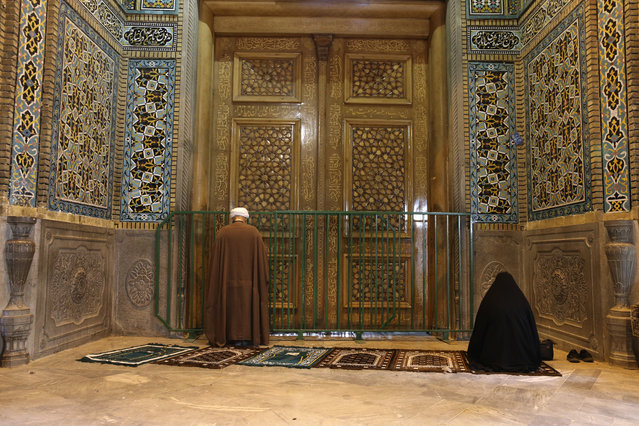
A cleric and a woman pray behind a closed door of Masoume shrine in the city of Qom, some 80 miles (125 kilometers) south of the capital Tehran, Iran, Monday, March 16, 2020. On Monday, Iran closed the Masoume shrine, a major pilgrimage site in the city of Qom, the epicenter of the country's new coronavirus outbreak. Authorities were already restricting access and barring pilgrims from kissing or touching the shrine, but it had remained open. (Photo by AP Photo)

A cleric and a woman pray behind a closed door of Masoume shrine in the city of Qom, some 80 miles (125 kilometers) south of the capital Tehran, Iran, Monday, March 16, 2020. On Monday, Iran closed the Masoume shrine, a major pilgrimage site in the city of Qom, the epicenter of the country's new coronavirus outbreak. Authorities were already restricting access and barring pilgrims from kissing or touching the shrine, but it had remained open. (Photo by AP Photo)
Details
23 Mar 2020 00:01:00