Loading...
Done
A walrus takes centre stage after barging another out of the way to be in a photograph in Svalbard, between mainland Norway and the North Pole in January 2025. (Photo by Olav Thokle/Syndicated Photos/Solent News)

A walrus takes centre stage after barging another out of the way to be in a photograph in Svalbard, between mainland Norway and the North Pole in January 2025. (Photo by Olav Thokle/Syndicated Photos/Solent News)
Details
16 Feb 2025 03:52:00
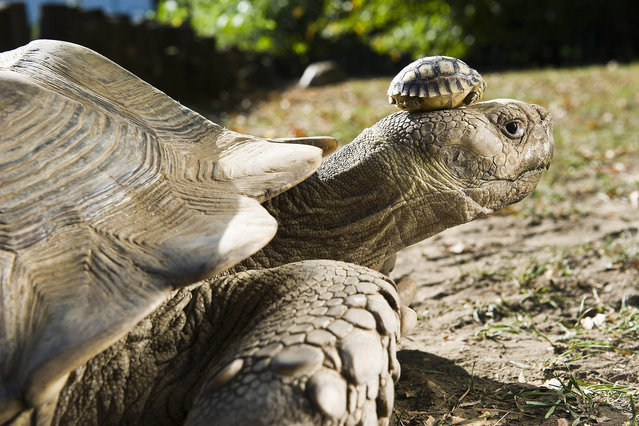
A four-day old African spurred tortoise, Geochelone sulcata, one of eight babies, was place on the head of its mother in their enclosure in Nyiregyhaza Animal Park in Nyiregyhaza, 226 km east of Budapest, Hungary, 27 September 2011. This was the first time that offspring of an African spurred tortoise were born in this zoo. The eight babies hatched after 115 days, they are 5.5 cms long and weigh 25 grams. Spurred tortoise is the largest species of land tortoises in Africa, the weight of an adult animal may reach 80 kgs. (Photo by Attila Balazs/EPA)


A four-day old African spurred tortoise, Geochelone sulcata, one of eight babies, was place on the head of its mother in their enclosure in Nyiregyhaza Animal Park in Nyiregyhaza, 226 km east of Budapest, Hungary, 27 September 2011. This was the first time that offspring of an African spurred tortoise were born in this zoo. The eight babies hatched after 115 days, they are 5.5 cms long and weigh 25 grams. Spurred tortoise is the largest species of land tortoises in Africa, the weight of an adult animal may reach 80 kgs. (Photo by Attila Balazs/EPA)
Details
07 May 2016 12:58:00
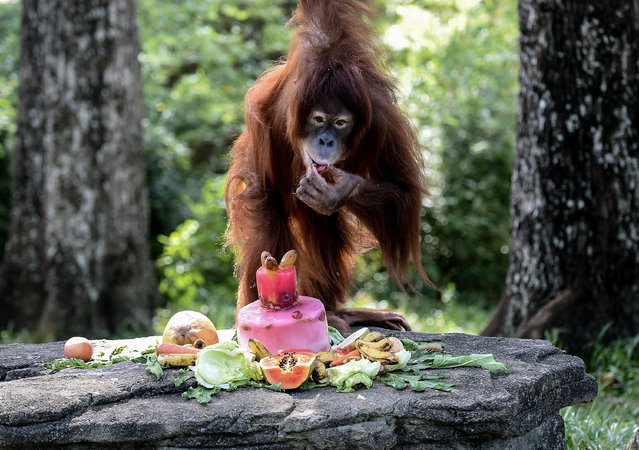
Tsunami, an eleven year old female Sumatran Orangutan eats a fruit platter during her birthday celebration at the National Zoo Ape Center in Kuala Lumpur, Malaysia, Thursday, December 31, 2015. (Photo by Manan Vatsyayana/AFP Photo)

Tsunami, an eleven year old female Sumatran Orangutan eats a fruit platter during her birthday celebration at the National Zoo Ape Center in Kuala Lumpur, Malaysia, Thursday, December 31, 2015. (Photo by Manan Vatsyayana/AFP Photo)
Details
02 Jan 2016 08:01:00
A laborer is transporting used oil durms by a hand-pulled vehicle near Buriganga River in Dhaka on June 12, 2021. (Photo by Md Rakibul Hasan/ZUMA Wire/Rex Features/Shutterstock)

A laborer is transporting used oil durms by a hand-pulled vehicle near Buriganga River in Dhaka on June 12, 2021. (Photo by Md Rakibul Hasan/ZUMA Wire/Rex Features/Shutterstock)
Details
15 Jul 2021 09:20:00
A cygnet keeps snug under its mother’s wing at Heronry Pond in Wanstead Park in east London in the last decade of May 2024. (Photo by Jeff Moore/The Times)

A cygnet keeps snug under its mother’s wing at Heronry Pond in Wanstead Park in east London in the last decade of May 2024. (Photo by Jeff Moore/The Times)
Details
09 Jun 2024 05:31:00
A child looks at a reveller dressed as devil on the eve of Saint Nicholas Day in Prague, Czech Republic on December 5, 2022. (Photo by David W. Cerny/Reuters)

A child looks at a reveller dressed as devil on the eve of Saint Nicholas Day in Prague, Czech Republic on December 5, 2022. (Photo by David W. Cerny/Reuters)
Details
01 Feb 2024 07:49:00
A French bulldog wears a costume at the annual Pet Expo 2021 in Bangkok, Thailand on November 25, 2021. (Photo by Athit Perawongmetha/Reuters)

A French bulldog wears a costume at the annual Pet Expo 2021 in Bangkok, Thailand on November 25, 2021. (Photo by Athit Perawongmetha/Reuters)
Details
19 Mar 2023 04:02:00
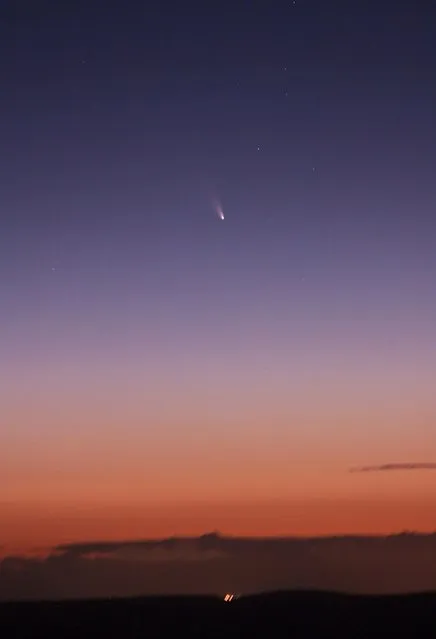
This image provided by NASA shoaws the comet PANSTARRS as seen from Mount Dale, Western Australia on March 5, 2013. According to NASA on March 10, it will make its closest approach to the sun about 28 million miles (45 million kilometers) away. As it continues its nightly trek across the sky, the comet may get lost in the sun's glare but should return and be visible to the naked eye by March 12. (Photo by AP Photo/NASA)

It’s time to start watching for Comet PANSTARRS, one of two comets to get excited about in 2013. Photo: This image provided by NASA shoaws the comet PANSTARRS as seen from Mount Dale, Western Australia on March 5, 2013. According to NASA on March 10, it will make its closest approach to the sun about 28 million miles (45 million kilometers) away. As it continues its nightly trek across the sky, the comet may get lost in the sun's glare but should return and be visible to the naked eye by March 12. (Photo by AP Photo/NASA)
Details
13 Mar 2013 08:03:00