Loading...
Done
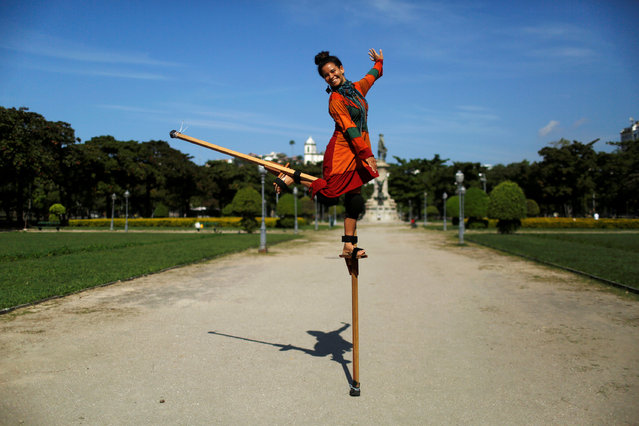
Raquel Poti, a 32-year-old street artist, poses at a park in Rio de Janeiro, Brazil, June 25, 2016. Raquel thinks the Olympics promotes a lifestyle that combines sports, culture and education. She is concerned about the large investment for the event while the population needs improvements in basic services. (Photo by Pilar Olivares/Reuters)

Just a week before Rio de Janeiro hosts South America's first Olympics, city residents expressed mixed feelings about the cost and security of the Games, while holding out hope they will bring joy to a nation facing economic and political crises. The conflicted thoughts mirror a recent survey by the Datafolha polling group showing that half of Brazilians were opposed to holding the Games, while 63 percent think the costs of hosting the event will outweigh benefits. (Photo by Pilar Olivares/Reuters)
Details
03 Aug 2016 11:51:00
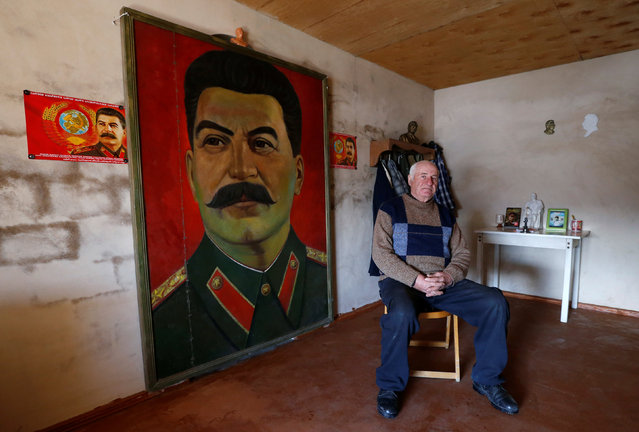
Retired builder Vasili Sidamonidze, 70, poses for a portrait at his home in Gori, Georgia, December 6, 2016. “Unfortunately, Stalin is not popular nowadays. Our people don't respect him. Only we, members of the (Communist) Party, respect him”, Sidamonidze said. “I always try to attend Stalin's birthday anniversaries in Gori. Unfortunately many people don't want to join us even if they live nearby. They look at us from their windows”. Stalin, who was born in Gori in 1878 and died in 1953, is largely reviled today in Georgia, which regained its independence during the 1991 collapse of the Soviet Union. Over the years, his memorials have been dismantled, most recently in 2010 when authorities removed a statue of the dictator from Gori's central square. But Stalin is still revered by a small group of mainly elderly supporters who stress his role in the industrialisation of the Soviet Union and in defeating Nazi Germany in World War Two. Each Dec. 21, a few dozen people mark his birthday by gathering outside a Gori museum dedicated to Stalin, where they make speeches and walk to the square where a 6-meter-high bronze statue of him once stood, calling for it to be reinstated. Opponents say it was a symbol of Moscow's still lingering shadow. In 2008, Russia fought a brief war with Georgia and recognised its breakaway regions of Abkhazia and South Ossetia as independent states. (Photo by David Mdzinarishvili/Reuters)

Retired builder Vasili Sidamonidze, 70, poses for a portrait at his home in Gori, Georgia, December 6, 2016. “Unfortunately, Stalin is not popular nowadays. Our people don't respect him. Only we, members of the (Communist) Party, respect him”, Sidamonidze said. “I always try to attend Stalin's birthday anniversaries in Gori. Unfortunately many people don't want to join us even if they live nearby. They look at us from their windows”. (Photo by David Mdzinarishvili/Reuters)
Details
17 Dec 2016 07:59:00
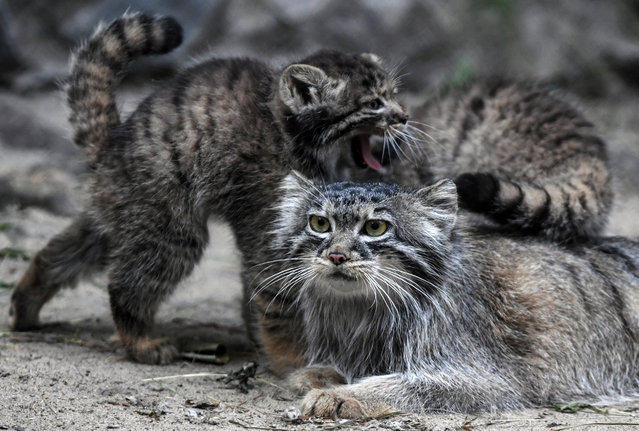
Pallas' s cat kittens with theit mother in an enclosure at the Novosibirsk Zoo, Novosibirsk, Russia on July 11, 2018. Pallas' s cat, also known as manul, is a small wild cat native to montane steppes of the Central Asia and listed as an endangered species. (Photo by Kirill Kukhmar/TASS)

Pallas' s cat kittens with theit mother in an enclosure at the Novosibirsk Zoo, Novosibirsk, Russia on July 11, 2018. Pallas' s cat, also known as manul, is a small wild cat native to montane steppes of the Central Asia and listed as an endangered species. (Photo by Kirill Kukhmar/TASS)
Details
15 Jul 2018 00:03:00
A man, wearing a protective mask following an outbreak of the coronavirus disease (COVID-19), walks in Tokyo, Japan on March 17, 2020. (Photo by Edgard Garrido/Reuters)

A man, wearing a protective mask following an outbreak of the coronavirus disease (COVID-19), walks in Tokyo, Japan on March 17, 2020. (Photo by Edgard Garrido/Reuters)
Details
20 Mar 2020 00:07:00
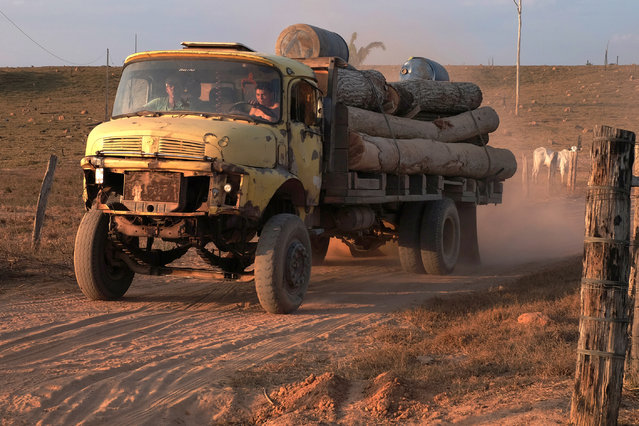
A truck laden with logs travels in Araribóia Indigenous Reserve, Maranhão, Brazil on August 7, 2015. Loggers have been stealing hardwood trees from indigenous lands in Brazil. The Guardians of the Forest are an armed militia formed by the Guajajara tribe to protect their reserve. (Photo by Bonnie Jo Mount/The Washington Post)

A truck laden with logs travels in Araribóia Indigenous Reserve, Maranhão, Brazil on August 7, 2015. Loggers have been stealing hardwood trees from indigenous lands in Brazil. The Guardians of the Forest are an armed militia formed by the Guajajara tribe to protect their reserve. (Photo by Bonnie Jo Mount/The Washington Post)
Details
09 Oct 2015 08:00:00
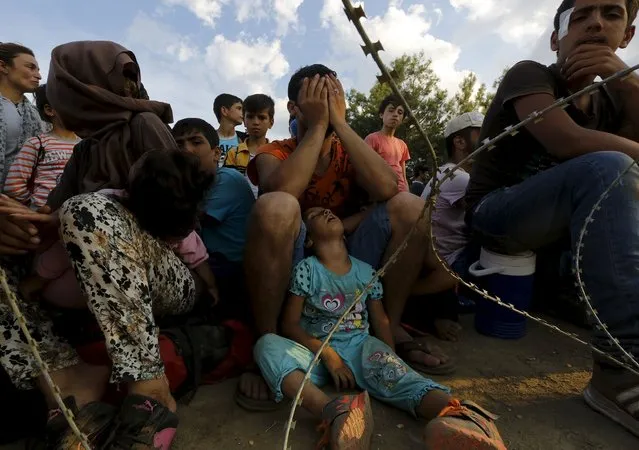
Syrian refugees sit behind barbed wire as they wait to cross into Macedonia at the Greek-Macedonian border, near the village of Idomeni, August 21, 2015. (Photo by Yannis Behrakis/Reuters)

Syrian refugees sit behind barbed wire as they wait to cross into Macedonia at the Greek-Macedonian border, near the village of Idomeni, August 21, 2015. (Photo by Yannis Behrakis/Reuters)
Details
12 Dec 2015 08:01:00
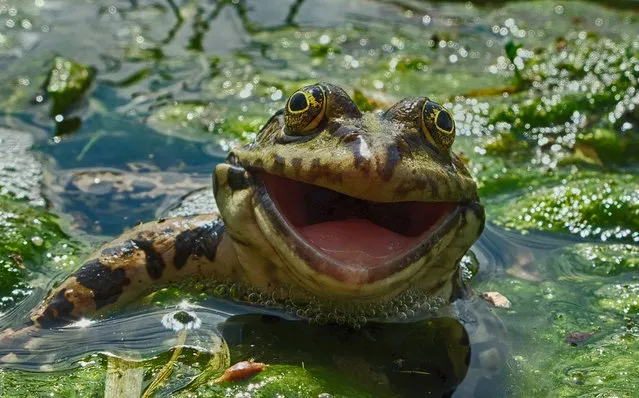
A frog appears to have a big smile for the camera, Russia. (Photo by Artyom Krivosheev/Barcroft Images/Comedy Wildlife Photography Awards 2016)

A frog appears to have a big smile for the camera, Russia. Things are heating up at the Comedy Wildlife Photography Awards as the shortlisted final 40 entries are revealed. This year's competition has featured over 2200 hilarious entries from around the world with photos including a fox face planting in the snow, a dancing brown bear and a pair of seemingly headless penguins – all beautifully photographed with perfect comedy timing and a strong conservation message. (Photo by Artyom Krivosheev/Barcroft Images/Comedy Wildlife Photography Awards 2016)
Details
08 Oct 2016 11:57:00
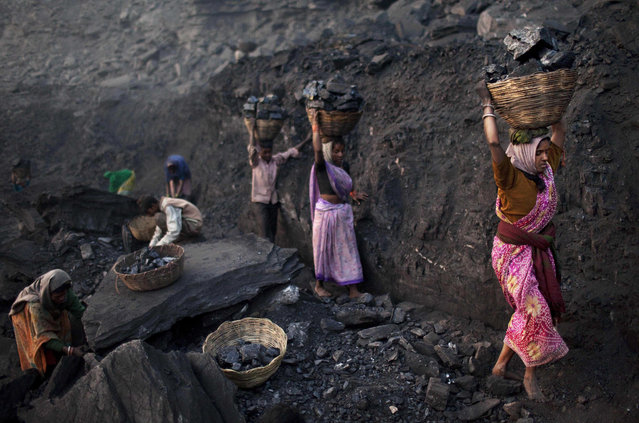
In this Friday, January 7, 2011 photo, people carry baskets of coal scavenged illegally at an open-cast mine in the village of Bokapahari in the eastern Indian state of Jharkhand where a community of coal scavengers live and work. The world's biggest coal users – China, the United States and India – have boosted coal mining in 2017, in an abrupt departure from last year's record global decline for the heavily polluting fuel and a setback to efforts to rein in climate change emissions. (Photo by Kevin Frayer/AP Photo)

In this Friday, January 7, 2011 photo, people carry baskets of coal scavenged illegally at an open-cast mine in the village of Bokapahari in the eastern Indian state of Jharkhand where a community of coal scavengers live and work. The world's biggest coal users – China, the United States and India – have boosted coal mining in 2017, in an abrupt departure from last year's record global decline for the heavily polluting fuel and a setback to efforts to rein in climate change emissions. (Photo by Kevin Frayer/AP Photo)
Details
28 Jun 2017 08:08:00