Loading...
Done
An opposition supporter gestures with a knife during clashes with police in Kibera slum in Nairobi, Kenya October 26, 2017. (Photo by Goran Tomasevic/Reuters)

An opposition supporter gestures with a knife during clashes with police in Kibera slum in Nairobi, Kenya on October 26, 2017. Kenyans trickled into polling stations today for a repeat election that has polarised the nation, amid sporadic clashes as supporters of opposition leader ignored his call to stay away and tried to block voting. (Photo by Goran Tomasevic/Reuters)
Details
28 Oct 2017 06:48:00
A graffiti, portraying a woman, is seen in Medellin, Colombia on November 19, 2017. (Photo by Juancho Torres/Anadolu Agency/Getty Images)

A graffiti, portraying a woman, is seen in Medellin, Colombia on November 19, 2017. Mural graffitis from different artists, street art can be seen in almost every city on Earth, but street arts raw power and potential for change was felt by me most intensively in Medellins Comuna 13, previously one of Colombias most dangerous neighbourhoods, in fact Communa 13 was constant battleground between gangs, narcos, paramilitaries and the government, but today you would hardly recognise it. (Photo by Juancho Torres/Anadolu Agency/Getty Images)
Details
22 Nov 2017 05:59:00
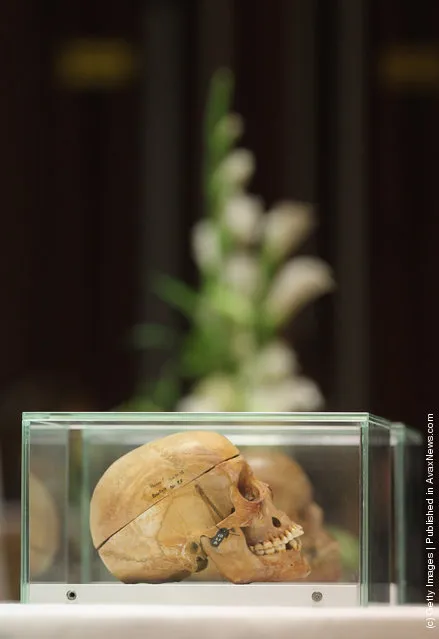
Charite Hospital Returns Herero Skulls To Namibia

Two of 20 skulls to be taken possession of by a delegation from Namibia stand on display at a ceremony at Charite hospital on September 30, 2011 in Berlin, Germany. The skulls are from Herero and Nama tribespeople taken by German colonial forces between 1904 and 1908, when the Germans violently suppressed an uprising in what was then German Southwest Africa, which is today's Namibia, and in the process killed tens of thousand of Herero and Nama. German scientists at the time took the skulls back to Berlin to demonstrate the racial superiority of Europeans over black Africans. Many Namibians demand a formal apology from the German government. (Photo by Sean Gallup/Getty Images)
Details
02 Oct 2011 11:42:00
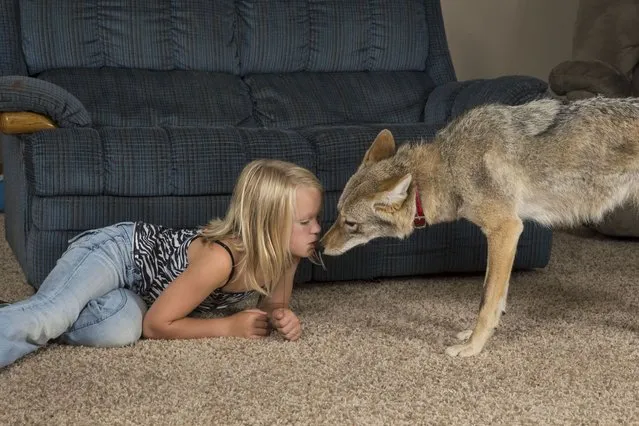
Coyote Wiley sniffs Hailey, 8, at their home. (Photo by Barcroft Media)

Hailey Hanestad thinks nothing about nuzzling up to the animal, called Wiley, and even dozes off with him on her bed. Wiley has been a treasured member of the family since being rescued by Hailey's dad, Rick, three years ago. Today he's thought to be just one of two coyotes in the US that have become domesticated after being born in the wild. Photo: Coyote Wiley sniffs Hailey, 8, at their home. (Photo by Barcroft Media)
Details
15 Jan 2014 11:00:00
Dorothy Bradley (left), photographed for LIFE magazine article on obesity, 1949. (Photo by Martha Holmes/Time & Life Pictures)

“The most serious health problem in the U.S. today is obesity.” Sounds familiar, doesn’t it? But that pronouncement about obesity’s primacy in the hierarchy of national health problems is not new. Rather, it’s the opening line to a remarkable article published 60 years ago in LIFE magazine. This photographs made by Martha Holmes to illustrate that March 1954 article, titled “The Plague of Overweight.” Photo: Dorothy Bradley (left), photographed for LIFE magazine article on obesity, 1949. (Photo by Martha Holmes/Time & Life Pictures)
Details
11 Apr 2013 11:42:00
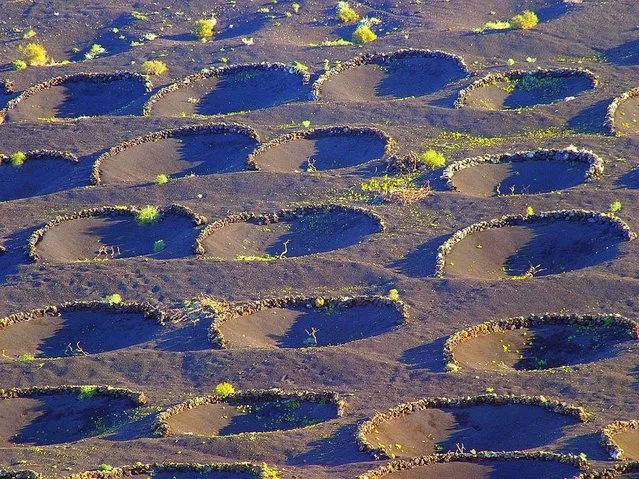
Grapes Born of Volcano In Lanzarote, Spanish

The valley of La Geria, which has been declared a 'Protected Area', is Lanzarote’s main wine-growing region, occupying about 20 square miles (52 square kilometres) and stretching on both sides of the road from Masdache to Uga and right up to the volcanic slopes. This area produces most of Lanzarote’s excellent wines, of which 75 per cent are made from the Malvasía grape, one of the oldest known grape varieties. Best known as a honey-coloured, very sweet wine with a rich flavour, already praised by Shakespeare hundreds of years ago, today the Malvasía grape produces a wide variety of quality white, red or rosé wines, from very sweet to very dry.
Details
31 Oct 2013 09:10:00
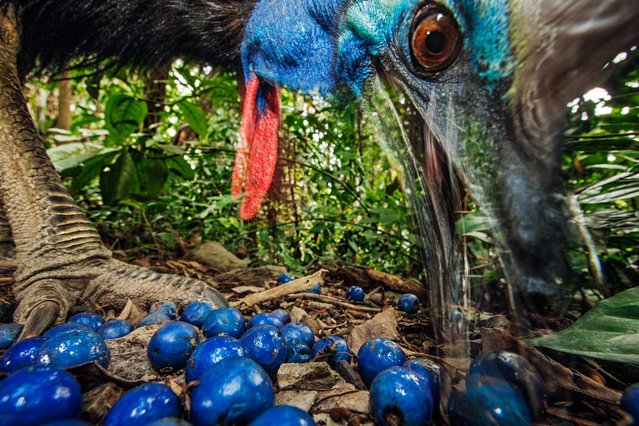
“Cassowaries are large, flightless birds related to emus and (more distantly) to ostriches, rheas, and kiwis”, writes Olivia Judson in the September issue of National Geographic magazine. (Photo by Christian Ziegler/National Geographic)

“Cassowaries are large, flightless birds related to emus and (more distantly) to ostriches, rheas, and kiwis”, writes Olivia Judson in the September issue of National Geographic magazine. How large? People-size: Adult males stand well over five foot five and top 110 pounds. Females are even taller, and can weigh more than 160 pounds. Dangerous when roused, they’re shy and peaceable when left alone. But even birds this big and tough are prey to habitat loss. The dense New Guinea and Australia rain forests where they live have dwindled. Today cassowaries might number 1,500 to 2,000. And because they help shape those same forests – by moving seeds from one place to another – “if they vanish”, Judson writes, “the structure of the forest would gradually change” too. (Photo by Christian Ziegler/National Geographic)
Details
06 Jan 2014 12:21:00
Jenn Sander from Red Robin PR, wearing a spacesuit once worn by US Astronaut Peggy Whitson, sits inside a re-entry capsule owned by Excalibur Almaz

A British space-exploration company has revealed its aim to fly the public to the moon from 2015 – providing they have £100m for a ticket.

Photo: Jenn Sander from Red Robin PR, wearing a spacesuit once worn by US Astronaut Peggy Whitson, sits inside a re-entry capsule owned by Excalibur Almaz outside the Queen Elizabeth II Centre on June 19, 2012 in London, England. The company today announced their plan to fly people to the moon on what is the 40th anniversary year of the Apollo 17 moon landing. (Photo by Rosie Hallam)
Details
20 Jun 2012 10:07:00