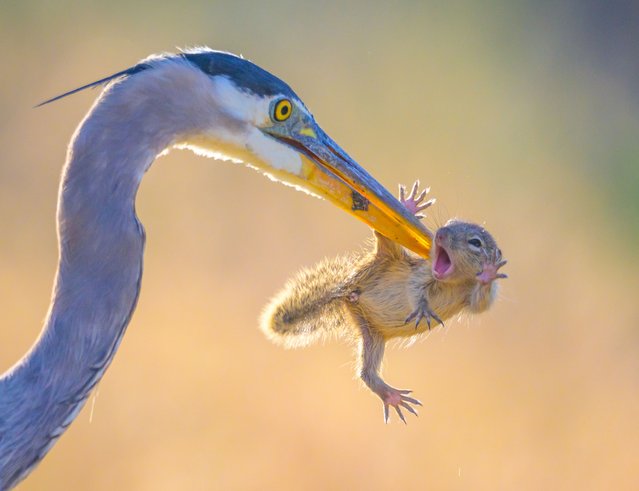
A squirrel fights for its life in the bill of a great blue heron at the Mission Trails Regional Park in California in the second decade of April 2025. (Phoot by Decker Nomura/Solent News & Photo Agency)
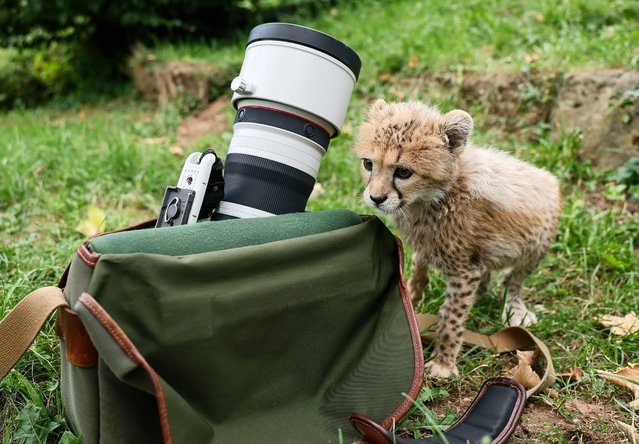
Sudan cheetah cub Assama inspects a camera bag in its enclosure at the Landau Zoo, in Landau, Germany, 03 September 2025. Assama, born in July as the only cub to a cheetah cat, was rejected by its mother, and is now being bottle-fed by its caretakers. (Photo by Ronald Wittek/EPA)
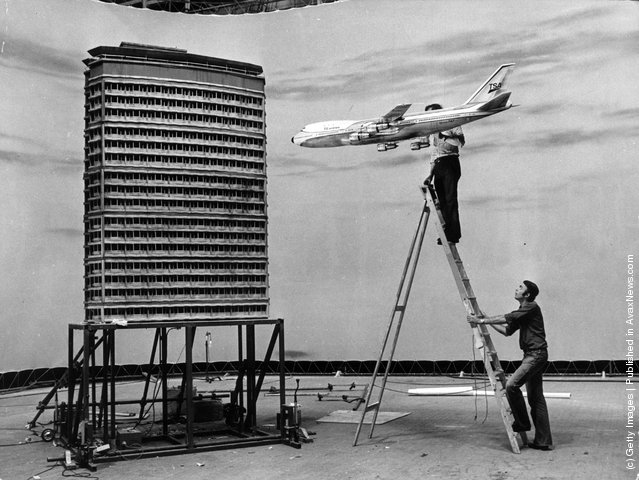
Film technicians at Pinewood Studios set up a miniature air crash sequence for the Jack Gold film “The Medusa Touch”, using scale models of a Boeing 747 and a skyscraper. (Photo by Alan F. Davis/Keystone/Getty Images). 9th August 1977
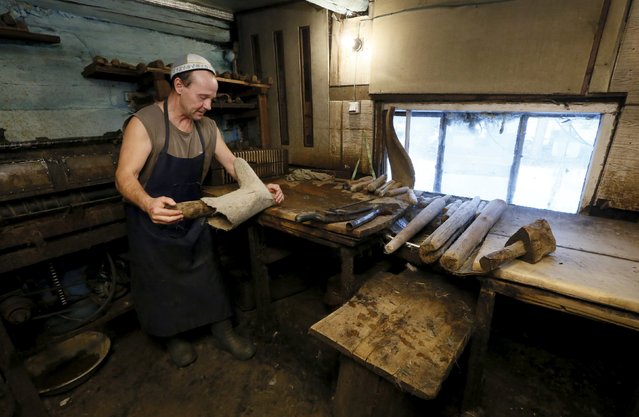
Ivan Plakhuta, 54, the owner of a small workshop manufacturing valenki, Russian traditional footwear, rolls a valenok in the remote Siberian village of Bolshaya Rechka, located in Taiga area in the foothills of the Western Sayan Mountain Ridge in the Yermakovsky district of Krasnoyarsk region, Russia, November 10, 2015. (Photo by Ilya Naymushin/Reuters)
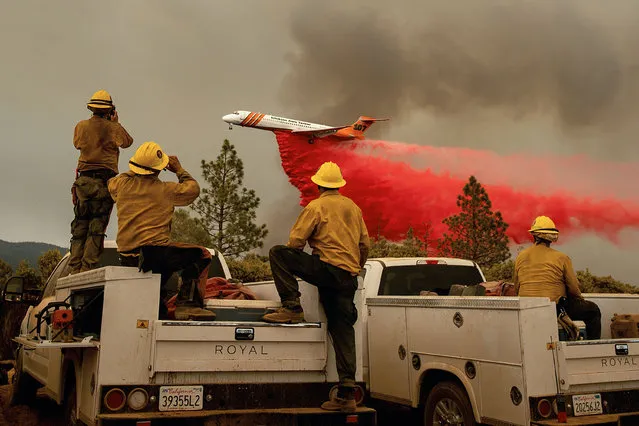
Firefighters watch as an air tanker drops retardant while battling the Ferguson fire in the Stanislaus National Forest, near Yosemite National Park, California on July 21, 2018. A fire that claimed the life of one firefighter and injured two others near California's Yosemite national park has almost doubled in size in three days, authorities said Friday. (Photo by Noah Berger/AFP Photo)
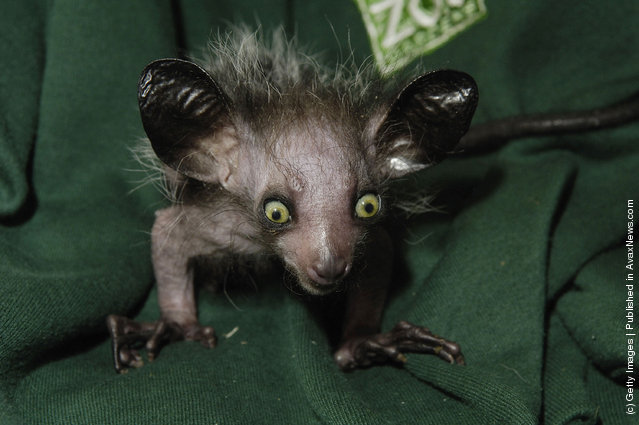
“The aye-aye (Daubentonia madagascariensis) is a lemur, a strepsirrhine primate native to Madagascar that combines rodent-like teeth and a special thin middle finger to fill the same ecological niche as a woodpecker. It is the world's largest nocturnal primate, and is characterized by its unusual method of finding food; it taps on trees to find grubs, then gnaws holes in the wood and inserts its narrow middle finger to pull the grubs out. The only other animal species known to find food in this way is the striped possum. From an ecological point of view the aye-aye fills the niche of a woodpecker as it is capable of penetrating wood to extract the invertebrates within”. – Wikipedia
Photo: In this handout image from Bristol Zoo is seen the first captive bred aye-aye in the UK named “Kintana” (meaning star in Malagasy) April 15, 2005 at Bristol Zoo Gardens, England. The zoo announced today only the second baby aye-aye to be hand-reared in the world (the first was in Jersey Zoo) and has now made his first public appearance since his birth on 11 February 2005. (Photo by Rob Cousins/Bristol Zoo via Getty Images)
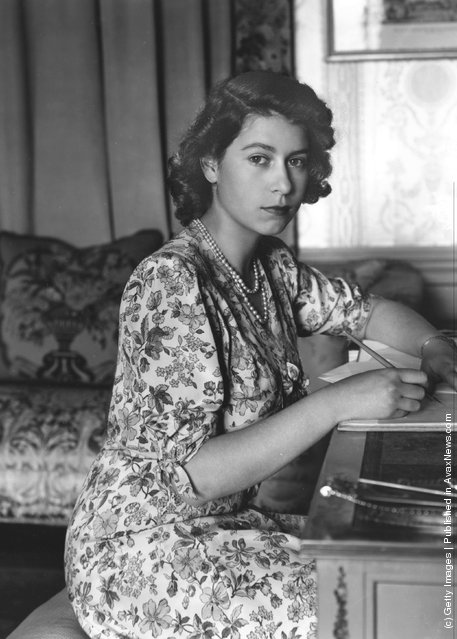
Queen Elizabeth II (as Princess Elizabeth) writing at her desk in Windsor Castle, Berkshire. (Photo by Lisa Sheridan/Studio Lisa/Getty Images). 30th May 1944