Loading...
Done
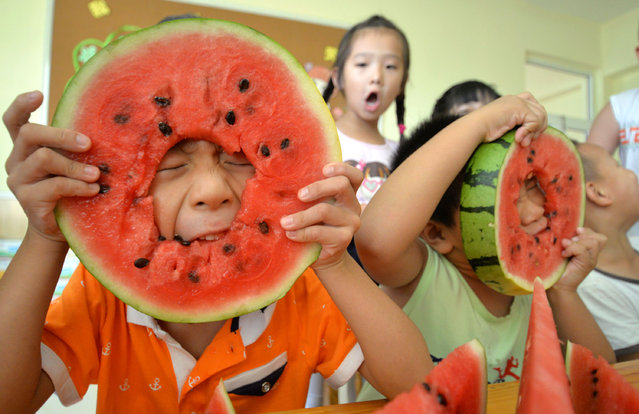
Children eat watermelons to meet the “beginning of autumn” at a kindergarten in Handan, China on August 7, 2015. Chinese tradition to eat watermelons or peaches before that day symbolises “biting away summer”. The solar term ‘beginning of autumn’ falls on 8 August this year. (Photo by Xinhua/REX Shutterstock)

Children eat watermelons to meet the “beginning of autumn” at a kindergarten in Handan, China on August 7, 2015. Chinese tradition to eat watermelons or peaches before that day symbolises “biting away summer”. The solar term ‘beginning of autumn’ falls on 8 August this year. (Photo by Xinhua/REX Shutterstock)
Details
11 Aug 2015 14:29:00
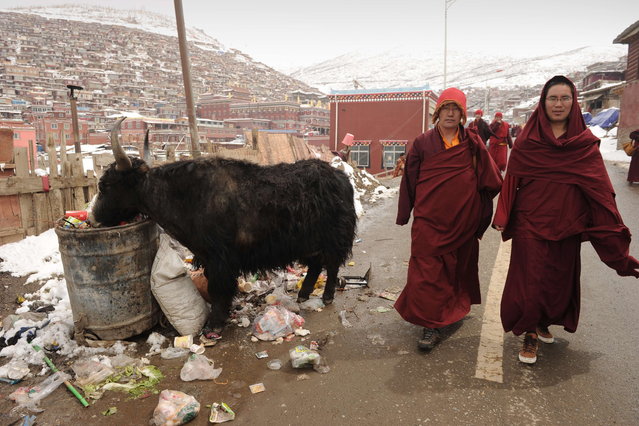
This photo taken on April 5, 2013 shows Buddhist monks passing a yak in Seda Monastery, the largest Tibetan Buddhist school in the world, with up to 40,000 monks and nuns in residence for some parts of the year. (Photo by Peter Parks/AFP Photo)

This photo taken on April 5, 2013 shows Buddhist monks passing a yak in Seda Monastery, the largest Tibetan Buddhist school in the world, with up to 40,000 monks and nuns in residence for some parts of the year. Seda, known to Tibetans as Serthar is located in Ganzi prefecture in the west of China's Sichuan province and has become a hotbed of protests and violence since the Tibetan uprisings of March 2008. (Photo by Peter Parks/AFP Photo)
Details
30 Apr 2013 08:56:00
Tony the ten-year-old tawny owl tucks himself on December 8, 2025 into a Christmas tree at the Scottish Owl Centre, West Lothian, where he was hatched and raised. (Photo by Katielee Arrowsmith/South West News Service)

Tony the ten-year-old tawny owl tucks himself on December 8, 2025 into a Christmas tree at the Scottish Owl Centre, West Lothian, where he was hatched and raised. (Photo by Katielee Arrowsmith/South West News Service)
Details
21 Dec 2025 09:39:00
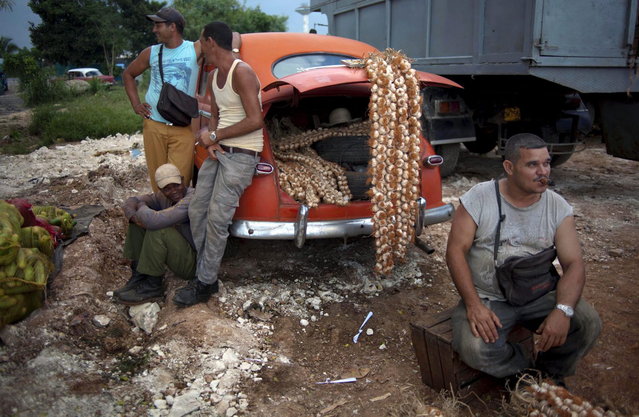
In this September 30, 2013 photo, farmers wait for customers next to their 1950s Chevrolet loaded with garlic for sale at the 114th Street Market on the outskirts of Havana, Cuba. The market s bustle is a result of economic reforms begun in 2010 by President Raul Castro, which includes relaxing rules on private farming. (Photo by Ramon Espinosa/AP Photo)

In this September 30, 2013 photo, farmers wait for customers next to their 1950s Chevrolet loaded with garlic for sale at the 114th Street Market on the outskirts of Havana, Cuba. The market s bustle is a result of economic reforms begun in 2010 by President Raul Castro, which includes relaxing rules on private farming. (Photo by Ramon Espinosa/AP Photo)
Details
02 Oct 2013 11:32:00


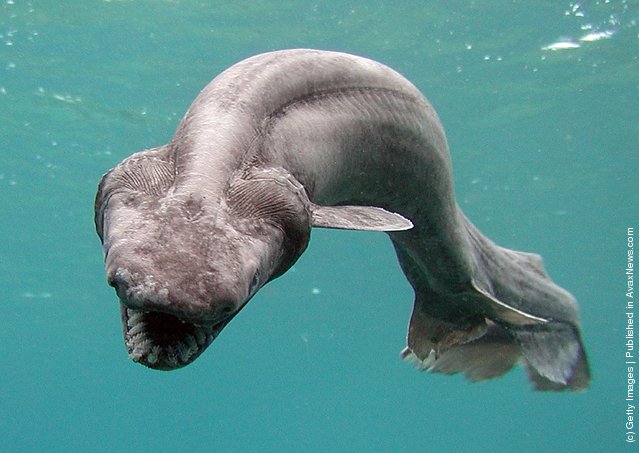
“The frilled shark (Chlamydoselachus anguineus) is one of two extant species of shark in the family Chlamydoselachidae, with a wide but patchy distribution in the Atlantic and Pacific Oceans. This uncommon species is found over the outer continental shelf and upper continental slope, generally near the bottom though there is evidence of substantial upward movements. It has been caught as deep as 1,570 m (5,150 ft), whereas in Suruga Bay, Japan it is most common at depths of 50–200 m (160–660 ft). Exhibiting several “primitive” features, the frilled shark has often been termed a «living fossil»”. – Wikipedia

Photo: A 1.6 meter long Frill shark swims in a tank after being found by a fisherman at a bay in Numazu, on January 21, 2007 in Numazu, Japan. The frill shark, also known as a Frilled shark usually lives in waters of a depth of 600 meters and so it is very rare that this shark is found alive at sea-level. It's body shape and the number of gill are similar to fossils of sharks which lived 350,000,000 years ago. (Photo by Awashima Marine Park/Getty Images)

Details
05 May 2011 10:01:00
People drink in the street in the Soho area of London, on April 12, 2021 as coronavirus restrictions are eased across the country in step two of the government's roadmap out of England's third national lockdown. Britons on Monday toasted a significant easing of coronavirus restrictions, with early morning pints – and much-needed haircuts – as the country took a tentative step towards the resumption of normal life. Businesses including non-essential retail, gyms, salons and outdoor hospitality were all able to open for the first time in months in the second step of the government's roadmap out of lockdown. (Photo by Tolga Akmen/AFP Photo)

People drink in the street in the Soho area of London, on April 12, 2021 as coronavirus restrictions are eased across the country in step two of the government's roadmap out of England's third national lockdown. Britons on Monday toasted a significant easing of coronavirus restrictions, with early morning pints – and much-needed haircuts – as the country took a tentative step towards the resumption of normal life. Businesses including non-essential retail, gyms, salons and outdoor hospitality were all able to open for the first time in months in the second step of the government's roadmap out of lockdown. (Photo by Tolga Akmen/AFP Photo)
Details
13 Apr 2021 08:02:00
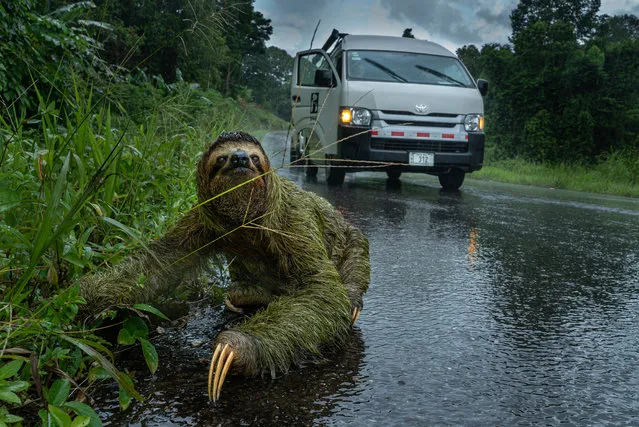
People and Nature category winner: Why did the sloth cross the road? by Andrew Whitworth (Osa Conservation and University of Glasgow), taken in Osa Peninsula, Costa Rica. “I was driving out from the Osa Peninsula, located on the southern Pacific coast of Costa Rica on a dark, stormy day. This female three-toed sloth (Bradypus variegatus) had luckily just about made it across the road, and the drivers of the Toyota on this occasion had spotted her in good time”. (Photo by Andrew Whitworth/2019 British Ecological Society Photography Competition)

People and Nature category winner: Why did the sloth cross the road? by Andrew Whitworth (Osa Conservation and University of Glasgow), taken in Osa Peninsula, Costa Rica. “I was driving out from the Osa Peninsula, located on the southern Pacific coast of Costa Rica on a dark, stormy day. This female three-toed sloth (Bradypus variegatus) had luckily just about made it across the road, and the drivers of the Toyota on this occasion had spotted her in good time”. (Photo by Andrew Whitworth/2019 British Ecological Society Photography Competition)
Details
30 Nov 2019 00:05:00
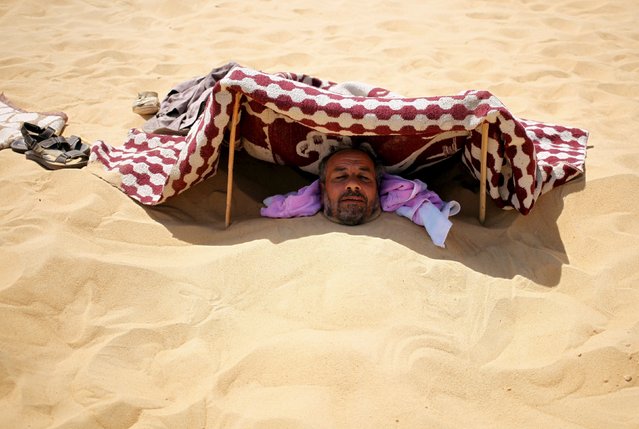
A patient buried in the hot sand looks out from under a shade that protects his face from the sun in Siwa, Egypt, August 12, 2015. (Photo by Asmaa Waguih/Reuters)

A patient buried in the hot sand looks out from under a shade that protects his face from the sun in Siwa, Egypt, August 12, 2015. In the searing heat of summer in western Egypt, at the hottest time of the day, sufferers of rheumatism, joint pain, infertility or impotence lie buried neck-deep in the sand of Siwa near Dakrour Mountain. Locals say taking a sand bath is a natural therapy with powers to cure many medical conditions. (Photo by Asmaa Waguih/Reuters)
Details
28 Aug 2015 12:07:00