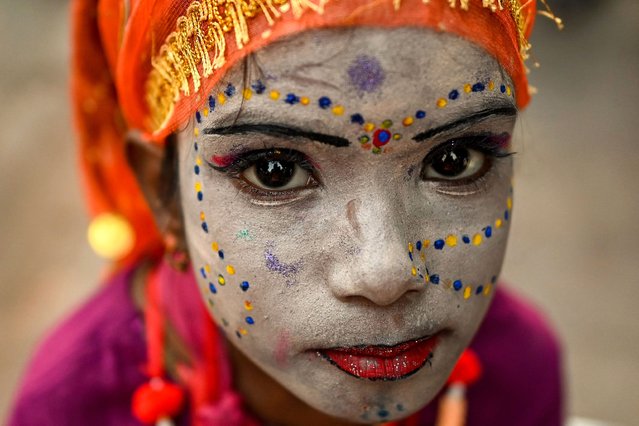
A child applies make-up as a mimic while asking for alms from passers-by at a market area ahead of the festival of Diwali in New Delhi on October 22, 2022. (Photo by Sajjad Hussain/AFP Photo)
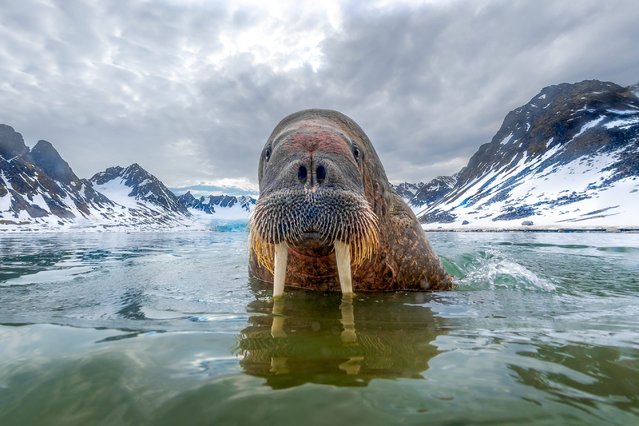
A walrus takes centre stage after barging another out of the way to be in a photograph in Svalbard, between mainland Norway and the North Pole in January 2025. (Photo by Olav Thokle/Syndicated Photos/Solent News)
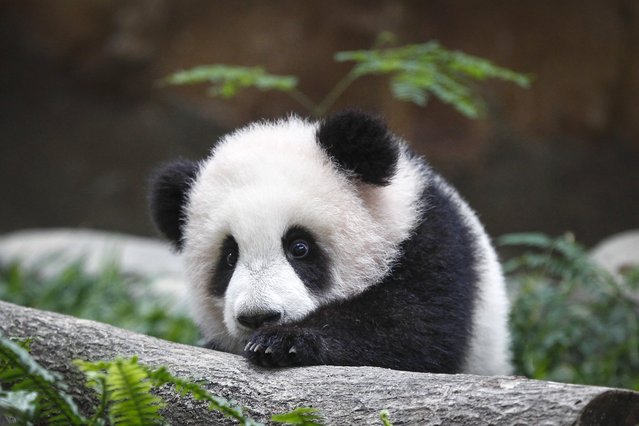
A 6-month old female giant panda cub, an offspring of Xing Xing, formerly known as Fu Wa and Liang Liang, formerly known as Feng Yi, plays at the Giant Panda Conservation Center at the National Zoo in Kuala Lumpur, Malaysia, Thursday, February 18, 2016. (Photo by Joshua Paul/AP Photo)
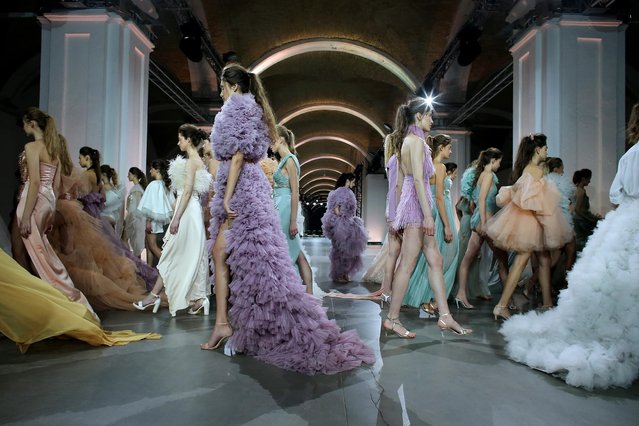
In this image released on February 5th – Models walk the runway at the Cihan Nacar show on February 04, 2021 in Kyiv, Ukraine. (Photo by Ferhat Zupcevic/Getty Images for Cihan Nacar)
This photo taken on February 10, 2025 shows a captured green iguana being held by hunters after it was brought down by a slingshot in Pingtung. Taiwan's iguana population has exploded since the spikey-backed giant lizards were introduced from Central and South America more than 20 years ago as exotic pets. Many escaped or were dumped by their owners and have bred rapidly in the warm climate of southern Taiwan, invading neighbourhoods and ravaging farmers' crops. (Photo by I-Hwa Cheng/AFP Photo)
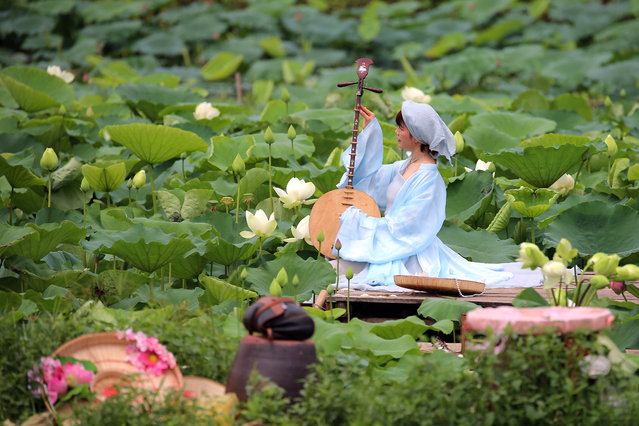
A woman poses for a photo next to lotus flowers in West lake in Hanoi, Vietnam, 09 June 2025.. Lotus flowers bloom from late May to August in Vietnam and are commonly found growing in the muddy waters of lakes and ponds across the country. (Photo by Luong Thai Linh/EPA)
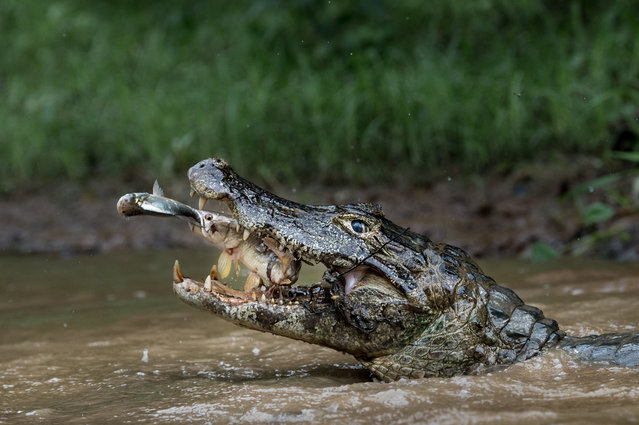
Second place, Nature: double trapping. Picture taken in the Brazilian Pantanal ... when I downloaded the CF did not want to believe it ... The nature knows we always give magnificent events but sometimes extraordinary. (Photo by Massimiliano Bencivenni/National Geographic Travel Photographer of the Year Contest)
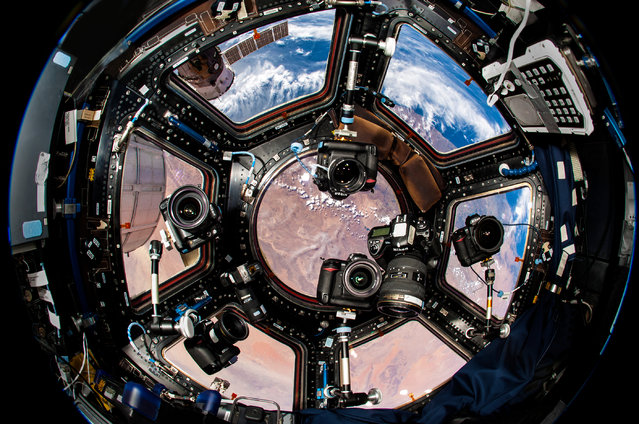
Astronaut Donald R. Pettit would often rig an array of as many as six cameras in the cupola windows and set them all to fire continuously for events such as sunsets, which only last around seven seconds on the ISS. (Photo by Donald R. Pettit)