Loading...
Done
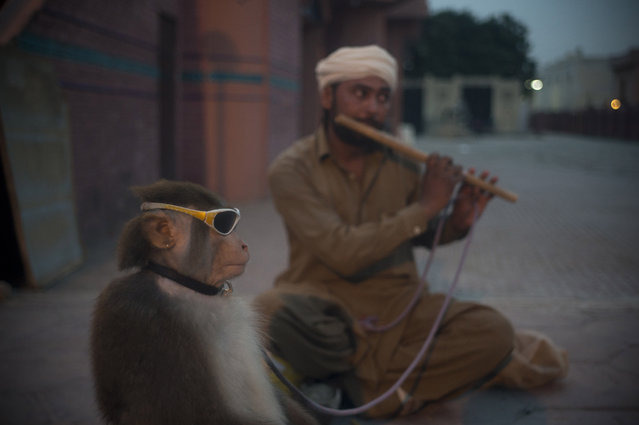
A Pakistani monkey handler Naseer Khan plays flute to attract passers by for a monkey show to earn his living in Islamabad, Pakistan, Monday, September 7, 2015. (Photo by B. K. Bangash/AP Photo)

A Pakistani monkey handler Naseer Khan plays flute to attract passers by for a monkey show to earn his living in Islamabad, Pakistan, Monday, September 7, 2015. (Photo by B. K. Bangash/AP Photo)
Details
09 Oct 2015 08:01:00
Pineapple

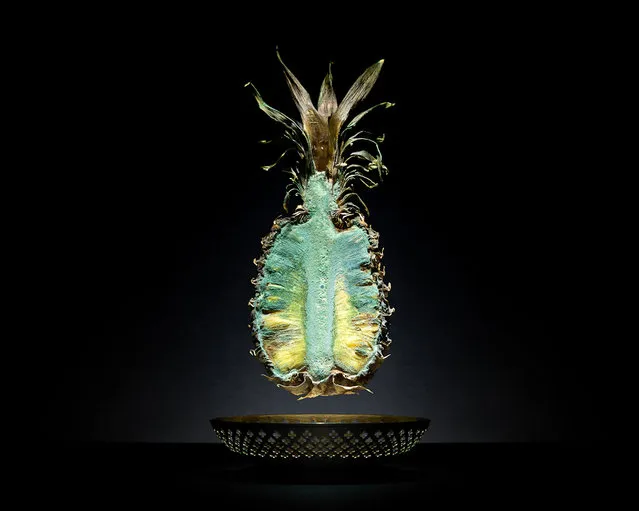
“One Third” – a project on food waste by an Austrian photography Klaus Pichler. According to a UN study one third of the world's food goes to waste – the largest part thereof in the industrialized nations of the global north. Equally, 925 million people around the world are threatened by starvation. The series “One Third” describes the connection between individual wastage of food and globalized food production.

Photo: Pineapple. Place of production: Guayaquil, Ecuador. Cultivation method: Outdoor plantation • Time of harvest: All- season. Transporting distance: 10.666 km (linear distance) • Means of transportation: Aircraft, truck. Carbon footprint (total) per kg: 11,94 kg • Water requirement (total) per kg: 360 l. Price: 2,10 € / kg. (Photo by Klaus Picher)
Details
02 May 2012 11:01:00
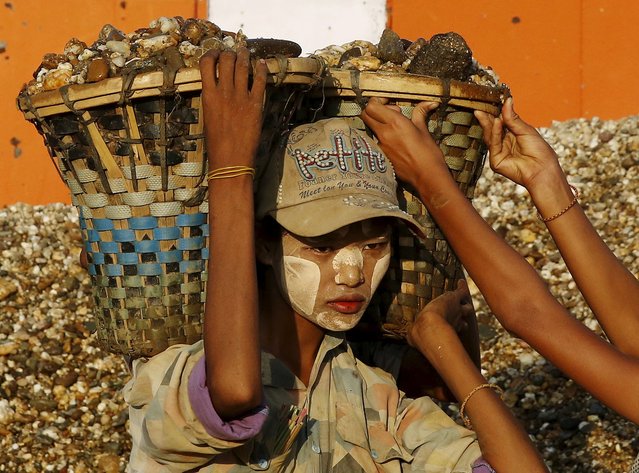
Labourers unload gravel from a boat docked in Dala township, opposite Yangon city, Myanmar, November 12, 2015. (Photo by Olivia Harris/Reuters)

Labourers unload gravel from a boat docked in Dala township, opposite Yangon city, Myanmar, November 12, 2015. (Photo by Olivia Harris/Reuters)
Details
16 Nov 2015 08:09:00
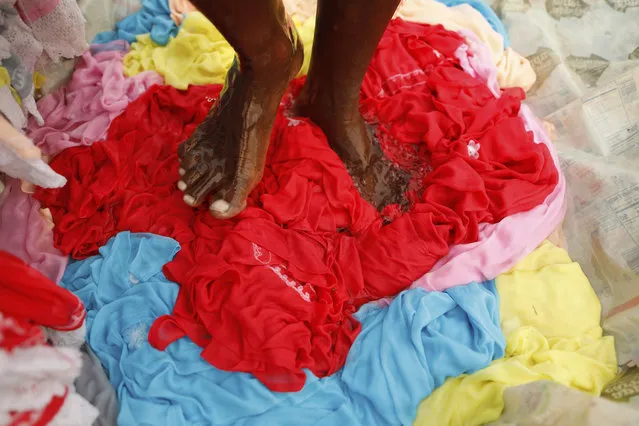
A dhobi, or a washerman washes cloths on the banks of the River Gomti in Lucknow, India, Saturday, September 12, 2020. Dhobis are traditional laundry workers who wash clothes by hand and dry them in the sun, an occupation which has been in existence for generations. Most cities in India have a Dhobi Ghat, or washermen's area, where the city's pile of clothes is laundered. This practice is still popular in India, despite of modern technology. Around 1,000 families work in Lucknow's Dhobi Ghat. However, in light of the novel coronavirus, their wages have decreased drastically. With each family earning around US$100-200 per month. (Photo by Rajesh Kumar Singh/AP Photo)

A dhobi, or a washerman washes cloths on the banks of the River Gomti in Lucknow, India, Saturday, September 12, 2020. Dhobis are traditional laundry workers who wash clothes by hand and dry them in the sun, an occupation which has been in existence for generations. Most cities in India have a Dhobi Ghat, or washermen's area, where the city's pile of clothes is laundered. This practice is still popular in India, despite of modern technology. Around 1,000 families work in Lucknow's Dhobi Ghat. However, in light of the novel coronavirus, their wages have decreased drastically. With each family earning around US$100-200 per month. (Photo by Rajesh Kumar Singh/AP Photo)
Details
25 Sep 2020 00:03:00
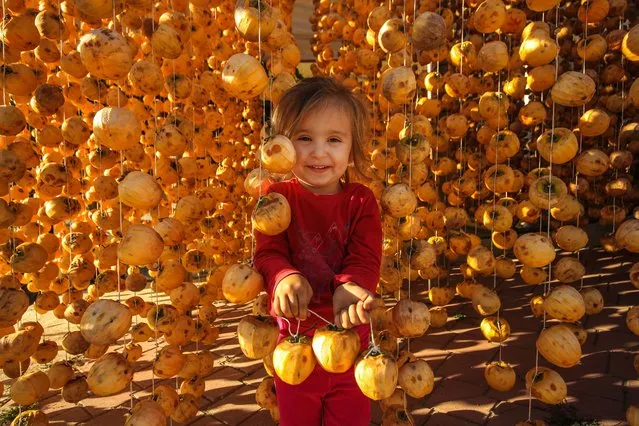
A child is seen with persimmons in Denizli, Turkiye on October 24, 2022. (Photo by Ummu Nisan Kandilcioglu/Anadolu Agency via Getty Images)

A child is seen with persimmons in Denizli, Turkiye on October 24, 2022. (Photo by Ummu Nisan Kandilcioglu/Anadolu Agency via Getty Images)
Details
09 Nov 2022 05:32:00
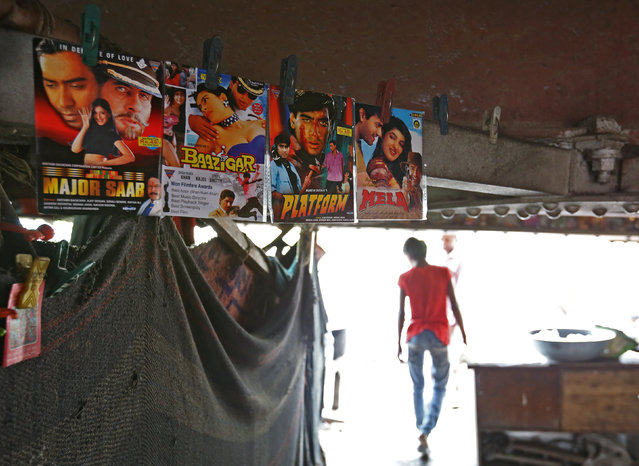
Films that are being screened are advertised in a makeshift cinema located under a bridge in the old quarters of Delhi, India May 25, 2016. (Photo by Cathal McNaughton/Reuters)

Films that are being screened are advertised in a makeshift cinema located under a bridge in the old quarters of Delhi, India May 25, 2016. A makeshift cinema hall under a 140-year-old bridge in the Indian capital is allowing poor rickshaw pullers and migrant labourers to escape daily hardship and sweltering heat into a world of Bollywood song, dance and romance. With the rusty iron floor of the bridge as its ceiling and some old rags acquired on the cheap from a nearby crematorium serving as curtains and floor mats, the cinema shows four films a day. (Photo by Cathal McNaughton/Reuters)
Details
28 May 2016 12:21:00
Black women in Brazil sit at the intersection of racism and misogyny, and have in recent years been at the forefront of a movement that challenges issues ranging from sexual and domestic violence to police brutality and stereotyping. Kolor Collective considers itself to be a part of this movement and questions expectations imposed on black women with satirical and subversive images, as seen here. (Photo by Kolor Art Collective/The Guardian)

Photographer Pol Kurucz’s vivid collection of photos explores issues faced by black Brazilian women, from political misrepresentation to unrealistic beauty standards. Kolor Collective is a Rio de Janeiro-based creative group that challenges the struggle faced by black women in Brazil through theatrical and provocative art. It was founded in 2015 by Franco-Hungarian photographer Pol Kurucz, who often touches on his own experiences of discrimination to call out sensitive social problems. (Photo by Kolor Art Collective/The Guardian)
Details
28 Dec 2016 07:24:00
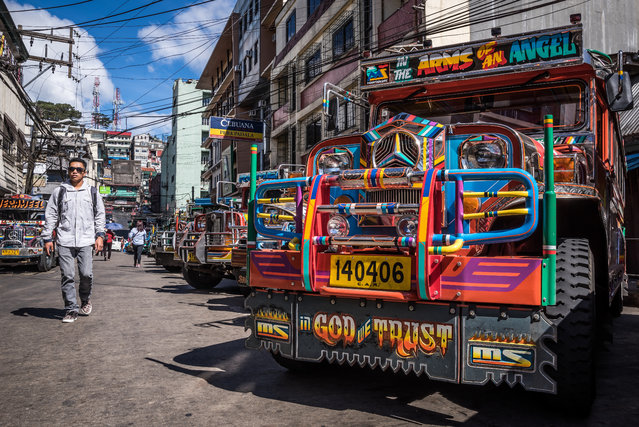
A jeepney waits for departure at Baguio (North Luzon). (Photo by Claudio Sieber/Barcroft Media)

These Filipino icons of ingenuity were originally re-crafted from abandoned US army jeeps after the second world war, and helped to establish a new system of urban transportation. Jeepneys are being phased to help ease city congestion, but the move will also cause unemployment for experienced drivers – and higher fares for commuters. (Photo by Claudio Sieber/Barcroft Media)
Details
30 May 2019 00:01:00