Loading...
Done
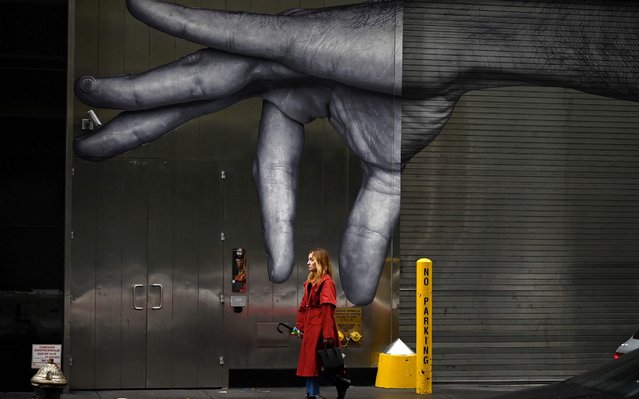
A woman passes a mural in Manhattan on October 27, 2019 in New York City. (Photo by Johannes Eisele/AFP Photo)

A woman passes a mural in Manhattan on October 27, 2019 in New York City. (Photo by Johannes Eisele/AFP Photo)
Details
29 Oct 2019 00:01:00
Laura Ford’s 1991 sculpture Twiglet has been installed at Thirsk Hall Sculpture Garden, North Yorkshire, UK in the last decade of April 2024. (Photo by James Glossop/The Times)

Laura Ford’s 1991 sculpture Twiglet has been installed at Thirsk Hall Sculpture Garden, North Yorkshire, UK in the last decade of April 2024. (Photo by James Glossop/The Times)
Details
08 Jun 2024 03:03:00
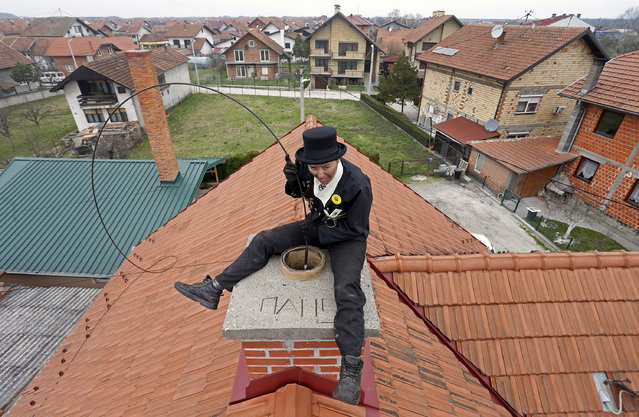
Dajana Djuric, 25, who has worked as a chimney sweep since the age of six, cleans a chimney in Brcko, Bosnia and Herzegovina. Picture taken March 3, 2016. (Photo by Dado Ruvic/Reuters)

Dajana Djuric, 25, who has worked as a chimney sweep since the age of six, cleans a chimney in Brcko, Bosnia and Herzegovina. Dajana Djuric, believed to be the only female chimney sweep in Bosnia and Herzegovina, has to contend with perilous roofs in the depth of winter. (Photo by Dado Ruvic/Reuters)
Details
09 Mar 2016 13:07:00
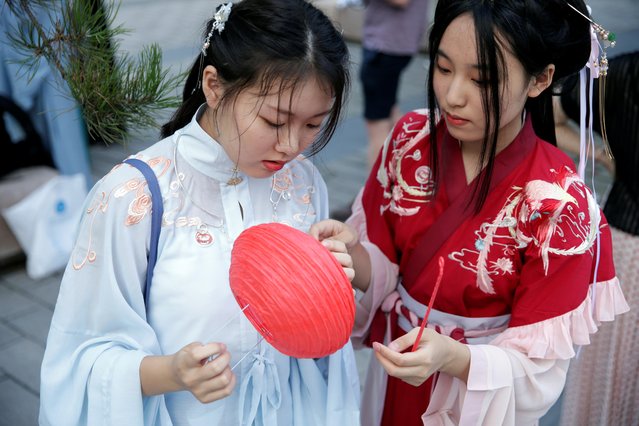
Girls dressed in “Hanfu”, or Han clothing, prepare for an event to mark the traditional Qixi festival, the Chinese equivalent of Valentine's Day, at a park in Beijing, China, August 7, 2019. Chinese for “Han clothing”, “Hanfu” is based on the idea of donning costumes worn in bygone eras by China's dominant Han ethnicity. Some of the most popular styles are from the Ming, Song and Tang dynasties. Hanfu enthusiasts doubled to two million in 2018 from a year earlier, according to a survey by Hanfu Zixun, a popular community account on the Wechat social media platform. (Photo by Jason Lee/Reuters)

Girls dressed in “Hanfu”, or Han clothing, prepare for an event to mark the traditional Qixi festival, the Chinese equivalent of Valentine's Day, at a park in Beijing, China, August 7, 2019. Chinese for “Han clothing”, “Hanfu” is based on the idea of donning costumes worn in bygone eras by China's dominant Han ethnicity. Some of the most popular styles are from the Ming, Song and Tang dynasties. Hanfu enthusiasts doubled to two million in 2018 from a year earlier, according to a survey by Hanfu Zixun, a popular community account on the Wechat social media platform. (Photo by Jason Lee/Reuters)

Details
23 Sep 2019 00:05:00
An Iraqi Muslim woman walks past Christmas decorations for sale in the Shiite holy city of Najaf on December 17, 2015. (Photo by Haidar Hamdani/AFP Photo)

An Iraqi Muslim woman walks past Christmas decorations for sale in the Shiite holy city of Najaf on December 17, 2015. (Photo by Haidar Hamdani/AFP Photo)
Details
18 Dec 2015 12:59:00
German car manufacturer BMW presents the “Vision Next 100” concept car during the 100th anniversary celebrations in Munich, Germany, Monday, March 7, 2016. (Photo by Matthias Schrader/AP Photo)

German car manufacturer BMW presents the “Vision Next 100” concept car during the 100th anniversary celebrations in Munich, Germany, Monday, March 7, 2016. (Photo by Matthias Schrader/AP Photo)
Details
08 Mar 2016 13:17:00
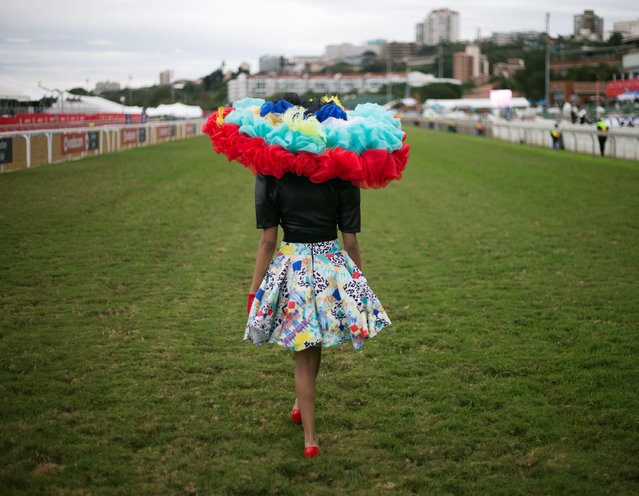
A person poses on the track during a fashion competition at the Durban July horse racing event in Durban, South Africa, July 2, 2016. (Photo by Rogan Ward/Reuters)

A person poses on the track during a fashion competition at the Durban July horse racing event in Durban, South Africa, July 2, 2016. (Photo by Rogan Ward/Reuters)
Details
03 Jul 2016 11:25:00
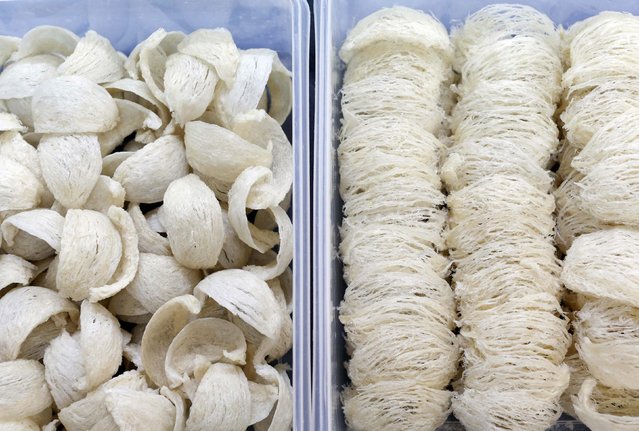
Two styles of cleaned bird's nest, Yan Zhan (L) and Su Zhan (R) await repacking at a processing plant in Kuala Lumpur, February 17, 2015. Prized in China for is alleged health benefits for hundreds of years, nests made from swiftlets' saliva are being mixed into coffee and cereal as the Southeast Asian producers of the delicacy seek to broaden its appeal, and their profit margins. (Photo by Olivia Harris/Reuters)

Two styles of cleaned bird's nest, Yan Zhan (L) and Su Zhan (R) await repacking at a processing plant in Kuala Lumpur, February 17, 2015. Prized in China for is alleged health benefits for hundreds of years, nests made from swiftlets' saliva are being mixed into coffee and cereal as the Southeast Asian producers of the delicacy seek to broaden its appeal, and their profit margins. The nests are among the world's most expensive foods, selling for up to $2,500 a kg and the swiftlets that weave them are indigenous to Indonesia, Malaysia, Thailand and Vietnam. (Photo by Olivia Harris/Reuters)
Details
24 Feb 2015 13:57:00