Loading...
Done
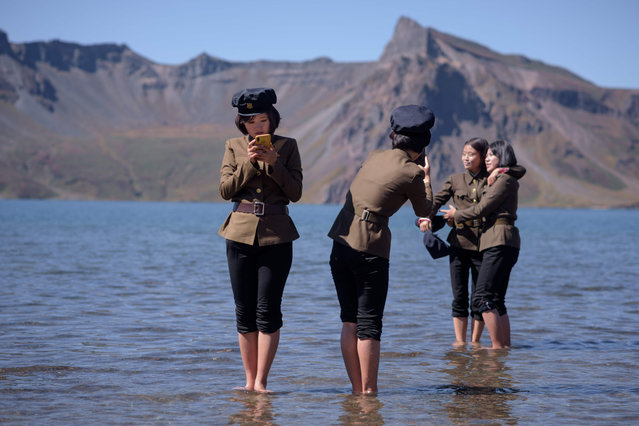
In a photo taken on September 11, 2019, North Korean students pose for photos in Chonji lake, or “Heaven lake”, as they visit the crater of Mount Paektu, near Samjiyon. Mount Paektu has long been considered the spiritual birthplace of the Korean nation and is a place of pilgrimage for tens of thousands of North Koreans every year, who are trained from birth to revere their leaders. Every year 100,000 North Koreans or more are taken on study tours to the camp, the mountain, and nearby revolutionary sites where relics of operations are preserved. Dressing in khaki uniforms said to resemble guerrillas' outfits and carrying red flags, they march to the summit of the volcano. (Photo by Ed Jones/AFP Photo)

In a photo taken on September 11, 2019, North Korean students pose for photos in Chonji lake, or “Heaven lake”, as they visit the crater of Mount Paektu, near Samjiyon. Mount Paektu has long been considered the spiritual birthplace of the Korean nation and is a place of pilgrimage for tens of thousands of North Koreans every year, who are trained from birth to revere their leaders. (Photo by Ed Jones/AFP Photo)
Details
09 Oct 2019 00:03:00
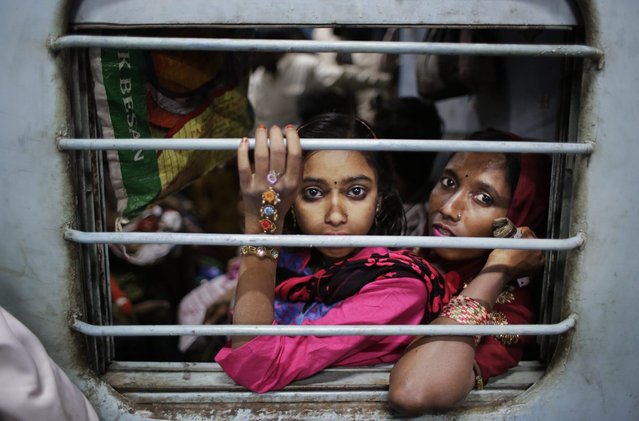
In this November 18, 2014 photo, Murshida, 12, sits on the lap of her mother Marjina as the train leaves for their village in West Bengal, at a railway station in New Delhi, India. Six months ago, Marjina stepped off a train in New Delhi with her two children, hoping to find a better life after her husband abandoned them without so much as a goodbye. (Photo by Altaf Qadri/AP Photo)

In this November 18, 2014 photo, Murshida, 12, sits on the lap of her mother Marjina as the train leaves for their village in West Bengal, at a railway station in New Delhi, India. Six months ago, Marjina stepped off a train in New Delhi with her two children, hoping to find a better life after her husband abandoned them without so much as a goodbye. The family spent their days at a landfill picking through other people’s garbage to find salvageable bits to resell or recycle. After six months of poverty, illness and shame, they returned to that train station in New Delhi, headed back to an uncertain future to their hometown in West Bengal. (Photo by Altaf Qadri/AP Photo)
Details
09 Dec 2014 09:47:00
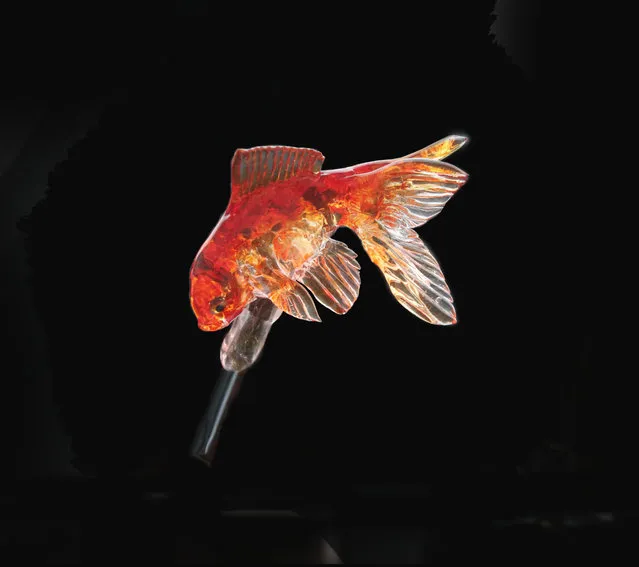
Realistic Animal Lollipops By Shinri Tezuka

Amezaiku is the Japanese craft of lollipop-making, which dates back to the 700s when artisans made mouth-watering and artistic lollipops to be presented as gifts. Carrying on the tradition is 26-year old Shinri Tezuka, the owner of a small shop in the Asakusa district of Tokyo called Ameshin.
Details
04 Sep 2015 08:50:00
Illustration by Chase Stone

Chase Stone has been working as a freelance illustrator and concept artist for several years. His work has been featured at the Society of Illustrators and in various publications such as 2dartist Magazine, Digital Masters, and Digital Painting Techniques. Stone now lives and works in NYC.
Details
24 Feb 2014 12:26:00
Illustrations By Chow Hon Lam

Chow Hon Lam aka Flying Mouse, a tee shirt designer/illustrator from Malaysia. Chow just completed his personal project called Flying Mouse 365, which is create 1 design a day, 365 designs a year.
Details
10 Mar 2014 11:55:00


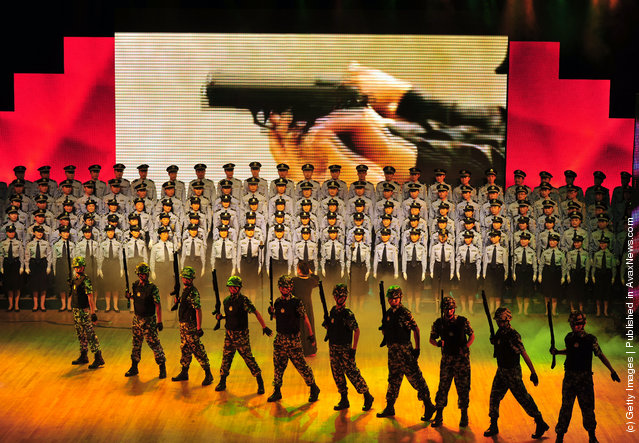
Officers from the municipal authorities of Huaian city perform red songs at the Huaian Great Hall of the People on June 13, 2011 in Huaian, Jiangsu Province of China. This year's celebrations will mark the 90th anniversary of the founding of the Communist Party of China. (Photo by ChinaFotoPress/Getty Images)
Details
15 Jun 2011 10:16:00


“Kumbh Mela is a mass Hindu pilgrimage in which Hindus gather at the Ganges river. The normal Kumbh Mela is celebrated every 3 years, the Ardh (half) Kumbh Mela is celebrated every six years at Haridwar and Prayag, the Purna (complete) Kumbh takes place every twelve years, at four places (Prayag (Allahabad), Haridwar, Ujjain, and Nashik). The Maha (great) Kumbh Mela which comes after 12 “Purna Kumbh Melas”, or 144 years, is held at Allahabad.

The last Ardh Kumbh Mela was held over a period of 45 days beginning in January 2007, more than 70 million Hindu pilgrims took part in the Ardh Kumbh Mela at Prayag, and on January 15, the most auspicious day of the festival of Makar Sankranti, more than 5 million participated. The previous Maha Kumbh Mela, held in 2001, was attended by around 60 million people, making it at the time the largest gathering anywhere in the world in recorded history”. – Wikipedia

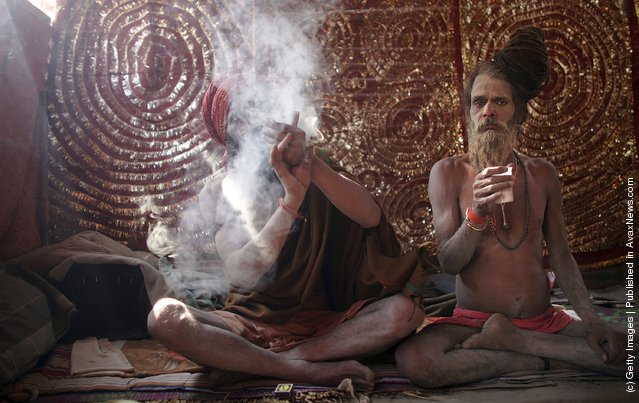
Photo: Sadhus (holy men) smoke at their camp near the ritual site at Sangam, the confluence of the Ganges, Yamuna and mythical Saraswati rivers during the Ardh Kumbh Mela festival (Half Pitcher festival) January 18, 2007 in Allahabad, India. Millions of Hindu pilgrims have flocked to the largest religious gathering in the world which lasts for 45 days in northern India. The festival commemorates the mythical conflict between gods and demons over a pitcher filled with the “nectar of immortality”. Devotees believe that taking a holy dip in the Ganges at this time washes away their sins and paves the path to salvation. (Photo by Mario Tama/Getty Images)

Details
30 Jun 2011 10:27:00


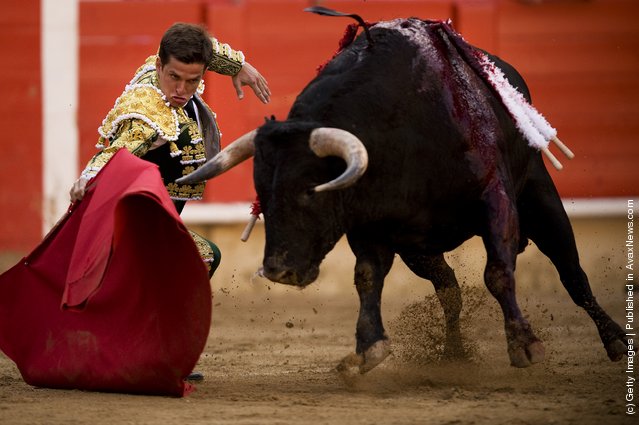
Bullfighter Julian Lopez “El Juli” of Spain performs during the second bullfight of the 2011 season at the Monumental bullring on July 10, 2011 in Barcelona, Spain. This will be the last year for Bull fighting at the Monumental bullring as the parliament of Catalonia has voted to ban bullfighting as of January 1, 2012. (Photo by David Ramos/Getty Images)
Details
11 Jul 2011 10:49:00